
Kingdom
Pseudomonadati
Phylum
Pseudomonadota
Class
Gammaproteobacteria
Order
Enterobacterales
Family
Yersiniaceae
Genus
Yersinia
Description
Taxonomy
| Kingdom | Pseudomonadati |
|---|---|
| Phylum | Pseudomonadota |
| Class | Gammaproteobacteria |
| Order | Enterobacterales |
| Family | Yersiniaceae |
| Genus | Yersinia |
| Species | Yersinia massiliensis |
| Strain | No strain |
Profile
| Physiology | |
|---|---|
| Gram staining properties | Not Available |
| Shape | Rod |
| Mobility | Not Available |
| Flagellar presence | Yes |
| Number of membranes | Not Available |
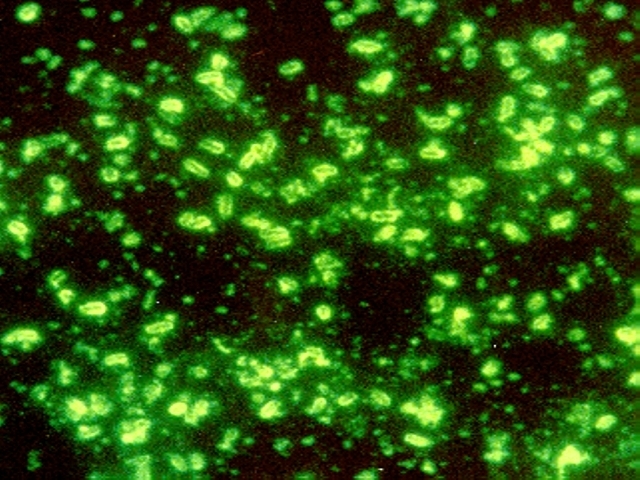
Image source: Wikipedia/Wikimedia
| Ecology, Host, and Life Cycle | |
|---|---|
| Oxygen requirements | Not Available |
| Optimal temperature | Not Available |
| Temperature range | Not Available |
| Habitat | Not Available |
| Biotic relationship | Not Available |
| Host(s) | Not Available |
| Cell arrangement | Not Available |
| Sporulation | Not Available |
| Energy source | Not Available |
| Pathogenicity | Not Available |
Gene Summary
Adenine Count
1301956 bp
Thymine Count
1284051 bp
Guanine Count
1159094 bp
Cytosine Count
1187495 bp
Genome Length
4960833 bp
Protein-coding Genes
4210 genes
Non-Coding Genes
208 genes
# of Chromosomes/Plasmids
1
Genes
| Name | Locus Tag | UniProt ID | Strand Orientation | Gene Start/End | Protein Molecular Weight |
|---|---|---|---|---|---|
| aminoimidazole riboside kinase | ERS008670_04041 | Not Available | Positive | 4512844 - 4513791 | 34592.4 |
| galactoside permease | ERS008670_04042 | Not Available | Positive | 4513822 - 4515069 | 47191.4 |
| beta-lactamase | ERS008670_04043 | Not Available | Negative | 4515192 - 4516091 | 32473.9 |
| putative inner membrane protein | ERS008670_04044 | Not Available | Positive | 4516296 - 4516952 | 23832.5 |
| lysr family transcriptional regulator | ERS008670_04045 | Not Available | Negative | 4517100 - 4518050 | 35840.7 |
| arylsulfotransferase (asst) | ERS008670_04046 | Not Available | Positive | 4518391 - 4520223 | 68587.0 |
| protein disulfide isomerase i | ERS008670_04047 | Not Available | Positive | 4520313 - 4520975 | 24637.8 |
| periplasmic thiol:disulfide oxidoreductase dsbb%2crequired for dsba reoxidation | ERS008670_04048 | Not Available | Positive | 4520987 - 4521661 | 25269.9 |
| tetr family transcription regulatory protein | ERS008670_04049 | Not Available | Negative | 4521940 - 4522521 | 20999.8 |
| putative aldo/keto reductase | ERS008670_04050 | Not Available | Negative | 4522610 - 4523659 | 38094.1 |
Pathways
0 pathways
No pathways found
No metabolic pathways have been associated with this bacterium yet.
Health Effects
No health effects information available for this bacterium.


