
Kingdom
Pseudomonadati
Phylum
Pseudomonadota
Class
Gammaproteobacteria
Order
Enterobacterales
Family
Yersiniaceae
Genus
Yersinia
Description
Taxonomy
| Kingdom | Pseudomonadati |
|---|---|
| Phylum | Pseudomonadota |
| Class | Gammaproteobacteria |
| Order | Enterobacterales |
| Family | Yersiniaceae |
| Genus | Yersinia |
| Species | Yersinia massiliensis |
| Strain | No strain |
Profile
| Physiology | |
|---|---|
| Gram staining properties | Not Available |
| Shape | Rod |
| Mobility | Not Available |
| Flagellar presence | Yes |
| Number of membranes | Not Available |
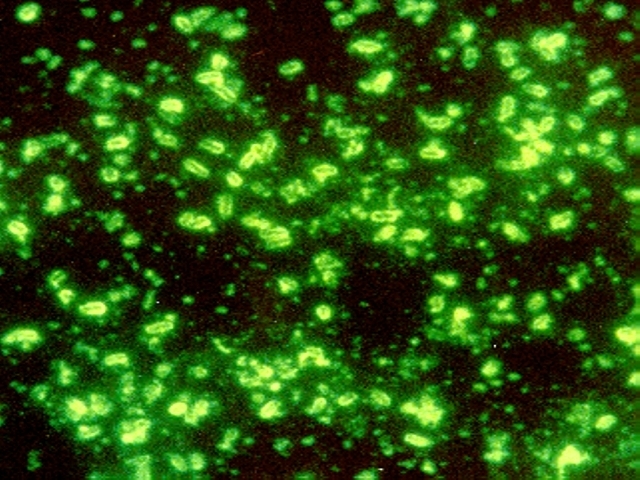
Image source: Wikipedia/Wikimedia
| Ecology, Host, and Life Cycle | |
|---|---|
| Oxygen requirements | Not Available |
| Optimal temperature | Not Available |
| Temperature range | Not Available |
| Habitat | Not Available |
| Biotic relationship | Not Available |
| Host(s) | Not Available |
| Cell arrangement | Not Available |
| Sporulation | Not Available |
| Energy source | Not Available |
| Pathogenicity | Not Available |
Gene Summary
Adenine Count
1301956 bp
Thymine Count
1284051 bp
Guanine Count
1159094 bp
Cytosine Count
1187495 bp
Genome Length
4960833 bp
Protein-coding Genes
4210 genes
Non-Coding Genes
208 genes
# of Chromosomes/Plasmids
1
Genes
| Name | Locus Tag | UniProt ID | Strand Orientation | Gene Start/End | Protein Molecular Weight |
|---|---|---|---|---|---|
| outer membrane lipoprotein | ERS008670_01418 | Not Available | Positive | 1653149 - 1653556 | 14365.5 |
| putative methyltransferase%2c yaeb/af_0241 family | ERS008670_01419 | Not Available | Positive | 1653553 - 1654260 | 26448.8 |
| prolyl-trna synthetase | ERS008670_01420 | Not Available | Positive | 1654365 - 1656083 | 64090.9 |
| lipoprotein involved with copper homeostasis and adhesion | ERS008670_01421 | Not Available | Negative | 1656150 - 1656836 | 25075.9 |
| peptidyl-trna hydrolase domain-containing protein | ERS008670_01422 | Not Available | Negative | 1656888 - 1657328 | 16240.0 |
| yaeq protein | ERS008670_01423 | Not Available | Negative | 1657307 - 1657855 | 21116.0 |
| putative cytochrome | ERS008670_01424 | Not Available | Negative | 1658674 - 1658988 | 10981.3 |
| trna(ile)-lysidine synthetase | ERS008670_01425 | Not Available | Negative | 1659078 - 1660439 | 50594.9 |
| putative lyase | ERS008670_01426 | Not Available | Negative | 1660441 - 1660839 | 15135.2 |
| acetyl-coa carboxylase carboxyltransferase subunit alpha | ERS008670_01427 | Not Available | Negative | 1660955 - 1661914 | 35498.9 |
Pathways
0 pathways
No pathways found
No metabolic pathways have been associated with this bacterium yet.
Health Effects
No health effects information available for this bacterium.


