
Kingdom
Pseudomonadati
Phylum
Pseudomonadota
Class
Gammaproteobacteria
Order
Enterobacterales
Family
Yersiniaceae
Genus
Yersinia
Description
Taxonomy
| Kingdom | Pseudomonadati |
|---|---|
| Phylum | Pseudomonadota |
| Class | Gammaproteobacteria |
| Order | Enterobacterales |
| Family | Yersiniaceae |
| Genus | Yersinia |
| Species | Yersinia kristensenii |
| Strain | No strain |
Profile
| Physiology | |
|---|---|
| Gram staining properties | Not Available |
| Shape | Rod |
| Mobility | Not Available |
| Flagellar presence | Yes |
| Number of membranes | Not Available |
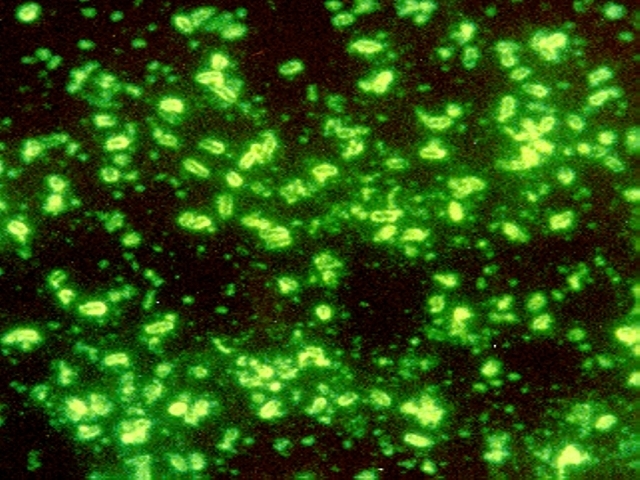
Image source: Wikipedia/Wikimedia
| Ecology, Host, and Life Cycle | |
|---|---|
| Oxygen requirements | Not Available |
| Optimal temperature | Not Available |
| Temperature range | Not Available |
| Habitat | environment; food |
| Biotic relationship | Not Available |
| Host(s) | Homo sapiens |
| Cell arrangement | Not Available |
| Sporulation | Not Available |
| Energy source | Not Available |
| Pathogenicity | Not Available |
Genome Summary
Yersinia kristensenii genome assembly 5139_5#5, scaffold
Gene Summary
Adenine Count
1152032 bp
Thymine Count
1127446 bp
Guanine Count
998346 bp
Cytosine Count
1046858 bp
Genome Length
4324694 bp
Protein-coding Genes
3779 genes
Non-Coding Genes
170 genes
# of Chromosomes/Plasmids
3
Genes
| Name | Locus Tag | UniProt ID | Strand Orientation | Gene Start/End | Protein Molecular Weight |
|---|---|---|---|---|---|
| flagellar basal body-associated protein flil | ERS008500_02421 | P26417 | Positive | 2637785 - 2638255 | 17260.2 |
| flagellar motor switch protein flim | ERS008500_02422 | P26418 | Positive | 2638261 - 2639265 | 37795.4 |
| flagellar motor switch protein flin | ERS008500_02423 | P26419 | Positive | 2639258 - 2639674 | 15096.1 |
| flagellar protein flio | ERS008500_02424 | P34199 | Positive | 2639674 - 2640243 | 19915.0 |
| flagellar biosynthesis protein flip | ERS008500_02425 | P54700 | Positive | 2640240 - 2640992 | 27453.9 |
| flagellar biosynthesis protein fliq | ERS008500_02426 | P34201 | Positive | 2641005 - 2641274 | 9454.22 |
| flagellar biosynthesis protein flir | ERS008500_02427 | P33135 | Positive | 2641277 - 2642059 | 27887.3 |
| flagellar hook-associated protein flgl | ERS008500_02428 | P29744 | Negative | 2642106 - 2643140 | 36918.4 |
| flagellar hook-associated protein flgk | ERS008500_02429 | P33235 | Negative | 2643192 - 2644856 | 58761.8 |
| flagellar rod assembly protein/muramidase flgj | ERS008500_02430 | P15931 | Negative | 2645043 - 2646005 | 34612.2 |
Pathways
0 pathways
No pathways found
No metabolic pathways have been associated with this bacterium yet.
Health Effects
No health effects information available for this bacterium.


