Kingdom
Bacillati
Phylum
Bacillota
Class
Bacilli
Order
Lactobacillales
Family
Streptococcaceae
Genus
Streptococcus
Description
Taxonomy
| Kingdom | Bacillati |
|---|---|
| Phylum | Bacillota |
| Class | Bacilli |
| Order | Lactobacillales |
| Family | Streptococcaceae |
| Genus | Streptococcus |
| Species | Streptococcus pneumoniae |
| Strain | strain GPSC8 |
Profile
| Physiology | |
|---|---|
| Gram staining properties | Positive |
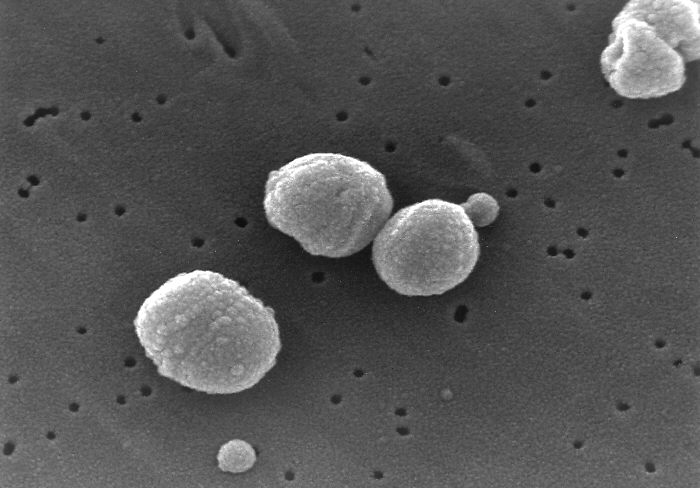
| Shape | Cocci |
| Mobility | No |
| Flagellar presence | Yes |
| Number of membranes | 1 |
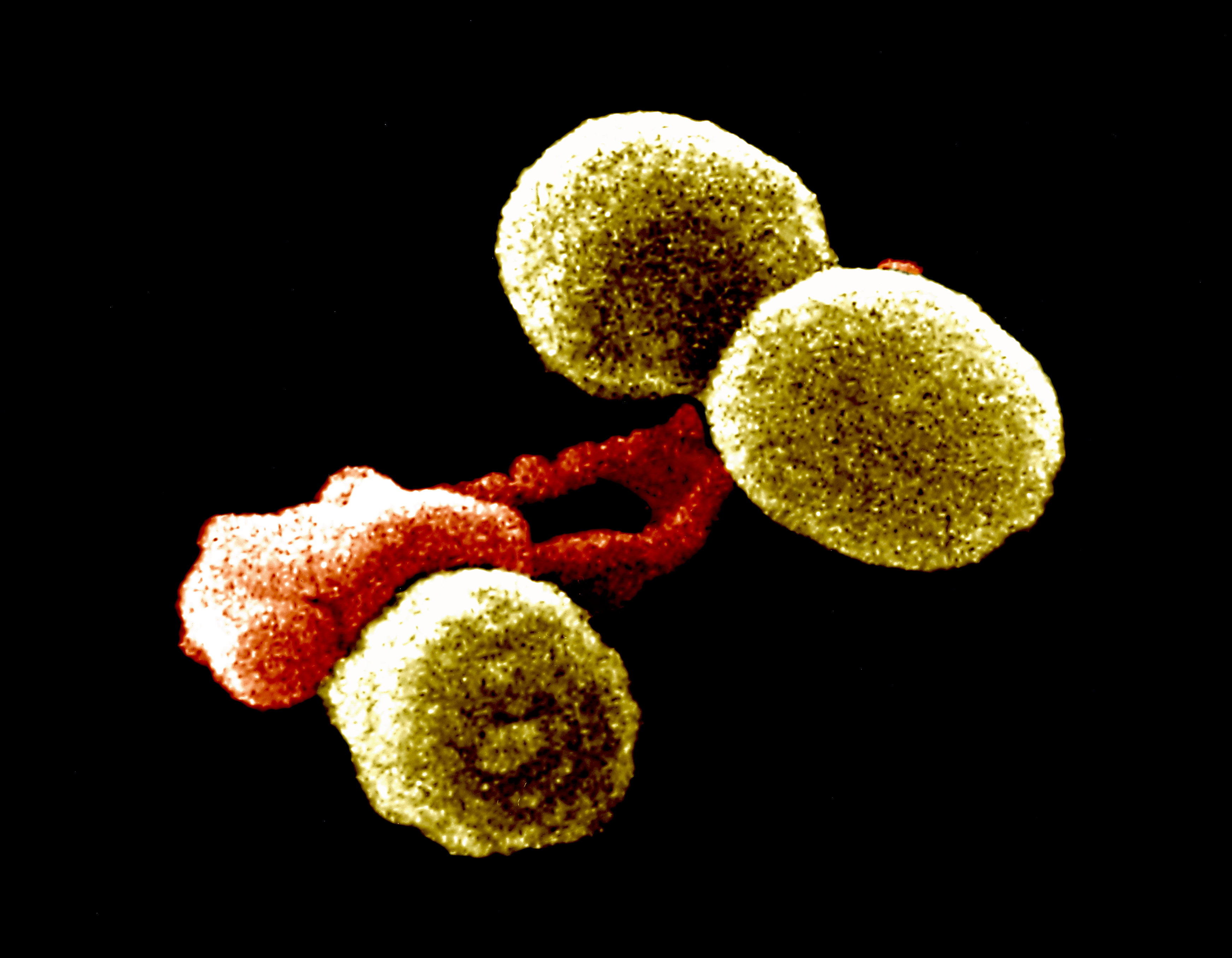
Image source: Wikipedia/Wikimedia
| Ecology, Host, and Life Cycle | |
|---|---|
| Oxygen requirements | Facultative anaerobe |
| Optimal temperature | 30 |
| Temperature range | Mesophilic |
| Habitat | Multiple |
| Biotic relationship | Free living |
| Host(s) | Homo sapiens, Gallus gallus, Cavia |
| Cell arrangement | Chains - Pairs |
| Sporulation | Not Available |
| Energy source | Not Available |
| Pathogenicity | Human |
Genome Summary
Streptococcus pneumoniae strain GPSC8 genome assembly, contig:
Gene Summary
Adenine Count
666356 bp
Thymine Count
660069 bp
Guanine Count
434383 bp
Cytosine Count
434909 bp
Genome Length
2198157 bp
Protein-coding Genes
2087 genes
Non-Coding Genes
180 genes
# of Chromosomes/Plasmids
2
Genes
| Name | Locus Tag | UniProt ID | Strand Orientation | Gene Start/End | Protein Molecular Weight |
|---|---|---|---|---|---|
| zinc metalloprotease zmpb | SAMEA3389840_00446 | Not Available | Negative | 437733 - 443420 | 212706.0 |
| upf0340 protein ssu05 | SAMEA3389840_00447 | Not Available | Negative | 443442 - 444005 | 20223.6 |
| histidine kinase | SAMEA3389840_00448 | Not Available | Negative | 444121 - 445812 | 63641.3 |
| dna-binding response regulator | SAMEA3389840_00449 | Not Available | Negative | 445809 - 446546 | 28264.1 |
| peptide methionine sulfoxide reductase | SAMEA3389840_00450 | Not Available | Negative | 446859 - 447971 | 41963.2 |
| thioredoxin | SAMEA3389840_00451 | Not Available | Negative | 447982 - 448548 | 20859.9 |
| cytochrome c-type biogenesis protein | SAMEA3389840_00452 | Not Available | Negative | 448568 - 449278 | 25397.9 |
| ribonuclease bn | SAMEA3389840_00453 | Not Available | Negative | 449489 - 450349 | 32432.9 |
| na+/h+ antiporter | SAMEA3389840_00454 | Not Available | Negative | 450528 - 452582 | 77803.2 |
| uncharacterised protein | SAMEA3389840_00455 | Not Available | Negative | 452594 - 452848 | 10117.5 |
Pathways
857 pathways
Health Effects
| Health Condition | Relation | Reference |
|---|---|---|
| Community acquired pneumonia | Causes | PMC10663590 |
| Bacterial pneumonia | Causes | PMC10663590 |
| Meningitis | Causes | PMC11116026 |
| Encephalitis | Causes | PMC11116026 |
| Sinusitis | Causes | PMC12375837 |
| Meningitis | Causes | PMC12680174 |
| Pneumonia | Causes | PMC12680174 |
| Otitis media | Causes | PMC3695778 |
| Purulent pericarditis | Causes | PMC3853837 |
| Infections | Causes | PMC4120200 |