
Kingdom
Pseudomonadati
Phylum
Pseudomonadota
Class
Gammaproteobacteria
Order
Vibrionales
Family
Vibrionaceae
Genus
Vibrio
Description
Taxonomy
| Kingdom | Pseudomonadati |
|---|---|
| Phylum | Pseudomonadota |
| Class | Gammaproteobacteria |
| Order | Vibrionales |
| Family | Vibrionaceae |
| Genus | Vibrio |
| Species | Vibrio anguillarum |
| Strain | strain 12B09 |
Profile
| Physiology | |
|---|---|
| Gram staining properties | Negative |
| Shape | CurvedShaped |
| Mobility | Yes |
| Flagellar presence | Not Available |
| Number of membranes | Not Available |
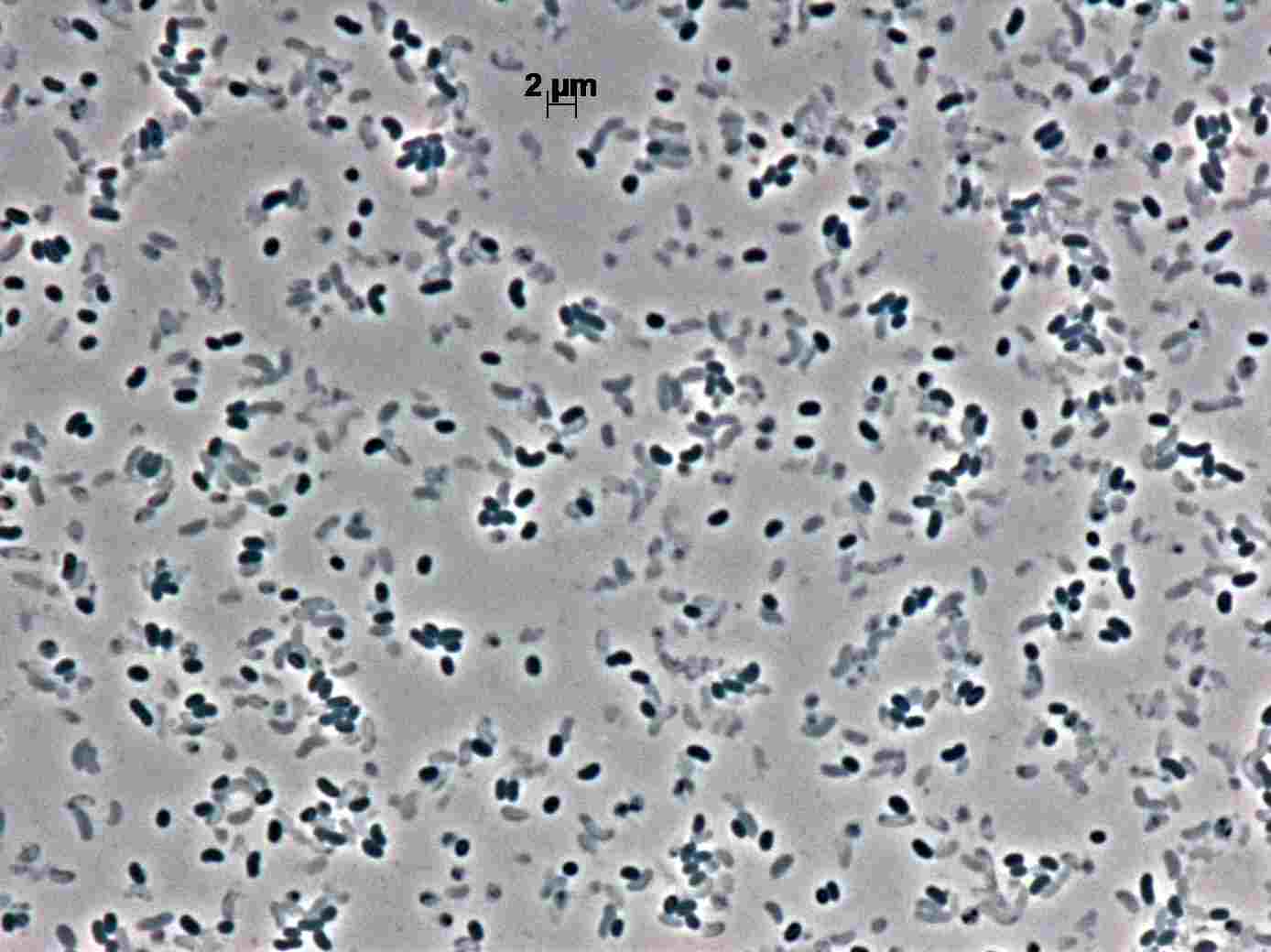
Image source: Wikipedia/Wikimedia
| Ecology, Host, and Life Cycle | |
|---|---|
| Oxygen requirements | Facultative |
| Optimal temperature | Not Available |
| Temperature range | Mesophilic |
| Habitat | HostAssociated |
| Biotic relationship | Free living |
| Host(s) | Homo sapiens |
| Cell arrangement | Singles |
| Sporulation | Nonsporulating |
| Energy source | Heterotroph |
| Pathogenicity | Animal |
Gene Summary
Adenine Count
1121298 bp
Thymine Count
1121020 bp
Guanine Count
897551 bp
Cytosine Count
905695 bp
Genome Length
4097728 bp
Protein-coding Genes
3439 genes
Non-Coding Genes
85 genes
# of Chromosomes/Plasmids
1
Genes
| Name | Locus Tag | UniProt ID | Strand Orientation | Gene Start/End | Protein Molecular Weight |
|---|---|---|---|---|---|
| chemotaxis protein cher | A1QY_09945 | Not Available | Negative | 3316474 - 3317301 | 30810.6 |
| chemotaxis protein chew | A1QY_09950 | Not Available | Negative | 3317312 - 3318238 | 34081.3 |
| flagella basal body p-ring formation protein flga | A1QY_09955 | Not Available | Positive | 3318316 - 3319062 | 27633.5 |
| flagellar biosynthesis anti-sigma factor flgm | A1QY_09960 | Not Available | Positive | 3319191 - 3319511 | 11235.0 |
| molecular chaperone | A1QY_09965 | Not Available | Positive | 3319543 - 3319968 | 15503.8 |
| flagellar biosynthesis protein flgp | A1QY_09970 | Not Available | Negative | 3320067 - 3320498 | 16318.8 |
| hypothetical protein | A1QY_09975 | Not Available | Negative | 3320508 - 3321143 | 23590.3 |
| flagellar basal-body protein | A1QY_09980 | Not Available | Positive | 3321305 - 3322438 | 42240.4 |
| Trna-arg | Not Available | Not Available | Positive | 3322493 - 3322569 | Not Available |
| fe3+-citrate abc transporter substrate-binding protein | A1QY_09990 | Not Available | Positive | 3322735 - 3323241 | 19511.0 |
Pathways
0 pathways
No pathways found
No metabolic pathways have been associated with this bacterium yet.
Health Effects
| Health Condition | Relation | Reference |
|---|---|---|
| Vibriosis | Causes | PMC8416912 |
| Vibriosis | Causes | PMC11577842 |
| Vibriosis | Causes | PMC11790442 |
| Hemorrhagic septicemia | Causes | PMC11790442 |


