
Kingdom
Pseudomonadati
Phylum
Pseudomonadota
Class
Gammaproteobacteria
Order
Vibrionales
Family
Vibrionaceae
Genus
Vibrio
Description
Taxonomy
| Kingdom | Pseudomonadati |
|---|---|
| Phylum | Pseudomonadota |
| Class | Gammaproteobacteria |
| Order | Vibrionales |
| Family | Vibrionaceae |
| Genus | Vibrio |
| Species | Vibrio anguillarum |
| Strain | strain 12B09 |
Profile
| Physiology | |
|---|---|
| Gram staining properties | Negative |
| Shape | CurvedShaped |
| Mobility | Yes |
| Flagellar presence | Not Available |
| Number of membranes | Not Available |
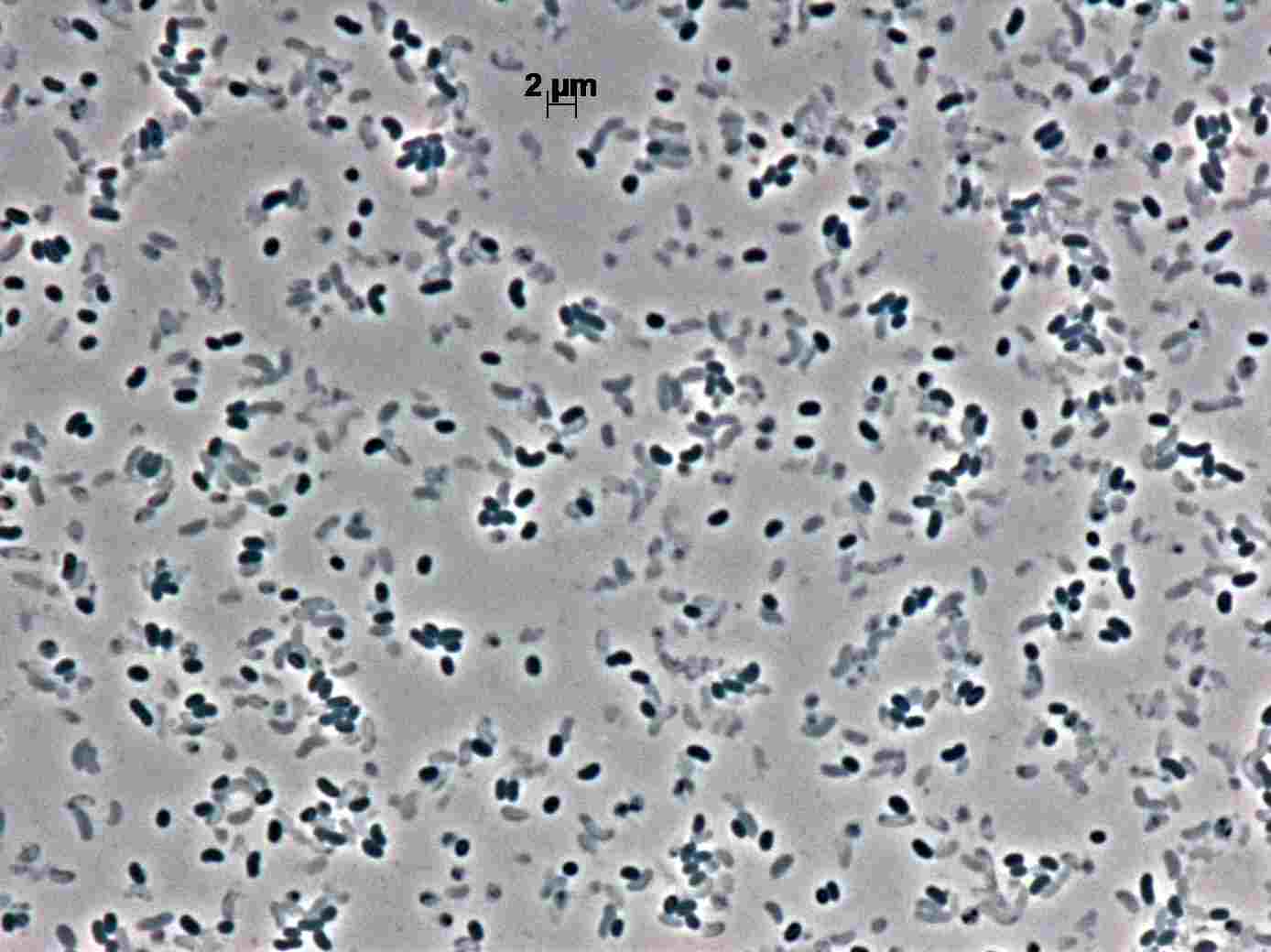
Image source: Wikipedia/Wikimedia
| Ecology, Host, and Life Cycle | |
|---|---|
| Oxygen requirements | Facultative |
| Optimal temperature | Not Available |
| Temperature range | Mesophilic |
| Habitat | HostAssociated |
| Biotic relationship | Free living |
| Host(s) | Homo sapiens |
| Cell arrangement | Singles |
| Sporulation | Nonsporulating |
| Energy source | Heterotroph |
| Pathogenicity | Animal |
Gene Summary
Adenine Count
1121298 bp
Thymine Count
1121020 bp
Guanine Count
897551 bp
Cytosine Count
905695 bp
Genome Length
4097728 bp
Protein-coding Genes
3439 genes
Non-Coding Genes
85 genes
# of Chromosomes/Plasmids
1
Genes
| Name | Locus Tag | UniProt ID | Strand Orientation | Gene Start/End | Protein Molecular Weight |
|---|---|---|---|---|---|
| hypothetical protein | A1QY_09490 | Not Available | Negative | 3237207 - 3237470 | 9696.44 |
| elongation factor p hydroxylase | A1QY_09495 | Not Available | Negative | 3237503 - 3238033 | 20419.3 |
| hypothetical protein | A1QY_09500 | Not Available | Positive | 3238268 - 3238891 | 22233.2 |
| chorismate synthase | A1QY_09505 | Not Available | Negative | 3239044 - 3240129 | 39190.7 |
| ribosomal protein l3 n(5)-glutamine methyltransferase | A1QY_09510 | Not Available | Negative | 3240314 - 3241246 | 35118.0 |
| hypothetical protein | A1QY_09515 | Not Available | Positive | 3241310 - 3241840 | 20212.3 |
| flagellar biosynthesis protein flhb | A1QY_09520 | Not Available | Negative | 3241897 - 3243027 | 41993.8 |
| flagellar biosynthetic protein flir | A1QY_09525 | Not Available | Negative | 3243037 - 3243819 | 28897.5 |
| flagellar export apparatus protein fliq | A1QY_09530 | Not Available | Negative | 3243828 - 3244097 | 10314.3 |
| flagellar biosynthetic protein flip | A1QY_09535 | Not Available | Negative | 3244109 - 3245008 | 32356.4 |
Pathways
0 pathways
No pathways found
No metabolic pathways have been associated with this bacterium yet.
Health Effects
| Health Condition | Relation | Reference |
|---|---|---|
| Vibriosis | Causes | PMC8416912 |
| Vibriosis | Causes | PMC11577842 |
| Vibriosis | Causes | PMC11790442 |
| Hemorrhagic septicemia | Causes | PMC11790442 |


