
Kingdom
Pseudomonadati
Phylum
Pseudomonadota
Class
Gammaproteobacteria
Order
Vibrionales
Family
Vibrionaceae
Genus
Vibrio
Description
Taxonomy
| Kingdom | Pseudomonadati |
|---|---|
| Phylum | Pseudomonadota |
| Class | Gammaproteobacteria |
| Order | Vibrionales |
| Family | Vibrionaceae |
| Genus | Vibrio |
| Species | Vibrio anguillarum |
| Strain | strain 12B09 |
Profile
| Physiology | |
|---|---|
| Gram staining properties | Negative |
| Shape | CurvedShaped |
| Mobility | Yes |
| Flagellar presence | Not Available |
| Number of membranes | Not Available |
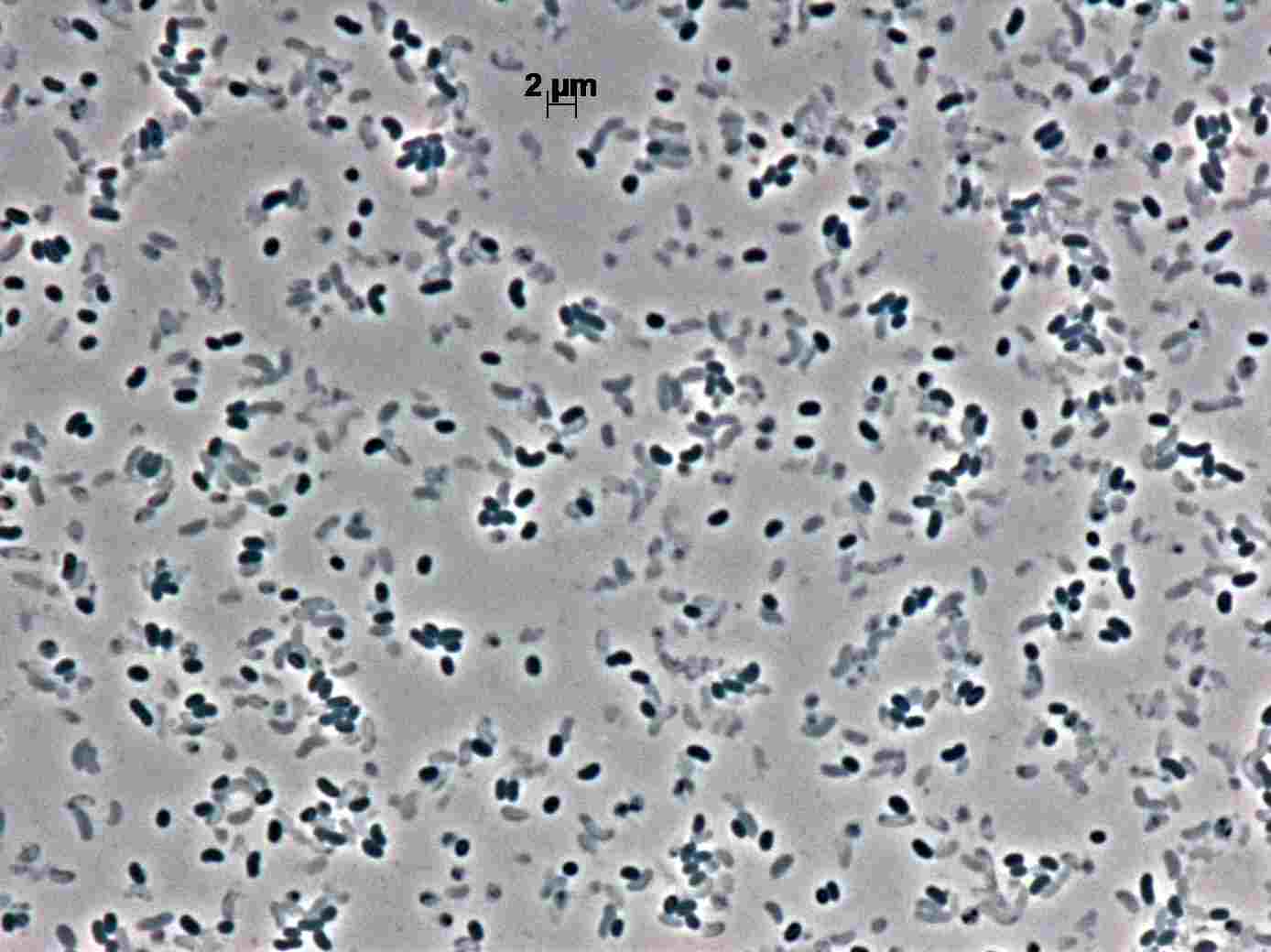
Image source: Wikipedia/Wikimedia
| Ecology, Host, and Life Cycle | |
|---|---|
| Oxygen requirements | Facultative |
| Optimal temperature | Not Available |
| Temperature range | Mesophilic |
| Habitat | HostAssociated |
| Biotic relationship | Free living |
| Host(s) | Homo sapiens |
| Cell arrangement | Singles |
| Sporulation | Nonsporulating |
| Energy source | Heterotroph |
| Pathogenicity | Animal |
Gene Summary
Adenine Count
1121298 bp
Thymine Count
1121020 bp
Guanine Count
897551 bp
Cytosine Count
905695 bp
Genome Length
4097728 bp
Protein-coding Genes
3439 genes
Non-Coding Genes
85 genes
# of Chromosomes/Plasmids
1
Genes
| Name | Locus Tag | UniProt ID | Strand Orientation | Gene Start/End | Protein Molecular Weight |
|---|---|---|---|---|---|
| zn-dependent hydrolase | A1QY_06910 | Not Available | Negative | 2649151 - 2649927 | 29932.5 |
| glycerophosphoryl diester phosphodiesterase | A1QY_06915 | Not Available | Positive | 2650093 - 2650800 | 26523.8 |
| caax protease | A1QY_06920 | Not Available | Positive | 2650919 - 2651752 | 31130.9 |
| aminopeptidase | A1QY_06925 | Not Available | Positive | 2651942 - 2653453 | 54879.8 |
| maleylacetoacetate isomerase | A1QY_06930 | Not Available | Negative | 2653494 - 2654144 | 24342.2 |
| 2-keto-4-pentenoate hydratase | A1QY_06935 | Not Available | Negative | 2654141 - 2655154 | 36734.8 |
| homogentisate 1,2-dioxygenase | A1QY_06940 | Not Available | Negative | 2655178 - 2656308 | 43056.5 |
| 4-hydroxyphenylpyruvate dioxygenase | A1QY_06945 | Not Available | Negative | 2656301 - 2657374 | 40226.6 |
| peptidase m20 | A1QY_06950 | Not Available | Positive | 2657934 - 2659040 | 39394.3 |
| chromosome partitioning protein para | A1QY_06955 | Not Available | Negative | 2659109 - 2659843 | 27919.0 |
Pathways
0 pathways
No pathways found
No metabolic pathways have been associated with this bacterium yet.
Health Effects
| Health Condition | Relation | Reference |
|---|---|---|
| Vibriosis | Causes | PMC8416912 |
| Vibriosis | Causes | PMC11577842 |
| Vibriosis | Causes | PMC11790442 |
| Hemorrhagic septicemia | Causes | PMC11790442 |


