
Kingdom
Pseudomonadati
Phylum
Pseudomonadota
Class
Gammaproteobacteria
Order
Vibrionales
Family
Vibrionaceae
Genus
Vibrio
Description
Taxonomy
| Kingdom | Pseudomonadati |
|---|---|
| Phylum | Pseudomonadota |
| Class | Gammaproteobacteria |
| Order | Vibrionales |
| Family | Vibrionaceae |
| Genus | Vibrio |
| Species | Vibrio anguillarum |
| Strain | strain 12B09 |
Profile
| Physiology | |
|---|---|
| Gram staining properties | Negative |
| Shape | CurvedShaped |
| Mobility | Yes |
| Flagellar presence | Not Available |
| Number of membranes | Not Available |
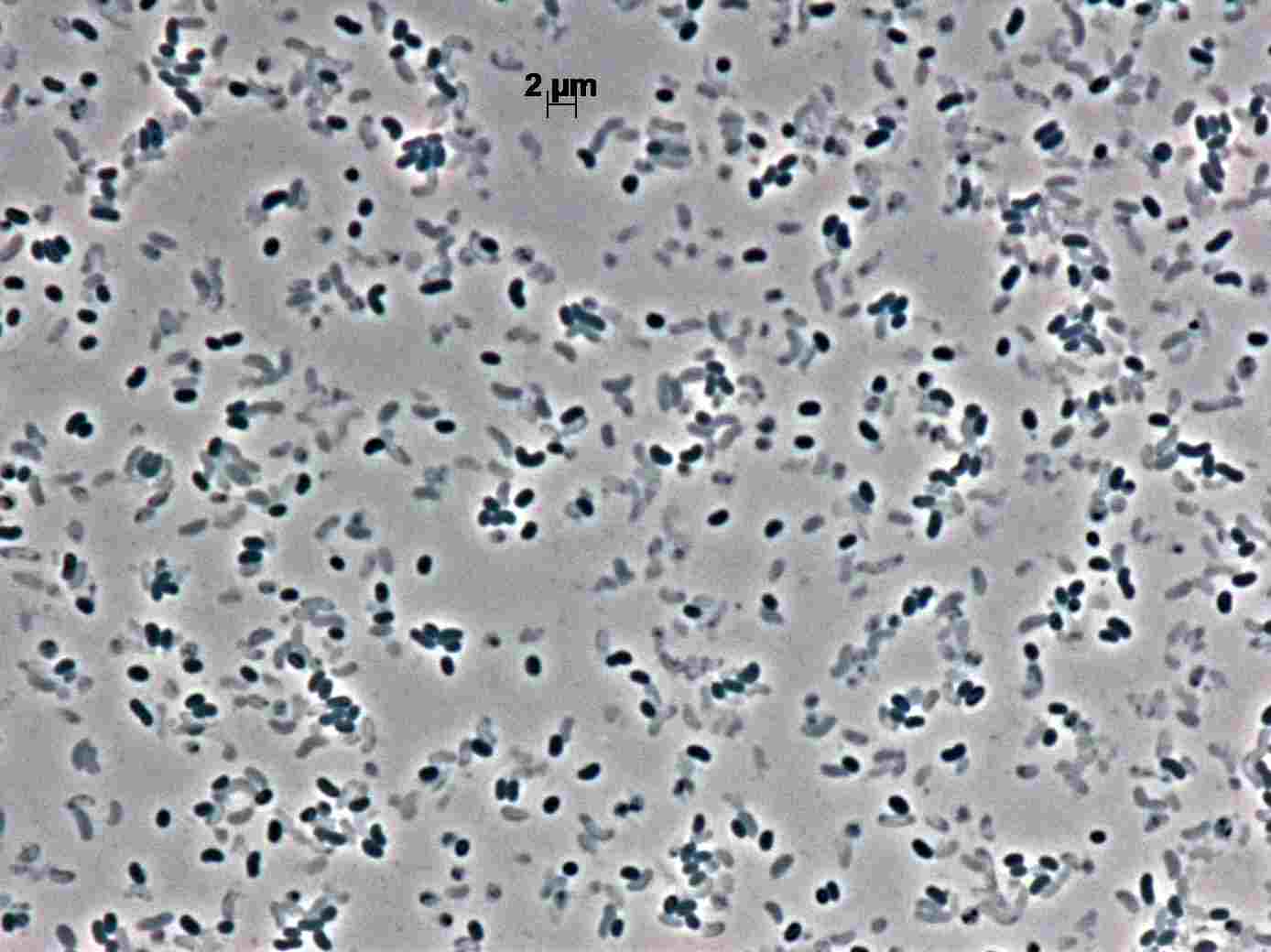
Image source: Wikipedia/Wikimedia
| Ecology, Host, and Life Cycle | |
|---|---|
| Oxygen requirements | Facultative |
| Optimal temperature | Not Available |
| Temperature range | Mesophilic |
| Habitat | HostAssociated |
| Biotic relationship | Free living |
| Host(s) | Homo sapiens |
| Cell arrangement | Singles |
| Sporulation | Nonsporulating |
| Energy source | Heterotroph |
| Pathogenicity | Animal |
Gene Summary
Adenine Count
1121298 bp
Thymine Count
1121020 bp
Guanine Count
897551 bp
Cytosine Count
905695 bp
Genome Length
4097728 bp
Protein-coding Genes
3439 genes
Non-Coding Genes
85 genes
# of Chromosomes/Plasmids
1
Genes
| Name | Locus Tag | UniProt ID | Strand Orientation | Gene Start/End | Protein Molecular Weight |
|---|---|---|---|---|---|
| hslu--hslv peptidase atpase subunit | A1QY_02390 | Not Available | Negative | 1616741 - 1618072 | 50062.4 |
| hslu--hslv peptidase proteolytic subunit | A1QY_02395 | Not Available | Negative | 1618108 - 1618674 | 20344.3 |
| cell division protein ftsn | A1QY_02400 | Not Available | Negative | 1618795 - 1619337 | 20568.0 |
| dna-binding transcriptional regulator cytr | A1QY_02405 | Not Available | Negative | 1619440 - 1620447 | 36799.6 |
| primosomal protein n' | A1QY_02410 | Not Available | Negative | 1620753 - 1622954 | 81788.1 |
| 50s ribosomal protein l31 | A1QY_02415 | Not Available | Positive | 1623223 - 1623438 | 7802.24 |
| malate dehydrogenase | A1QY_02420 | Not Available | Positive | 1623644 - 1624921 | 46310.9 |
| met repressor | A1QY_02425 | Not Available | Negative | 1625070 - 1625396 | 12362.6 |
| o-succinylhomoserine (thiol)-lyase | A1QY_02430 | Not Available | Positive | 1625790 - 1626956 | 42271.4 |
| bifunctional aspartate kinase/homoserine dehydrogenase ii | A1QY_02435 | Not Available | Positive | 1626956 - 1629367 | 88265.3 |
Pathways
0 pathways
No pathways found
No metabolic pathways have been associated with this bacterium yet.
Health Effects
| Health Condition | Relation | Reference |
|---|---|---|
| Vibriosis | Causes | PMC8416912 |
| Vibriosis | Causes | PMC11577842 |
| Vibriosis | Causes | PMC11790442 |
| Hemorrhagic septicemia | Causes | PMC11790442 |


