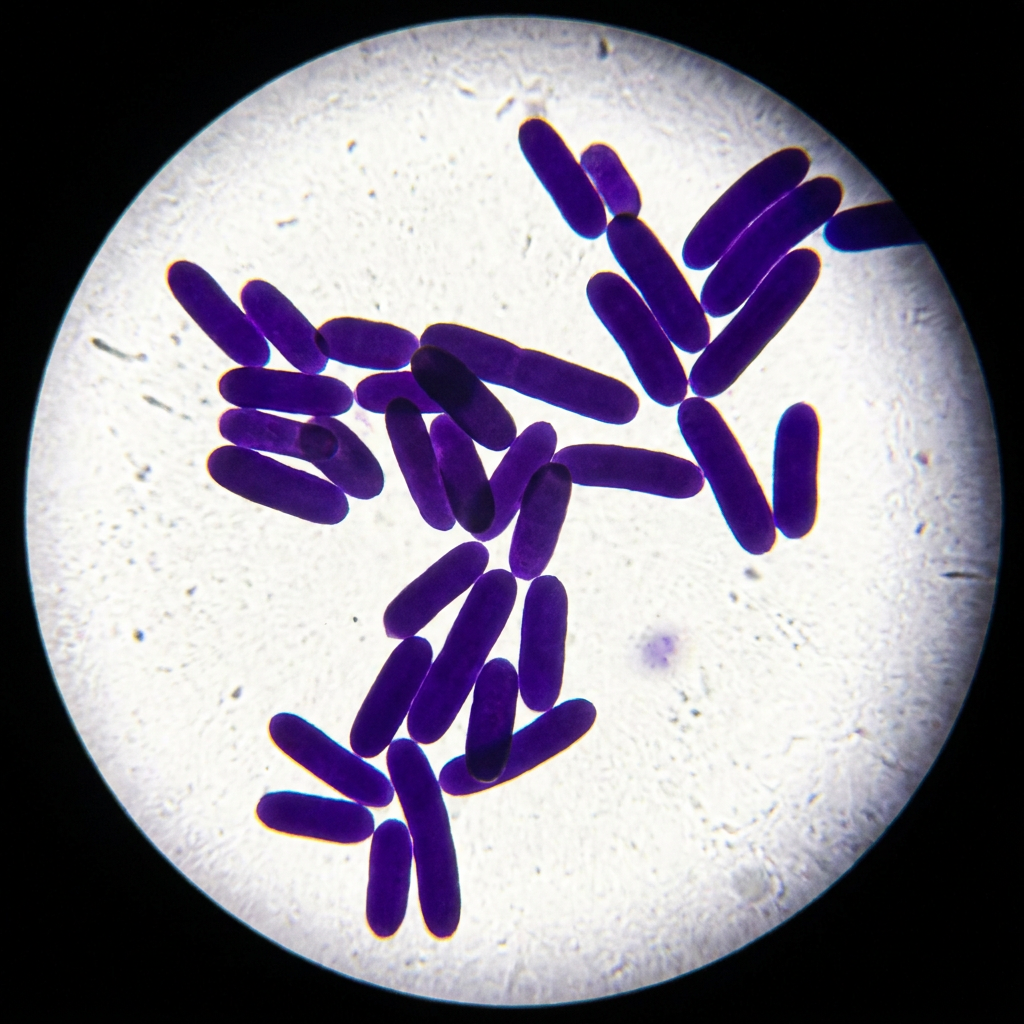
Pseudoflavonifractor capillosus ATCC 29799

BacilliNon-motileanaerobic

Kingdom

Bacillati

Phylum

Bacillota

Class

Clostridia

Order

Eubacteriales

Family

Oscillospiraceae

Genus

Pseudoflavonifractor

Description

Pseudoflavonifractor capillosus ATCC 29799 is a Gram-negative bacterium characterized as a chemoheterotroph, indicating that it derives its energy and carbon from organic compounds. This organism is strictly anaerobic, thriving in environments devoid of oxygen, which is a critical trait for its survival and metabolic processes. Morphologically, P. capillosus exhibits a bacilli shape, which is typical for many bacteria within its classification. Notably, it lacks mobility, suggesting that it does not possess flagella or other structures for locomotion. This immobility could influence its ecological niche, potentially limiting its ability to colonize new environments and instead relying on passive means for distribution. Pseudoflavonifractor capillosus is characterized by having one replicon, which denotes a single circular DNA molecule that contains its genetic information. This trait is significant in understanding its genetic structure and replication mechanisms. The genome of P. capillosus is accessible via the accession number AAXG00000000.2, providing a resource for researchers interested in its genetic and functional characteristics. In summary, Pseudoflavonifractor capillosus ATCC 29799 exemplifies a specialized anaerobic bacterium with a distinct ecological role, potentially contributing to organic matter decomposition in anoxic environments. Its adaptations to an anaerobic lifestyle underscore the diversity of microbial life and the various ecological niches that bacteria occupy.

Taxonomy

KingdomBacillati
PhylumBacillota
ClassClostridia
OrderEubacteriales
FamilyOscillospiraceae
GenusPseudoflavonifractor
SpeciesPseudoflavonifractor capillosus
StrainATCC 29799

Profile

Physiology
Gram staining propertiesNegative
ShapeBacilli
MobilityNo
Flagellar presenceNot Available
Number of membranesNot Available
Ecology, Host, and Life Cycle
Oxygen requirementsanaerobic
Optimal temperatureNot Available
Temperature rangeNot Available
HabitatNot Available
Biotic relationshipNot Available
Host(s)Not Available
Cell arrangementNot Available
SporulationNot Available
Energy sourceChemoheterotroph
PathogenicityNot Available

Genome Summary

Pseudoflavonifractor capillosus ATCC 29799

Gene Summary

Adenine Count

867304 bp

Thymine Count

867049 bp

Guanine Count

1248625 bp

Cytosine Count

1258875 bp

Genome Length

4241853 bp

Protein-coding Genes

4833 genes

Non-Coding Genes

62 genes

# of Chromosomes/Plasmids

1

Genes

NameLocus TagUniProt IDStrand OrientationGene Start/EndProtein Molecular Weight
stage ii sporulation protein dBACCAP_03080P07372Positive2676118 - 267713435019.1
hypothetical proteinBACCAP_03081Not AvailableNegative2677187 - 267766917479.1
cobw/p47k family proteinBACCAP_03082P33030Negative2677648 - 267808515664.9
abc transporter, permease proteinBACCAP_03083P40401Negative2678107 - 267902132925.7
abc transporter, atp-binding proteinBACCAP_03084P38046Negative2679018 - 267979127145.9
hypothetical proteinBACCAP_03085Not AvailableNegative2679815 - 268092139832.4
hypothetical proteinBACCAP_03086Not AvailableNegative2680952 - 268154220955.4
hypothetical proteinBACCAP_03087Not AvailablePositive2681774 - 268320452385.6
hypothetical proteinBACCAP_03088Not AvailablePositive2683243 - 268360813412.2
hypothetical proteinBACCAP_03089Not AvailableNegative2683644 - 26837694614.54

Displaying genes 3081 – 3090 of 4895 in total

Metabolites

746 records
Metabolite IDMetabolite nameStructureCAS number
BASm0000217alpha-ribazoleC14H18N2O4Chemical structure of alpha-ribazoleNot available
Average278.3037Da
Monoisotopic278.126657074Da
BASm0000237(R)-4'-phosphopantothenateC9H18NO8PChemical structure of (R)-4'-phosphopantothenateNot available
Average299.2149Da
Monoisotopic299.0770031Da
BASm00002502,5-didehydro-D-gluconateC6H7O7Chemical structure of 2,5-didehydro-D-gluconate53736-12-2
Average191.1156Da
Monoisotopic191.019177578Da
BASm00002512-dehydropantoateC6H9O4Chemical structure of 2-dehydropantoateNot available
Average145.1333Da
Monoisotopic145.050083776Da
BASm00002532-oxopent-4-enoateC5H5O3Chemical structure of 2-oxopent-4-enoateNot available
Average113.093Da
Monoisotopic113.024417601Da
BASm0000274aldehydo-D-galacturonateC6H9O7Chemical structure of aldehydo-D-galacturonateNot available
Average193.132Da
Monoisotopic193.0353762Da
BASm0000344(2R,3S)-homoisocitrateC7H7O7Chemical structure of (2R,3S)-homoisocitrateNot available
Average203.128Da
Monoisotopic203.020823305Da
BASm0000377(S)-malateC4H4O5Chemical structure of (S)-malateNot available
Average132.0716Da
Monoisotopic132.005873238Da
BASm0000387(6R)-5,10-methylene-5,6,7,8-tetrahydrofolateC20H21N7O6Chemical structure of (6R)-5,10-methylene-5,6,7,8-tetrahydrofolateNot available
Average455.432Da
Monoisotopic455.1564286Da
BASm0000399(S)-allantoinC4H6N4O3Chemical structure of (S)-allantoin97-59-6
Average158.1154Da
Monoisotopic158.0439901Da

Displaying 1–10 of 746 metabolites

Health Effects

No health effects information available for this bacterium.