Kingdom
Pseudomonadati
Phylum
Pseudomonadota
Class
Betaproteobacteria
Order
Neisseriales
Family
Chromobacteriaceae
Genus
Chromobacterium
Description
Taxonomy
| Kingdom | Pseudomonadati |
|---|---|
| Phylum | Pseudomonadota |
| Class | Betaproteobacteria |
| Order | Neisseriales |
| Family | Chromobacteriaceae |
| Genus | Chromobacterium |
| Species | Chromobacterium phragmitis |
| Strain | No strain |
Profile
| Physiology | |
|---|---|
| Gram staining properties | Not Available |
| Shape | Not Available |
| Mobility | Not Available |
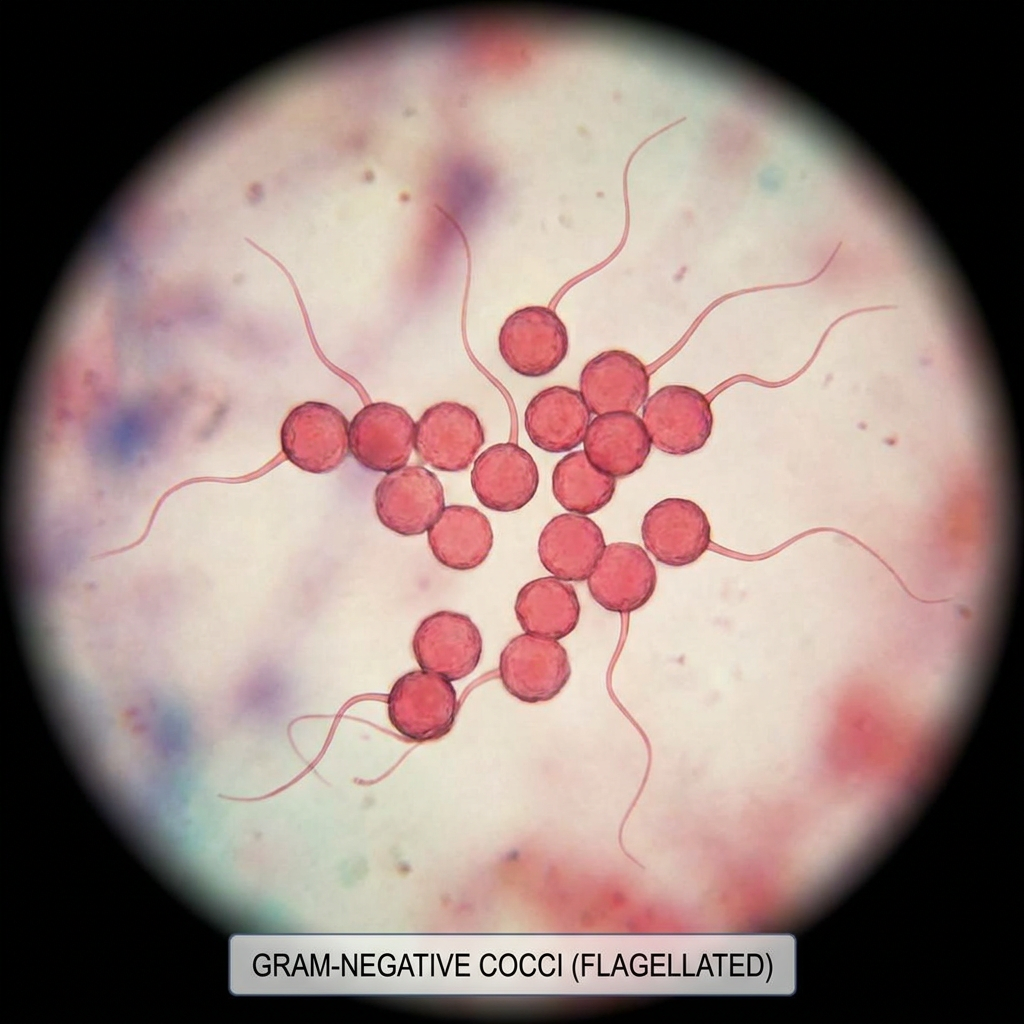
| Flagellar presence | Yes |
| Number of membranes | Not Available |
| Ecology, Host, and Life Cycle | |
|---|---|
| Oxygen requirements | Not Available |
| Optimal temperature | Not Available |
| Temperature range | Not Available |
| Habitat | Not Available |
| Biotic relationship | Not Available |
| Host(s) | Not Available |
| Cell arrangement | Not Available |
| Sporulation | Not Available |
| Energy source | Not Available |
| Pathogenicity | Not Available |
Gene Summary
Adenine Count
854857 bp
Thymine Count
849484 bp
Guanine Count
1506493 bp
Cytosine Count
1516111 bp
Genome Length
4726945 bp
Protein-coding Genes
4314 genes
Non-Coding Genes
264 genes
# of Chromosomes/Plasmids
1
Genes
| Name | Locus Tag | UniProt ID | Strand Orientation | Gene Start/End | Protein Molecular Weight |
|---|---|---|---|---|---|
| pgll family o-oligosaccharyltransferase | DK843_RS15895 | Not Available | Positive | 3325397 - 3327181 | 66137.4 |
| rna polymerase sigma factor rpoh | DK843_RS15900 | Not Available | Negative | 3327261 - 3328124 | 32233.3 |
| permease-like cell division protein ftsx | DK843_RS15905 | Not Available | Negative | 3328254 - 3329162 | 33129.9 |
| cell division atp-binding protein ftse | DK843_RS15910 | Not Available | Negative | 3329159 - 3329812 | 24151.6 |
| signal recognition particle-docking protein ftsy | DK843_RS15915 | Not Available | Negative | 3329868 - 3330773 | 32219.1 |
| 16s rrna (guanine(966)-n(2))-methyltransferase rsmd | DK843_RS15920 | Not Available | Positive | 3331245 - 3331799 | 20561.5 |
| yfhl family 4fe-4s dicluster ferredoxin | DK843_RS15925 | Not Available | Positive | 3331909 - 3332160 | 9298.87 |
| Trna-tyr | Not Available | Not Available | Positive | 3332300 - 3332384 | Not Available |
| Trna-gly | Not Available | Not Available | Positive | 3332438 - 3332511 | Not Available |
| Trna-thr | Not Available | Not Available | Positive | 3332538 - 3332612 | Not Available |
Pathways
0 pathways
No pathways found
No metabolic pathways have been associated with this bacterium yet.
Health Effects
No health effects information available for this bacterium.