Kingdom
Pseudomonadati
Phylum
Pseudomonadota
Class
Betaproteobacteria
Order
Neisseriales
Family
Chromobacteriaceae
Genus
Chromobacterium
Description
Taxonomy
| Kingdom | Pseudomonadati |
|---|---|
| Phylum | Pseudomonadota |
| Class | Betaproteobacteria |
| Order | Neisseriales |
| Family | Chromobacteriaceae |
| Genus | Chromobacterium |
| Species | Chromobacterium phragmitis |
| Strain | No strain |
Profile
| Physiology | |
|---|---|
| Gram staining properties | Not Available |
| Shape | Not Available |
| Mobility | Not Available |
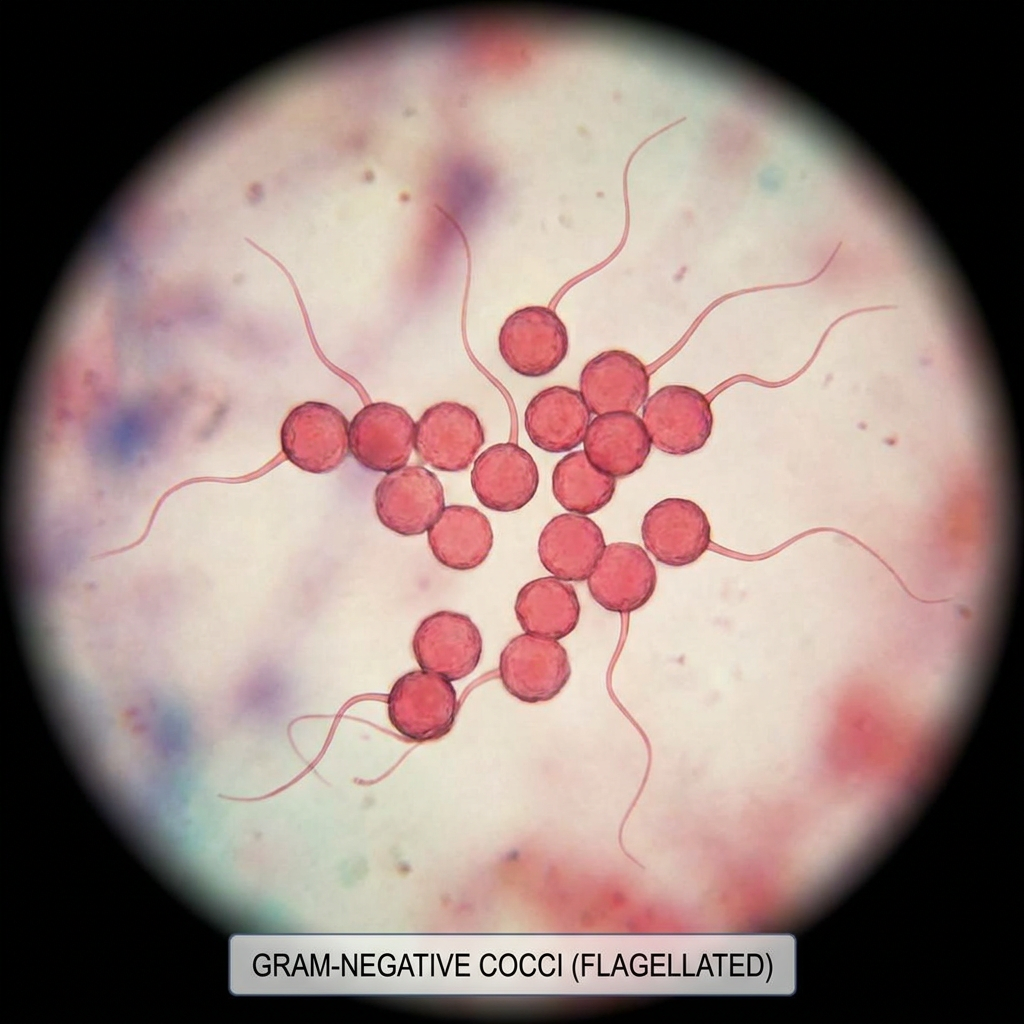
| Flagellar presence | Yes |
| Number of membranes | Not Available |
| Ecology, Host, and Life Cycle | |
|---|---|
| Oxygen requirements | Not Available |
| Optimal temperature | Not Available |
| Temperature range | Not Available |
| Habitat | Not Available |
| Biotic relationship | Not Available |
| Host(s) | Not Available |
| Cell arrangement | Not Available |
| Sporulation | Not Available |
| Energy source | Not Available |
| Pathogenicity | Not Available |
Gene Summary
Adenine Count
854857 bp
Thymine Count
849484 bp
Guanine Count
1506493 bp
Cytosine Count
1516111 bp
Genome Length
4726945 bp
Protein-coding Genes
4314 genes
Non-Coding Genes
264 genes
# of Chromosomes/Plasmids
1
Genes
| Name | Locus Tag | UniProt ID | Strand Orientation | Gene Start/End | Protein Molecular Weight |
|---|---|---|---|---|---|
| nyn domain-containing protein | DK843_RS13030 | Not Available | Positive | 2707308 - 2708189 | 32023.1 |
| gnat family n-acetyltransferase | DK843_RS13035 | Not Available | Positive | 2708256 - 2708780 | 19121.5 |
| chloride channel protein | DK843_RS13040 | Not Available | Negative | 2708740 - 2710044 | 45192.6 |
| aspartate carbamoyltransferase regulatory subunit | DK843_RS13045 | Not Available | Negative | 2710205 - 2710663 | 16987.7 |
| aspartate carbamoyltransferase | DK843_RS13050 | Not Available | Negative | 2710683 - 2711603 | 33886.6 |
| hd-gyp domain-containing protein | DK843_RS13055 | Not Available | Positive | 2712040 - 2713254 | 45140.7 |
| 16s rrna (uracil(1498)-n(3))-methyltransferase | DK843_RS13060 | Not Available | Negative | 2713398 - 2714123 | 26186.5 |
| inositol monophosphatase family protein | DK843_RS13065 | Not Available | Positive | 2714218 - 2715009 | 29272.0 |
| lar family restriction alleviation protein | DK843_RS13070 | Not Available | Negative | 2715013 - 2715204 | 6953.42 |
| sgnh/gdsl hydrolase family protein | DK843_RS13075 | Not Available | Negative | 2715284 - 2716618 | 48520.4 |
Pathways
0 pathways
No pathways found
No metabolic pathways have been associated with this bacterium yet.
Health Effects
No health effects information available for this bacterium.