Kingdom
Pseudomonadati
Phylum
Pseudomonadota
Class
Betaproteobacteria
Order
Neisseriales
Family
Chromobacteriaceae
Genus
Chromobacterium
Description
Taxonomy
| Kingdom | Pseudomonadati |
|---|---|
| Phylum | Pseudomonadota |
| Class | Betaproteobacteria |
| Order | Neisseriales |
| Family | Chromobacteriaceae |
| Genus | Chromobacterium |
| Species | Chromobacterium phragmitis |
| Strain | No strain |
Profile
| Physiology | |
|---|---|
| Gram staining properties | Not Available |
| Shape | Not Available |
| Mobility | Not Available |
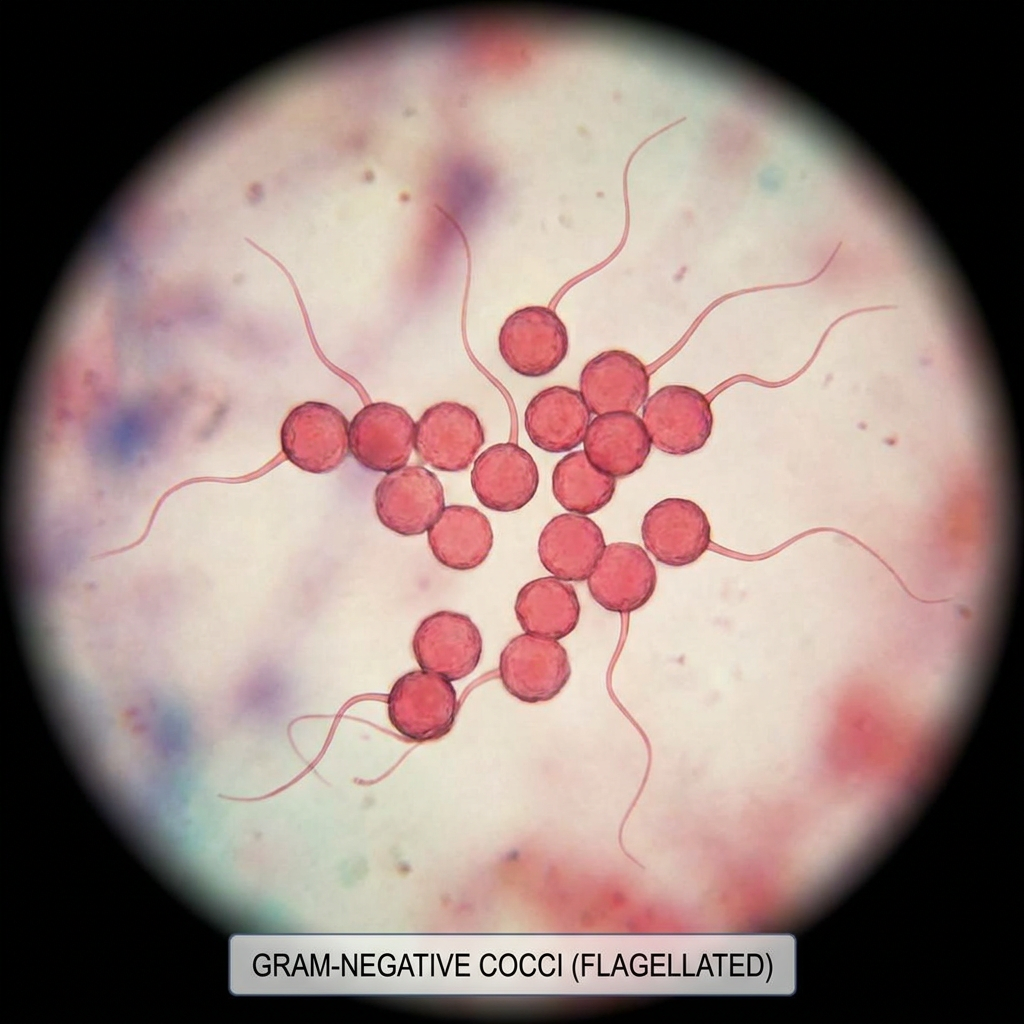
| Flagellar presence | Yes |
| Number of membranes | Not Available |
| Ecology, Host, and Life Cycle | |
|---|---|
| Oxygen requirements | Not Available |
| Optimal temperature | Not Available |
| Temperature range | Not Available |
| Habitat | Not Available |
| Biotic relationship | Not Available |
| Host(s) | Not Available |
| Cell arrangement | Not Available |
| Sporulation | Not Available |
| Energy source | Not Available |
| Pathogenicity | Not Available |
Gene Summary
Adenine Count
854857 bp
Thymine Count
849484 bp
Guanine Count
1506493 bp
Cytosine Count
1516111 bp
Genome Length
4726945 bp
Protein-coding Genes
4314 genes
Non-Coding Genes
264 genes
# of Chromosomes/Plasmids
1
Genes
| Name | Locus Tag | UniProt ID | Strand Orientation | Gene Start/End | Protein Molecular Weight |
|---|---|---|---|---|---|
| phosphoribosyl-amp cyclohydrolase | DK843_RS11705 | Not Available | Negative | 2421971 - 2422354 | 14344.0 |
| imidazole glycerol phosphate synthase subunit hisf | DK843_RS11710 | Not Available | Negative | 2422351 - 2423115 | 27288.6 |
| 1-(5-phosphoribosyl)-5-[(5- phosphoribosylamino)methylideneamino]imidazole-4- carboxamide isomerase | DK843_RS11715 | Not Available | Negative | 2423185 - 2423925 | 26057.3 |
| imidazole glycerol phosphate synthase subunit hish | DK843_RS11720 | Not Available | Negative | 2423947 - 2424585 | 23413.9 |
| imidazoleglycerol-phosphate dehydratase hisb | DK843_RS11725 | Not Available | Negative | 2424582 - 2425175 | 21671.8 |
| histidinol-phosphate transaminase | DK843_RS11730 | Not Available | Negative | 2425180 - 2426250 | 38332.5 |
| abc transporter substrate-binding protein | DK843_RS11735 | Not Available | Negative | 2426330 - 2427316 | 36670.3 |
| histidinol dehydrogenase | DK843_RS11740 | Not Available | Negative | 2427405 - 2428697 | 45765.7 |
| atp phosphoribosyltransferase | DK843_RS11745 | Not Available | Negative | 2428785 - 2429426 | 22744.0 |
| flagellar brake protein | DK843_RS11750 | Not Available | Negative | 2429464 - 2430231 | 28488.4 |
Pathways
0 pathways
No pathways found
No metabolic pathways have been associated with this bacterium yet.
Health Effects
No health effects information available for this bacterium.