Kingdom
Pseudomonadati
Phylum
Pseudomonadota
Class
Betaproteobacteria
Order
Neisseriales
Family
Chromobacteriaceae
Genus
Chromobacterium
Description
Taxonomy
| Kingdom | Pseudomonadati |
|---|---|
| Phylum | Pseudomonadota |
| Class | Betaproteobacteria |
| Order | Neisseriales |
| Family | Chromobacteriaceae |
| Genus | Chromobacterium |
| Species | Chromobacterium phragmitis |
| Strain | No strain |
Profile
| Physiology | |
|---|---|
| Gram staining properties | Not Available |
| Shape | Not Available |
| Mobility | Not Available |
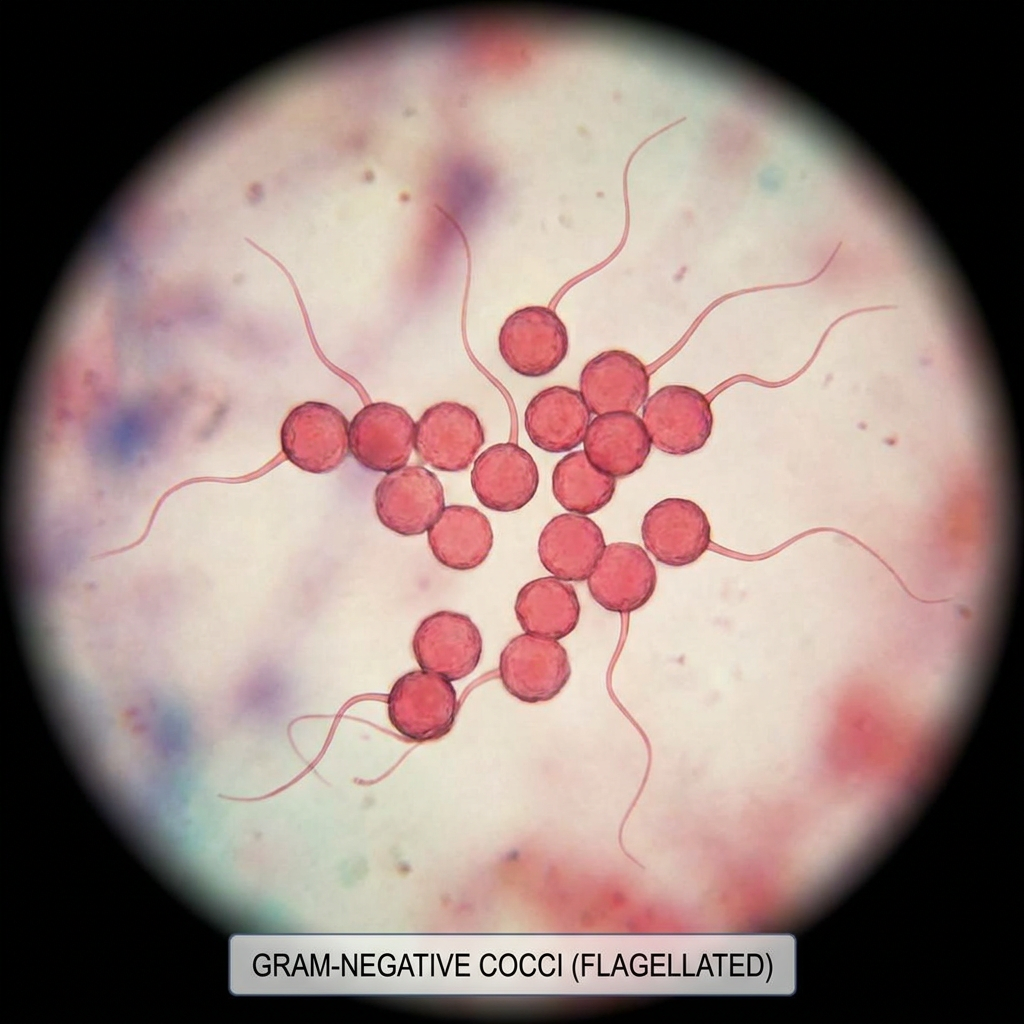
| Flagellar presence | Yes |
| Number of membranes | Not Available |
| Ecology, Host, and Life Cycle | |
|---|---|
| Oxygen requirements | Not Available |
| Optimal temperature | Not Available |
| Temperature range | Not Available |
| Habitat | Not Available |
| Biotic relationship | Not Available |
| Host(s) | Not Available |
| Cell arrangement | Not Available |
| Sporulation | Not Available |
| Energy source | Not Available |
| Pathogenicity | Not Available |
Gene Summary
Adenine Count
854857 bp
Thymine Count
849484 bp
Guanine Count
1506493 bp
Cytosine Count
1516111 bp
Genome Length
4726945 bp
Protein-coding Genes
4314 genes
Non-Coding Genes
264 genes
# of Chromosomes/Plasmids
1
Genes
| Name | Locus Tag | UniProt ID | Strand Orientation | Gene Start/End | Protein Molecular Weight |
|---|---|---|---|---|---|
| 3-dehydroquinate synthase | DK843_RS10760 | Not Available | Positive | 2237112 - 2238191 | 38516.1 |
| fimv family protein | DK843_RS10765 | Not Available | Positive | 2238311 - 2238691 | 14299.2 |
| lipid a export permease/atp-binding protein msba | DK843_RS10770 | Not Available | Negative | 2238760 - 2240517 | 63666.5 |
| o-antigen ligase family protein | DK843_RS10775 | Not Available | Negative | 2240785 - 2242104 | 48608.6 |
| glycosyltransferase family 9 protein | DK843_RS10780 | Not Available | Negative | 2242091 - 2243218 | 41491.4 |
| glycosyltransferase family 4 protein | DK843_RS10785 | Not Available | Negative | 2243248 - 2244393 | 42483.3 |
| putative lipopolysaccharide heptosyltransferase iii | DK843_RS10790 | Not Available | Negative | 2244393 - 2245472 | 39600.3 |
| phosphoenolpyruvate--protein phosphotransferase | DK843_RS10795 | Not Available | Negative | 2245490 - 2247229 | 64259.7 |
| hpr family phosphocarrier protein | DK843_RS10800 | Not Available | Negative | 2247406 - 2247675 | 9896.95 |
| pts sugar transporter subunit iia | DK843_RS10805 | Not Available | Negative | 2247662 - 2248069 | 14074.2 |
Pathways
0 pathways
No pathways found
No metabolic pathways have been associated with this bacterium yet.
Health Effects
No health effects information available for this bacterium.