
Kingdom
Pseudomonadati
Phylum
Pseudomonadota
Class
Gammaproteobacteria
Order
Pseudomonadales
Family
Pseudomonadaceae
Genus
Pseudomonas
Description
Taxonomy
| Kingdom | Pseudomonadati |
|---|---|
| Phylum | Pseudomonadota |
| Class | Gammaproteobacteria |
| Order | Pseudomonadales |
| Family | Pseudomonadaceae |
| Genus | Pseudomonas |
| Species | Pseudomonas sp. SWI36 |
| Strain | No strain |
Profile
| Physiology | |
|---|---|
| Gram staining properties | Not Available |
| Shape | Not Available |
| Mobility | Not Available |
| Flagellar presence | Not Available |
| Number of membranes | Not Available |
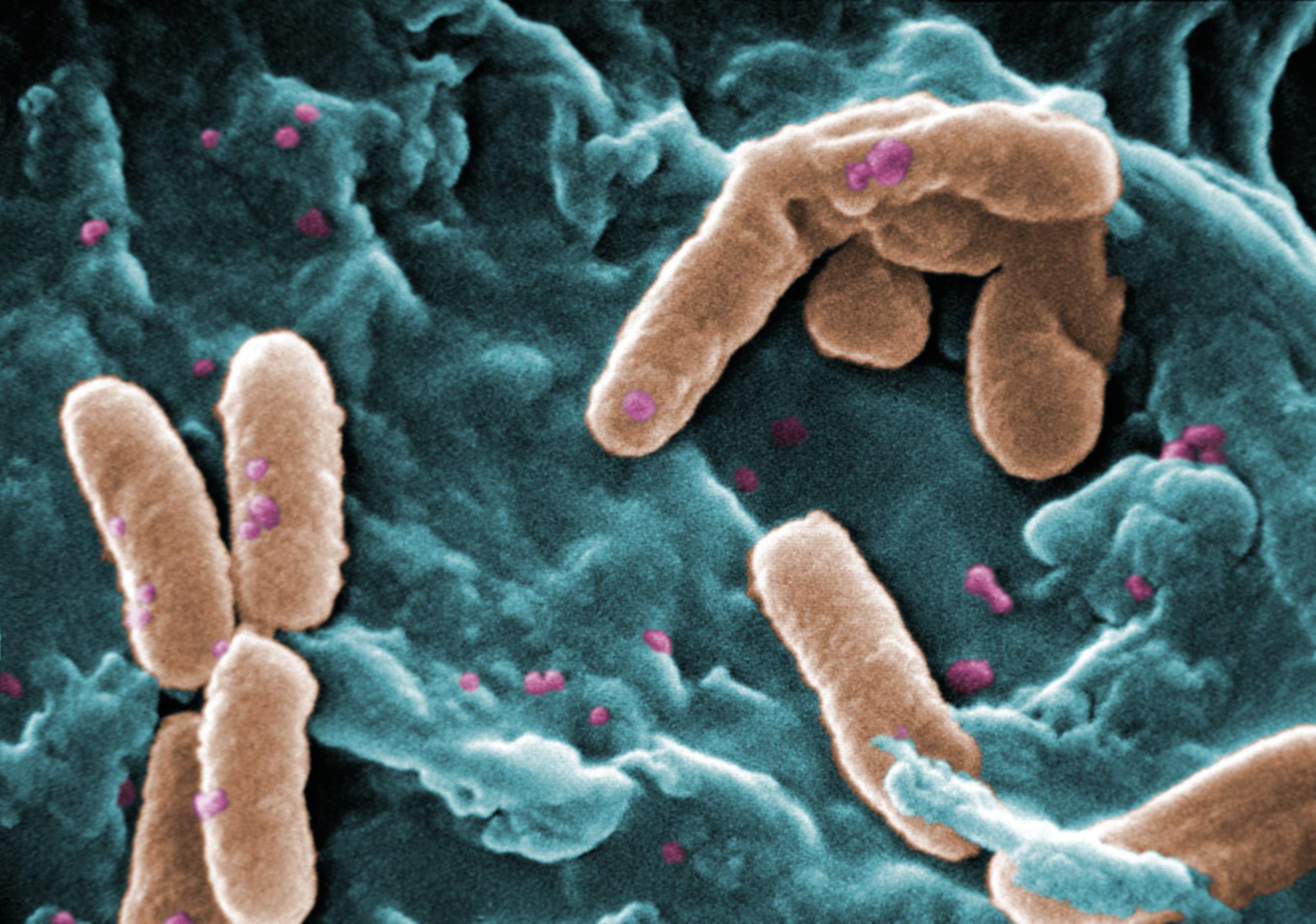
Image source: Wikipedia/Wikimedia
| Ecology, Host, and Life Cycle | |
|---|---|
| Oxygen requirements | Not Available |
| Optimal temperature | Not Available |
| Temperature range | Not Available |
| Habitat | Not Available |
| Biotic relationship | Not Available |
| Host(s) | Not Available |
| Cell arrangement | Not Available |
| Sporulation | Not Available |
| Energy source | Not Available |
| Pathogenicity | Not Available |
Gene Summary
Adenine Count
1175403 bp
Thymine Count
1180188 bp
Guanine Count
1908623 bp
Cytosine Count
1908042 bp
Genome Length
6172256 bp
Protein-coding Genes
5458 genes
Non-Coding Genes
167 genes
# of Chromosomes/Plasmids
1
Genes
| Name | Locus Tag | UniProt ID | Strand Orientation | Gene Start/End | Protein Molecular Weight |
|---|---|---|---|---|---|
| l-ornithine n(alpha)-acyltransferase | C4Q27_RS06525 | Not Available | Positive | 1323402 - 1324157 | 28025.8 |
| lysophospholipid acyltransferase family protein | C4Q27_RS06530 | Not Available | Positive | 1324157 - 1324945 | 29013.3 |
| acp phosphodiesterase | C4Q27_RS06535 | Not Available | Negative | 1325044 - 1325643 | 22491.1 |
| arsr/smtb family transcription factor | C4Q27_RS06540 | Not Available | Positive | 1325794 - 1326096 | 11285.5 |
| alkene reductase | C4Q27_RS06545 | Not Available | Positive | 1326114 - 1327163 | 37807.6 |
| hypothetical protein | C4Q27_RS06550 | Not Available | Negative | 1327270 - 1328139 | 30878.5 |
| nad-dependent epimerase/dehydratase family protein | C4Q27_RS06555 | Not Available | Negative | 1328213 - 1329205 | 37073.6 |
| lysr family transcriptional regulator argp | C4Q27_RS06560 | Not Available | Negative | 1329255 - 1330145 | 32639.6 |
| lyse/argo family amino acid transporter | C4Q27_RS06565 | Not Available | Positive | 1330247 - 1330846 | 21165.4 |
| superoxide dismutase | C4Q27_RS06570 | Not Available | Positive | 1331113 - 1331709 | 21939.6 |
Pathways
0 pathways
No pathways found
No metabolic pathways have been associated with this bacterium yet.
Health Effects
No health effects information available for this bacterium.


