
Kingdom
Bacillati
Phylum
Cyanobacteriota
Class
Cyanophyceae
Order
Leptolyngbyales
Family
Leptolyngbyaceae
Genus
Leptolyngbya
Description
Taxonomy
| Kingdom | Bacillati |
|---|---|
| Phylum | Cyanobacteriota |
| Class | Cyanophyceae |
| Order | Leptolyngbyales |
| Family | Leptolyngbyaceae |
| Genus | Leptolyngbya |
| Species | Leptolyngbya sp. 'hensonii' |
| Strain | No strain |
Profile
| Physiology | |
|---|---|
| Gram staining properties | Not Available |
| Shape | Filamentous |
| Mobility | Not Available |
| Flagellar presence | Not Available |
| Number of membranes | Not Available |
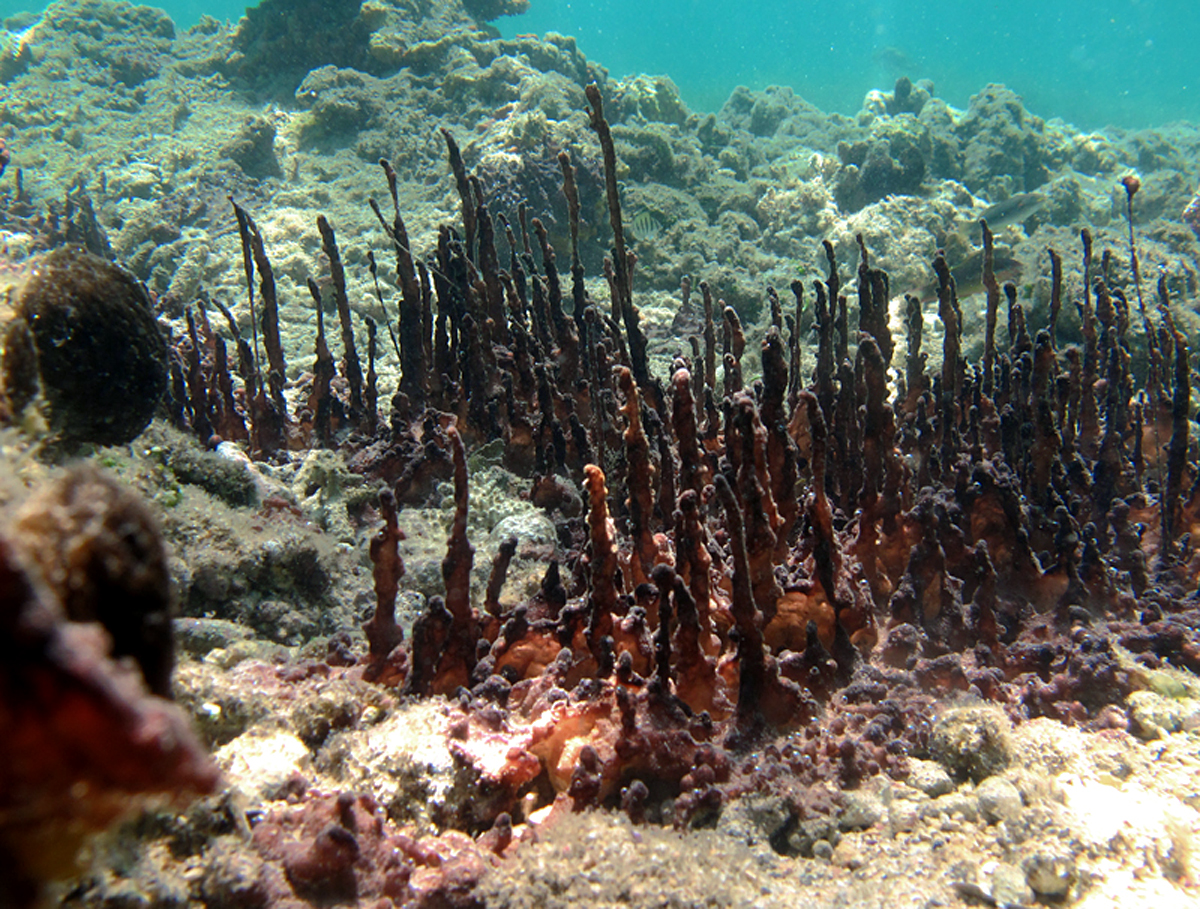
Image source: Wikipedia/Wikimedia
| Ecology, Host, and Life Cycle | |
|---|---|
| Oxygen requirements | Not Available |
| Optimal temperature | Not Available |
| Temperature range | Not Available |
| Habitat | Not Available |
| Biotic relationship | Not Available |
| Host(s) | Not Available |
| Cell arrangement | Not Available |
| Sporulation | Not Available |
| Energy source | Not Available |
| Pathogenicity | Not Available |
Gene Summary
Adenine Count
1415093 bp
Thymine Count
1417054 bp
Guanine Count
1552378 bp
Cytosine Count
1555278 bp
Genome Length
5940030 bp
Protein-coding Genes
5141 genes
Non-Coding Genes
87 genes
# of Chromosomes/Plasmids
1
Genes
| Name | Locus Tag | UniProt ID | Strand Orientation | Gene Start/End | Protein Molecular Weight |
|---|---|---|---|---|---|
| atp-dependent clp endopeptidase, proteolytic subunit clpp | BST81_13865 | Not Available | Positive | 3081051 - 3081740 | 24916.9 |
| atp-dependent protease atp-binding subunit clpx | BST81_13870 | Not Available | Positive | 3081755 - 3083113 | 50208.5 |
| alpha/beta hydrolase | BST81_13875 | Not Available | Positive | 3083122 - 3083988 | 33282.2 |
| dna methyltransferase | BST81_13880 | Not Available | Positive | 3084101 - 3084976 | 33469.1 |
| ribosomal protein l11 methyltransferase | BST81_13885 | Not Available | Negative | 3085054 - 3085947 | 33069.0 |
| phosphoglycerate dehydrogenase | BST81_13890 | Not Available | Negative | 3086092 - 3087672 | 56331.8 |
| hypothetical protein | BST81_13895 | Not Available | Positive | 3087850 - 3088377 | 18958.0 |
| phosphoribosyltransferase | BST81_13900 | Not Available | Negative | 3088374 - 3088898 | 19873.6 |
| mfs transporter | BST81_13905 | Not Available | Positive | 3088976 - 3090403 | 52654.1 |
| phosphate abc transporter substrate-binding protein psts | BST81_13910 | Not Available | Positive | 3090528 - 3091640 | 38854.9 |
Pathways
0 pathways
No pathways found
No metabolic pathways have been associated with this bacterium yet.
Health Effects
No health effects information available for this bacterium.