
Kingdom
Bacillati
Phylum
Cyanobacteriota
Class
Cyanophyceae
Order
Leptolyngbyales
Family
Leptolyngbyaceae
Genus
Leptolyngbya
Description
Taxonomy
| Kingdom | Bacillati |
|---|---|
| Phylum | Cyanobacteriota |
| Class | Cyanophyceae |
| Order | Leptolyngbyales |
| Family | Leptolyngbyaceae |
| Genus | Leptolyngbya |
| Species | Leptolyngbya sp. 'hensonii' |
| Strain | No strain |
Profile
| Physiology | |
|---|---|
| Gram staining properties | Not Available |
| Shape | Filamentous |
| Mobility | Not Available |
| Flagellar presence | Not Available |
| Number of membranes | Not Available |
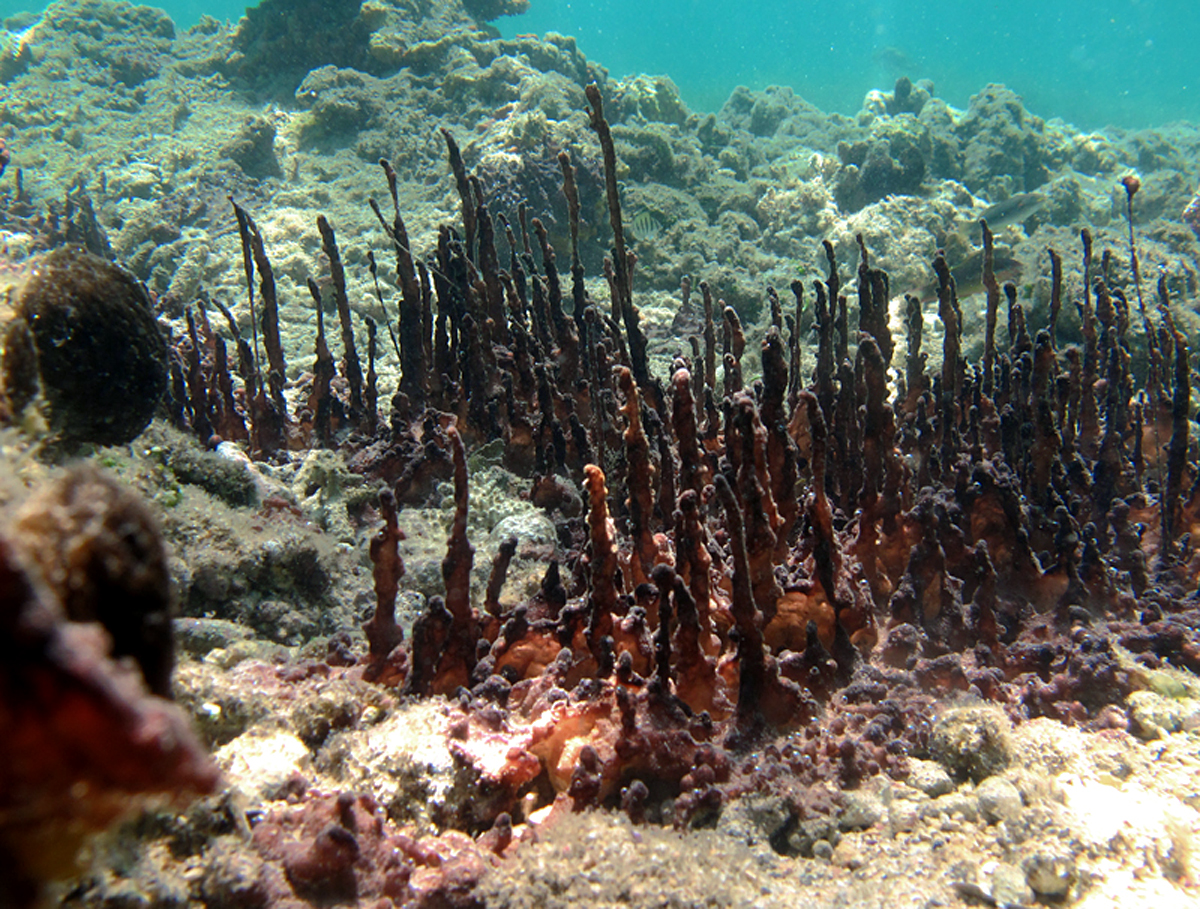
Image source: Wikipedia/Wikimedia
| Ecology, Host, and Life Cycle | |
|---|---|
| Oxygen requirements | Not Available |
| Optimal temperature | Not Available |
| Temperature range | Not Available |
| Habitat | Not Available |
| Biotic relationship | Not Available |
| Host(s) | Not Available |
| Cell arrangement | Not Available |
| Sporulation | Not Available |
| Energy source | Not Available |
| Pathogenicity | Not Available |
Gene Summary
Adenine Count
1415093 bp
Thymine Count
1417054 bp
Guanine Count
1552378 bp
Cytosine Count
1555278 bp
Genome Length
5940030 bp
Protein-coding Genes
5141 genes
Non-Coding Genes
87 genes
# of Chromosomes/Plasmids
1
Genes
| Name | Locus Tag | UniProt ID | Strand Orientation | Gene Start/End | Protein Molecular Weight |
|---|---|---|---|---|---|
| hypothetical protein | BST81_13665 | Not Available | Positive | 3045869 - 3046120 | 9420.39 |
| hypothetical protein | BST81_13670 | Not Available | Negative | 3046389 - 3048545 | 78915.4 |
| eama family transporter | BST81_13675 | Not Available | Negative | 3048826 - 3049896 | 38303.1 |
| two-component sensor histidine kinase | BST81_13680 | Not Available | Positive | 3050288 - 3051721 | 53355.1 |
| hypothetical protein | BST81_13685 | Not Available | Negative | 3051915 - 3052109 | 6878.49 |
| dna-binding response regulator | BST81_13690 | Not Available | Negative | 3052128 - 3052805 | 25893.3 |
| hypothetical protein | BST81_13695 | Not Available | Positive | 3053054 - 3053563 | 18175.3 |
| abortive phage infection protein | BST81_13700 | Not Available | Negative | 3053643 - 3055253 | 60015.9 |
| histidine phosphatase family protein | BST81_13705 | Not Available | Positive | 3055363 - 3056739 | 51615.1 |
| fis family transcriptional regulator | BST81_13710 | Not Available | Negative | 3056828 - 3059416 | 93946.9 |
Pathways
0 pathways
No pathways found
No metabolic pathways have been associated with this bacterium yet.
Health Effects
No health effects information available for this bacterium.