
Kingdom
Bacillati
Phylum
Cyanobacteriota
Class
Cyanophyceae
Order
Leptolyngbyales
Family
Leptolyngbyaceae
Genus
Leptolyngbya
Description
Taxonomy
| Kingdom | Bacillati |
|---|---|
| Phylum | Cyanobacteriota |
| Class | Cyanophyceae |
| Order | Leptolyngbyales |
| Family | Leptolyngbyaceae |
| Genus | Leptolyngbya |
| Species | Leptolyngbya sp. 'hensonii' |
| Strain | No strain |
Profile
| Physiology | |
|---|---|
| Gram staining properties | Not Available |
| Shape | Filamentous |
| Mobility | Not Available |
| Flagellar presence | Not Available |
| Number of membranes | Not Available |
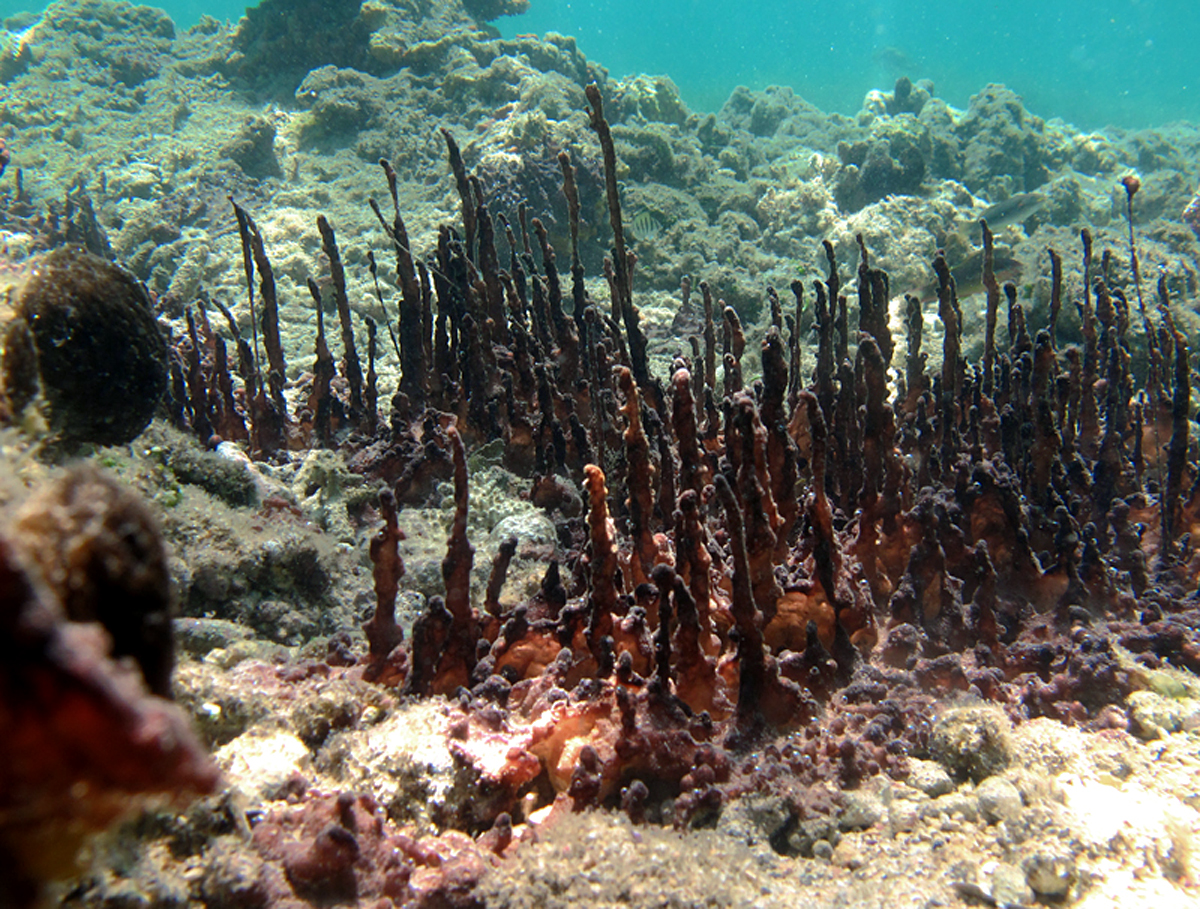
Image source: Wikipedia/Wikimedia
| Ecology, Host, and Life Cycle | |
|---|---|
| Oxygen requirements | Not Available |
| Optimal temperature | Not Available |
| Temperature range | Not Available |
| Habitat | Not Available |
| Biotic relationship | Not Available |
| Host(s) | Not Available |
| Cell arrangement | Not Available |
| Sporulation | Not Available |
| Energy source | Not Available |
| Pathogenicity | Not Available |
Gene Summary
Adenine Count
1415093 bp
Thymine Count
1417054 bp
Guanine Count
1552378 bp
Cytosine Count
1555278 bp
Genome Length
5940030 bp
Protein-coding Genes
5141 genes
Non-Coding Genes
87 genes
# of Chromosomes/Plasmids
1
Genes
| Name | Locus Tag | UniProt ID | Strand Orientation | Gene Start/End | Protein Molecular Weight |
|---|---|---|---|---|---|
| diguanylate phosphodiesterase | BST81_13515 | Not Available | Positive | 2991724 - 2992824 | 40830.2 |
| hypothetical protein | BST81_13520 | Not Available | Positive | 2992951 - 2995743 | 105317.0 |
| hypothetical protein | BST81_13525 | Not Available | Positive | 2995740 - 3001385 | 214356.0 |
| hypothetical protein | BST81_13530 | Not Available | Positive | 3001421 - 3004732 | 124348.0 |
| chloride channel protein | BST81_13535 | Not Available | Negative | 3004724 - 3007408 | 95698.8 |
| isoleucine--trna ligase | BST81_13540 | Not Available | Positive | 3007552 - 3010446 | 108930.0 |
| hypothetical protein | BST81_13545 | Not Available | Negative | 3010443 - 3011231 | 28874.6 |
| flagellar biosynthesis protein flgm | BST81_13550 | Not Available | Negative | 3011258 - 3012121 | 31629.1 |
| two-component system sensor histidine kinase/response regulator | BST81_13555 | Not Available | Positive | 3012547 - 3015018 | 90659.1 |
| hybrid sensor histidine kinase/response regulator | BST81_13560 | Not Available | Positive | 3015005 - 3016336 | 49569.3 |
Pathways
0 pathways
No pathways found
No metabolic pathways have been associated with this bacterium yet.
Health Effects
No health effects information available for this bacterium.