Kingdom
Pseudomonadati
Phylum
Pseudomonadota
Class
Alphaproteobacteria
Order
Hyphomicrobiales
Family
Rhizobiaceae
Genus
Sinorhizobium
Description
Taxonomy
| Kingdom | Pseudomonadati |
|---|---|
| Phylum | Pseudomonadota |
| Class | Alphaproteobacteria |
| Order | Hyphomicrobiales |
| Family | Rhizobiaceae |
| Genus | Sinorhizobium |
| Species | Sinorhizobium sp. NFACC03 |
| Strain | No strain |
Profile
| Physiology | |
|---|---|
| Gram staining properties | Not Available |
| Shape | Not Available |
| Mobility | Not Available |
| Flagellar presence | Yes |
| Number of membranes | Not Available |
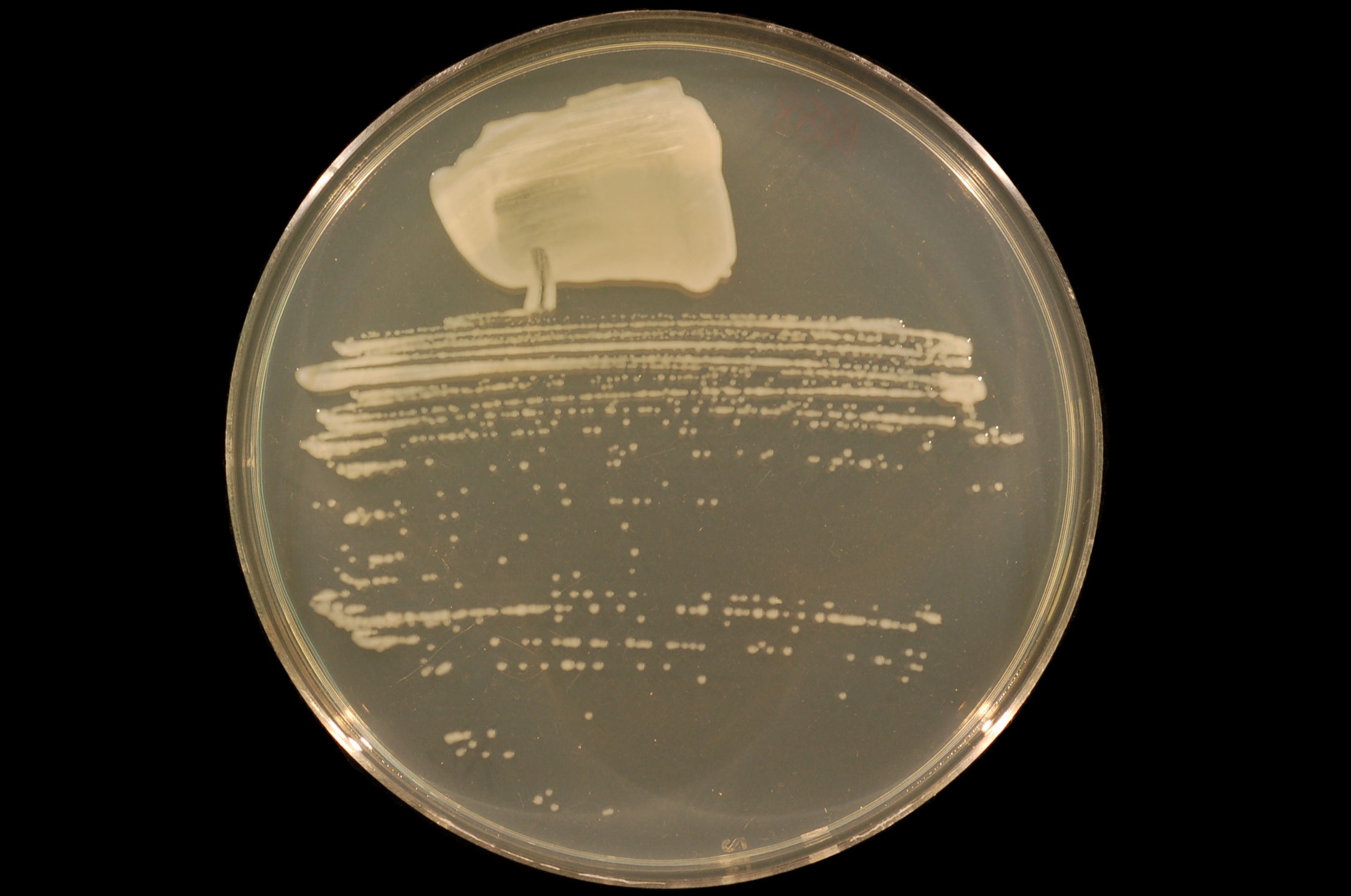
Image source: Wikipedia/Wikimedia
| Ecology, Host, and Life Cycle | |
|---|---|
| Oxygen requirements | Not Available |
| Optimal temperature | Not Available |
| Temperature range | Not Available |
| Habitat | Not Available |
| Biotic relationship | Not Available |
| Host(s) | Not Available |
| Cell arrangement | Not Available |
| Sporulation | Not Available |
| Energy source | Not Available |
| Pathogenicity | Not Available |
Gene Summary
Adenine Count
1368662 bp
Thymine Count
1381851 bp
Guanine Count
2252748 bp
Cytosine Count
2223575 bp
Genome Length
7228948 bp
Protein-coding Genes
6777 genes
Non-Coding Genes
98 genes
# of Chromosomes/Plasmids
1
Genes
| Name | Locus Tag | UniProt ID | Strand Orientation | Gene Start/End | Protein Molecular Weight |
|---|---|---|---|---|---|
| nte family protein | SAMN03159448_01127 | Not Available | Negative | 1120676 - 1121641 | 34308.5 |
| phosphoribosyl-amp cyclohydrolase | SAMN03159448_01128 | Not Available | Negative | 1122040 - 1122492 | 16622.5 |
| gtp cyclohydrolase i | SAMN03159448_01129 | Not Available | Negative | 1122517 - 1123134 | 22825.5 |
| nifu homolog involved in fe-s cluster formation | SAMN03159448_01130 | Not Available | Positive | 1123475 - 1123921 | 16063.3 |
| hypothetical protein | SAMN03159448_01131 | Not Available | Positive | 1124034 - 1124297 | 10039.1 |
| uncharacterized conserved protein, duf2267 family | SAMN03159448_01132 | Not Available | Positive | 1124303 - 1124722 | 15757.9 |
| uncharacterized conserved protein, duf1697 family | SAMN03159448_01133 | Not Available | Positive | 1124734 - 1125273 | 19632.8 |
| ser-trna(thr) hydrolase /threonyl-trna synthetase | SAMN03159448_01134 | Not Available | Positive | 1125497 - 1127479 | 75188.6 |
| putative hemolysin | SAMN03159448_01135 | Not Available | Positive | 1127559 - 1128398 | 31520.8 |
| hypothetical protein | SAMN03159448_01136 | Not Available | Negative | 1128433 - 1129443 | 34929.3 |
Pathways
0 pathways
No pathways found
No metabolic pathways have been associated with this bacterium yet.
Health Effects
No health effects information available for this bacterium.