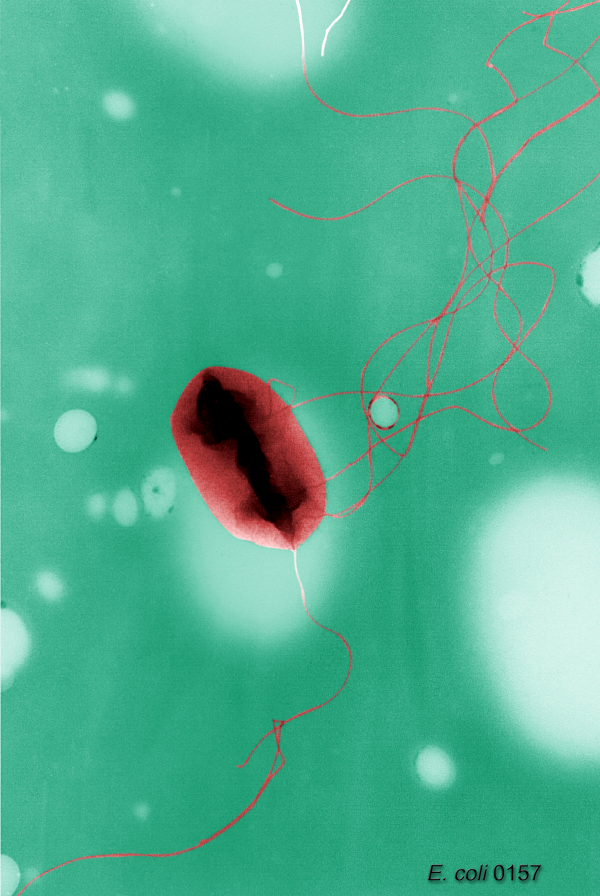
Escherichia coli O145:NM str. 2010C-3526

Gram-negativeRodMotileFacultative anaerobe

Kingdom

Pseudomonadati

Phylum

Pseudomonadota

Class

Gammaproteobacteria

Order

Enterobacterales

Family

Enterobacteriaceae

Genus

Escherichia

Description

Escherichia coli O145:NM str. 2010C-3526 is a Gram-negative, rod-shaped bacterium that exhibits mobility through the presence of flagella. This strain is classified as a facultative anaerobe, allowing it to thrive in both aerobic and anaerobic environments. It typically resides in host-associated habitats, indicating its relationship with living organisms, although it is also capable of free-living existence. The optimal growth temperature for E. coli O145:NM str. 2010C-3526 is 37°C, which aligns with the mesophilic temperature range suitable for many bacteria that inhabit warm-blooded animals. With a single replicon and two membranes, this organism possesses a relatively simple genomic architecture, which is characteristic of many strains within the Escherichia genus. Understanding the ecological role of Escherichia coli O145:NM str. 2010C-3526 is crucial, as it may participate in various biotic interactions within its host or surrounding environment. Its ability to adapt to different oxygen levels and thrive at body temperature suggests that it plays a significant role in the gut microbiome of warm-blooded hosts, potentially influencing nutrient absorption and immune system function. The strain's adaptability and mobility may contribute to its survival and proliferation within diverse ecological niches, underscoring the importance of E. coli in microbial ecosystems.

Taxonomy

KingdomPseudomonadati
PhylumPseudomonadota
ClassGammaproteobacteria
OrderEnterobacterales
FamilyEnterobacteriaceae
GenusEscherichia
SpeciesEscherichia coli
StrainO145:NM 2010C-3526

Profile

Physiology
Gram staining propertiesNegative
ShapeRod
MobilityYes
Flagellar presenceYes
Number of membranes2
Image of Escherichia coli O145:NM str. 2010C-3526
Image source: Wikipedia/Wikimedia
Ecology, Host, and Life Cycle
Oxygen requirementsFacultative anaerobe
Optimal temperature37
Temperature rangeMesophilic
HabitatHostAssociated
Biotic relationshipFree living
Host(s)Not Available
Cell arrangementPairs - Singles
SporulationNot Available
Energy sourceNot Available
PathogenicityNot Available

Genome Summary

Escherichia coli O145:NM str. 2010C-3526 contig221, whole genome

Gene Summary

Adenine Count

1344768 bp

Thymine Count

1346008 bp

Guanine Count

1360044 bp

Cytosine Count

1370514 bp

Genome Length

5438817 bp

Protein-coding Genes

4800 genes

Non-Coding Genes

317 genes

# of Chromosomes/Plasmids

1

Genes

NameLocus TagUniProt IDStrand OrientationGene Start/EndProtein Molecular Weight
dna-binding proteinBX51_09615Not AvailablePositive335277 - 33568115348.4
membrane proteinBX51_09620Not AvailableNegative335728 - 33625218640.9
transcriptional regulatorBX51_09625Not AvailableNegative336262 - 33656110596.9
peptidoglycan-binding proteinBX51_09635Not AvailablePositive336986 - 33743516064.0
transcriptional regulatorBX51_09640Not AvailableNegative337436 - 33809825019.4
gamma-aminobutyrate transporterBX51_09645Not AvailableNegative338119 - 33951951069.1
4-aminobutyrate aminotransferaseBX51_09650Not AvailableNegative339756 - 34103645691.3
succinate-semialdehyde dehydrogenaseBX51_09655Not AvailableNegative341050 - 34249851765.1
hydroxyglutarate oxidaseBX51_09660Not AvailableNegative342521 - 34378946048.6
carbon starvation induced proteinBX51_09665Not AvailableNegative343809 - 34478637371.5

Displaying genes 541 – 550 of 5117 in total

Metabolites

4785 records
Metabolite IDMetabolite nameStructureCAS number
BASm0000173(R)-3-Hydroxybutyric acidC4H8O3Chemical structure of (R)-3-Hydroxybutyric acid625-72-3
Average104.0473Da
Monoisotopic104.047344122Da
BASm0000217alpha-ribazoleC14H18N2O4Chemical structure of alpha-ribazoleNot available
Average278.3037Da
Monoisotopic278.126657074Da
BASm0000237(R)-4'-phosphopantothenateC9H18NO8PChemical structure of (R)-4'-phosphopantothenateNot available
Average299.2149Da
Monoisotopic299.0770031Da
BASm0000238(R)-3-phenyllactateC9H9O3Chemical structure of (R)-3-phenyllactateNot available
Average165.169Da
Monoisotopic165.05571773Da
BASm00002482,3-dihydroxy-3-methylbutanoateC5H10O4Chemical structure of 2,3-dihydroxy-3-methylbutanoate1756-18-9
Average134.1305Da
Monoisotopic134.0579088Da
BASm00002502,5-didehydro-D-gluconateC6H7O7Chemical structure of 2,5-didehydro-D-gluconate53736-12-2
Average191.1156Da
Monoisotopic191.019177578Da
BASm00002512-dehydropantoateC6H9O4Chemical structure of 2-dehydropantoateNot available
Average145.1333Da
Monoisotopic145.050083776Da
BASm00002532-oxopent-4-enoateC5H5O3Chemical structure of 2-oxopent-4-enoateNot available
Average113.093Da
Monoisotopic113.024417601Da
BASm00002593alpha,12alpha-dihydroxy-7-oxo-5beta-cholanateC24H37O5Chemical structure of 3alpha,12alpha-dihydroxy-7-oxo-5beta-cholanateNot available
Average405.556Da
Monoisotopic405.264647871Da
BASm00002603alpha,7alpha-dihydroxy-12-oxo-5beta-cholanateC24H37O5Chemical structure of 3alpha,7alpha-dihydroxy-12-oxo-5beta-cholanateNot available
Average405.556Da
Monoisotopic405.264647871Da

Displaying 1–10 of 4785 metabolites

Health Effects

No health effects information available for this bacterium.