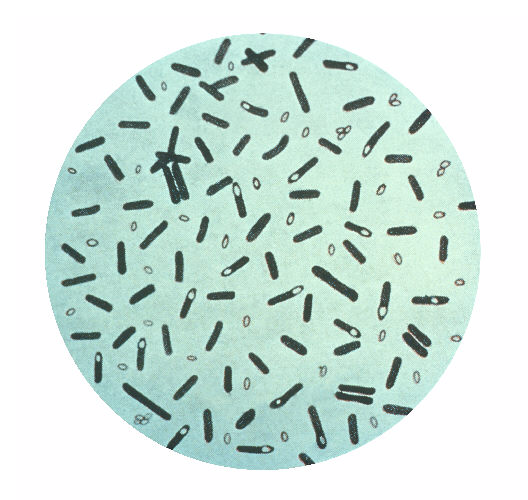
Clostridium botulinum B str. Osaka05

Gram-positiveRodMotileAnaerobe

Kingdom

Bacillati

Phylum

Bacillota

Class

Clostridia

Order

Eubacteriales

Family

Clostridiaceae

Genus

Clostridium

Description

Clostridium botulinum B strain Osaka05 is a Gram-positive, rod-shaped anaerobic bacterium known for its role in producing botulinum toxin, a potent neurotoxin. This strain is a chemoorganotroph, utilizing organic compounds as an energy source. It exhibits a diverse cell arrangement, occurring in pairs, singles, and chains, which may influence its interactions in various environments. C. botulinum B Osaka05 is motile, possessing flagella that facilitate movement, which can be significant for its colonization and survival in different habitats. The optimal growth temperature for this strain is 37°C, situating it within the mesophilic temperature range, which is conducive to growth in moderate temperature environments. This strain has a single replicon and a single membrane, characteristics typical of many anaerobic bacteria. It is categorized as free-living, indicating that it does not rely on a host organism for its survival, allowing it to thrive in diverse ecological niches. Understanding the traits of Clostridium botulinum B strain Osaka05 is important not only for its implications in food safety due to its toxin production but also for its ecological role. As a free-living anaerobe, it contributes to the decomposition of organic matter in anaerobic environments, playing a part in nutrient cycling and the dynamics of microbial communities.

Taxonomy

KingdomBacillati
PhylumBacillota
ClassClostridia
OrderEubacteriales
FamilyClostridiaceae
GenusClostridium
SpeciesClostridium botulinum
StrainB Osaka05

Profile

Physiology
Gram staining propertiesPositive
ShapeRod
MobilityYes
Flagellar presenceYes
Number of membranes1
Image of Clostridium botulinum B str. Osaka05
Image source: Wikipedia/Wikimedia
Ecology, Host, and Life Cycle
Oxygen requirementsAnaerobe
Optimal temperature37
Temperature rangeMesophilic
HabitatMultiple
Biotic relationshipFree living
Host(s)Not Available
Cell arrangementPairs - Singles - Chains
SporulationNot Available
Energy sourceChemoorganotroph
PathogenicityNot Available

Genome Summary

Clostridium botulinum B str. Osaka05


Gene Summary

Adenine Count

Not Available

Thymine Count

Not Available

Guanine Count

Not Available

Cytosine Count

Not Available

Genome Length

Not Available

Protein-coding Genes

0 genes

Non-Coding Genes

0 genes

# of Chromosomes/Plasmids

1

Genes

No genes available for this genome.

Pathways

0 pathways

No pathways found

No metabolic pathways have been associated with this bacterium yet.

Metabolites

23 records
Metabolite IDMetabolite nameStructureCAS number
BASm0000387(6R)-5,10-methylene-5,6,7,8-tetrahydrofolateC20H21N7O6Chemical structure of (6R)-5,10-methylene-5,6,7,8-tetrahydrofolateNot available
Average455.432Da
Monoisotopic455.1564286Da
BASm0000401(S)-2-succinylamino-6-oxoheptanedioateC11H12NO8Chemical structure of (S)-2-succinylamino-6-oxoheptanedioateNot available
Average286.218Da
Monoisotopic286.0579371Da
BASm00005275-oxopentanoateC5H7O3Chemical structure of 5-oxopentanoateNot available
Average115.109Da
Monoisotopic115.040067665Da
BASm0000950L-xyluloseC5H10O5Chemical structure of L-xylulose527-50-4
Average150.1299Da
Monoisotopic150.05282343Da
BASm0001691hydrogenselenideHSeChemical structure of hydrogenselenideNot available
Average79.98Da
Monoisotopic80.924896Da
BASm0001865diphosphateHO7P2Chemical structure of diphosphateNot available
Average174.95Da
Monoisotopic174.9213971Da
BASm00021577-cyano-7-deazaguanineC7H5N5OChemical structure of 7-cyano-7-deazaguanineNot available
Average175.1475Da
Monoisotopic175.0494098Da
BASm00027107,8-dihydrofolateC19H19N7O6Chemical structure of 7,8-dihydrofolateNot available
Average441.405Da
Monoisotopic441.1407785Da
BASm0002715(6S)-5-formyl-5,6,7,8-tetrahydrofolateC20H21N7O7Chemical structure of (6S)-5-formyl-5,6,7,8-tetrahydrofolateNot available
Average471.431Da
Monoisotopic471.1513432Da
BASm0002826(2R)-3-phospho-glyceroyl phosphateC3H4O10P2Chemical structure of (2R)-3-phospho-glyceroyl phosphateNot available
Average262.005Da
Monoisotopic261.9301646Da

Displaying 1–10 of 23 metabolites

Health Effects

No health effects information available for this bacterium.