
Kingdom
Bacillati
Phylum
Cyanobacteriota
Class
Cyanophyceae
Order
Leptolyngbyales
Family
Leptolyngbyaceae
Genus
Leptolyngbya
Description
Taxonomy
| Kingdom | Bacillati |
|---|---|
| Phylum | Cyanobacteriota |
| Class | Cyanophyceae |
| Order | Leptolyngbyales |
| Family | Leptolyngbyaceae |
| Genus | Leptolyngbya |
| Species | Leptolyngbya sp. Heron Island J |
| Strain | No strain |
Profile
| Physiology | |
|---|---|
| Gram staining properties | Not Available |
| Shape | Filamentous |
| Mobility | Not Available |
| Flagellar presence | Not Available |
| Number of membranes | Not Available |
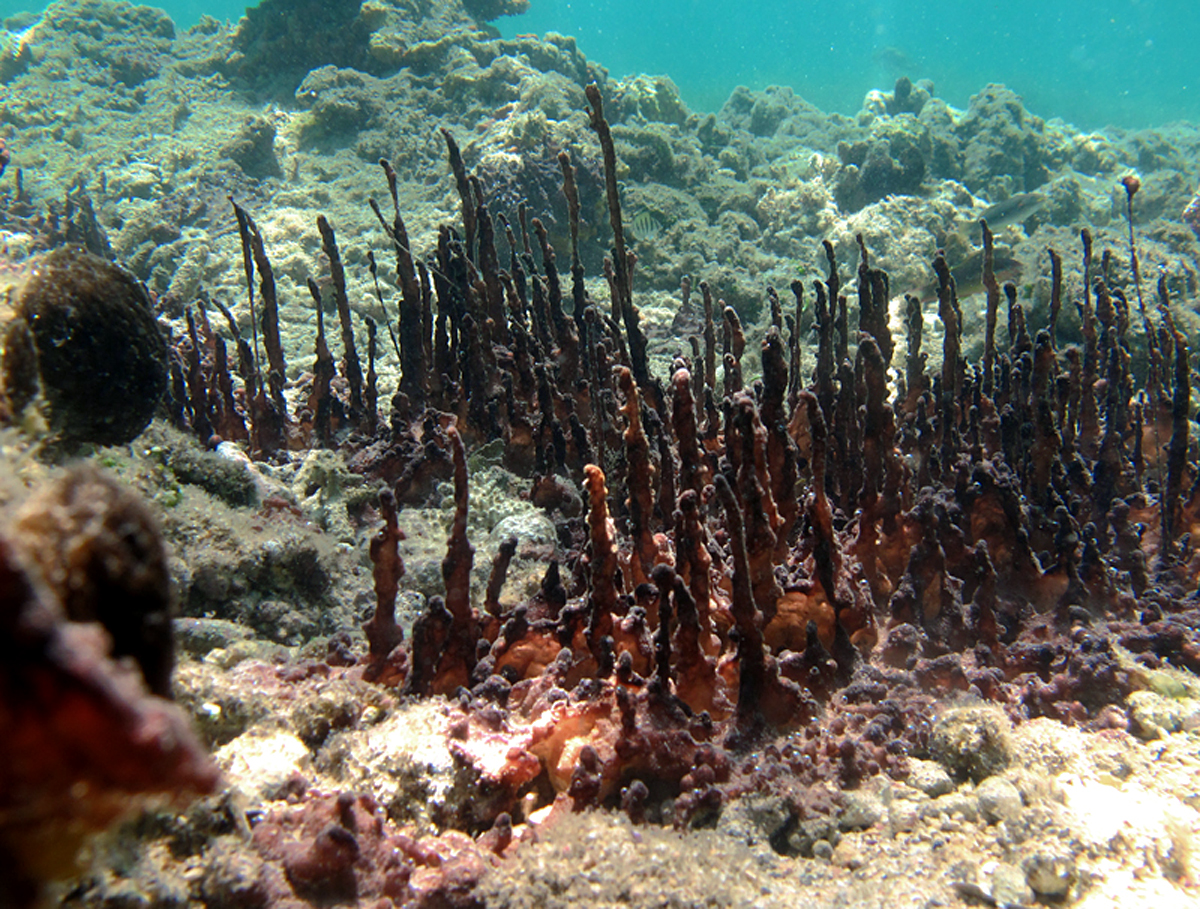
Image source: Wikipedia/Wikimedia
| Ecology, Host, and Life Cycle | |
|---|---|
| Oxygen requirements | Not Available |
| Optimal temperature | Not Available |
| Temperature range | Not Available |
| Habitat | Not Available |
| Biotic relationship | Not Available |
| Host(s) | Not Available |
| Cell arrangement | Not Available |
| Sporulation | Not Available |
| Energy source | Not Available |
| Pathogenicity | Not Available |
Gene Summary
Adenine Count
2091263 bp
Thymine Count
2098140 bp
Guanine Count
1943090 bp
Cytosine Count
1931671 bp
Genome Length
8064168 bp
Protein-coding Genes
7214 genes
Non-Coding Genes
66 genes
# of Chromosomes/Plasmids
1
Genes
| Name | Locus Tag | UniProt ID | Strand Orientation | Gene Start/End | Protein Molecular Weight |
|---|---|---|---|---|---|
| hypothetical protein | N836_02480 | Not Available | Positive | 866052 - 866222 | 6407.87 |
| hypothetical protein | N836_02485 | Not Available | Positive | 866212 - 866649 | 16603.6 |
| acetyltransferase | N836_02490 | Not Available | Negative | 866658 - 867110 | 17127.7 |
| hypothetical protein | N836_02495 | Not Available | Positive | 867476 - 867676 | 7840.58 |
| dna mismatch repair protein | N836_02500 | Not Available | Negative | 867797 - 870517 | 99579.6 |
| calcium-binding ef-hand-containing protein | N836_02505 | Not Available | Positive | 870648 - 871193 | 20983.0 |
| hypothetical protein | N836_02510 | Not Available | Positive | 871330 - 872199 | 32774.8 |
| 2-c-methyl-d-erythritol 4-phosphate cytidylyltransferase | N836_02515 | Not Available | Positive | 872510 - 874498 | 75177.5 |
| hypothetical protein | N836_02520 | Not Available | Negative | 874651 - 875184 | 19808.9 |
| membrane protein | N836_02525 | Not Available | Positive | 875328 - 875927 | 21325.8 |
Pathways
0 pathways
No pathways found
No metabolic pathways have been associated with this bacterium yet.
Health Effects
No health effects information available for this bacterium.