
Kingdom
Bacillati
Phylum
Cyanobacteriota
Class
Cyanophyceae
Order
Leptolyngbyales
Family
Leptolyngbyaceae
Genus
Leptolyngbya
Description
Taxonomy
| Kingdom | Bacillati |
|---|---|
| Phylum | Cyanobacteriota |
| Class | Cyanophyceae |
| Order | Leptolyngbyales |
| Family | Leptolyngbyaceae |
| Genus | Leptolyngbya |
| Species | Leptolyngbya sp. Heron Island J |
| Strain | No strain |
Profile
| Physiology | |
|---|---|
| Gram staining properties | Not Available |
| Shape | Filamentous |
| Mobility | Not Available |
| Flagellar presence | Not Available |
| Number of membranes | Not Available |
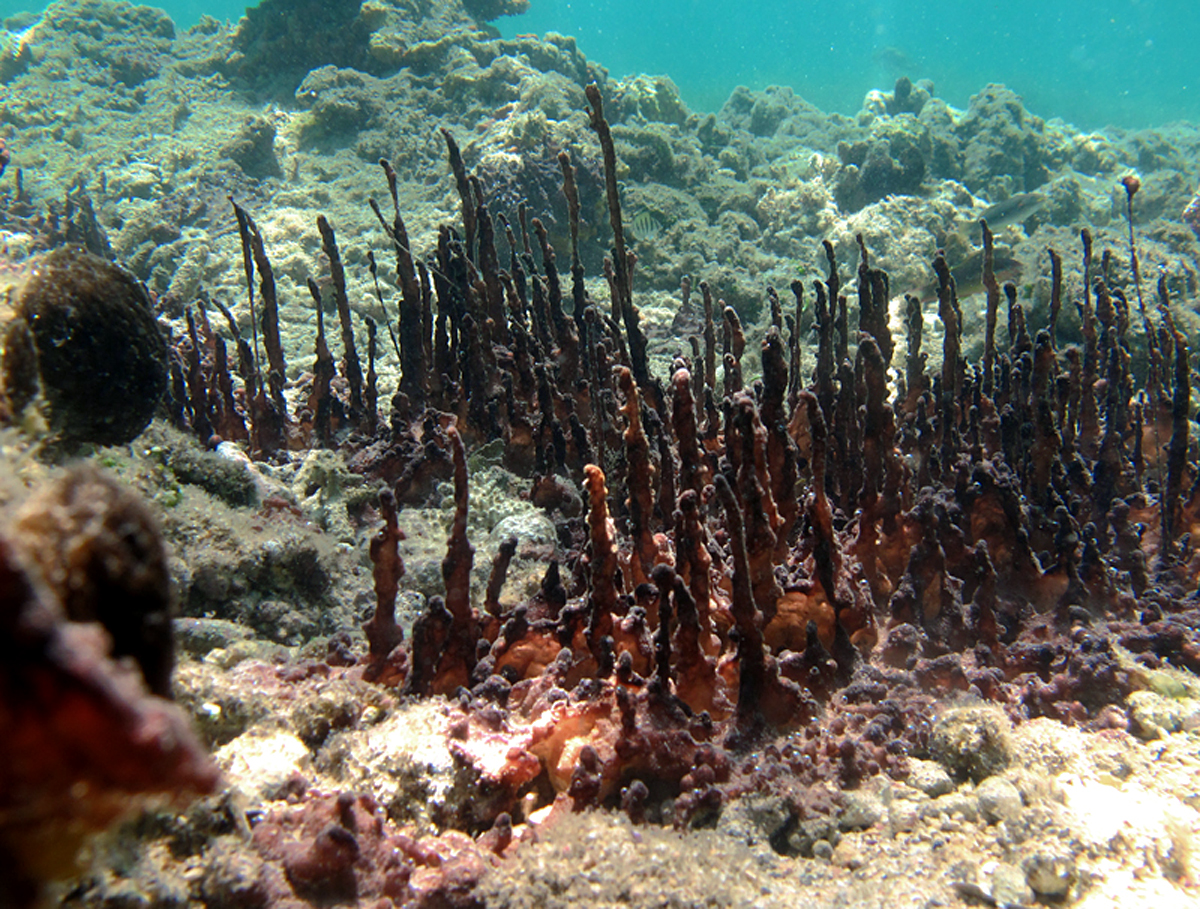
Image source: Wikipedia/Wikimedia
| Ecology, Host, and Life Cycle | |
|---|---|
| Oxygen requirements | Not Available |
| Optimal temperature | Not Available |
| Temperature range | Not Available |
| Habitat | Not Available |
| Biotic relationship | Not Available |
| Host(s) | Not Available |
| Cell arrangement | Not Available |
| Sporulation | Not Available |
| Energy source | Not Available |
| Pathogenicity | Not Available |
Gene Summary
Adenine Count
2091263 bp
Thymine Count
2098140 bp
Guanine Count
1943090 bp
Cytosine Count
1931671 bp
Genome Length
8064168 bp
Protein-coding Genes
7214 genes
Non-Coding Genes
66 genes
# of Chromosomes/Plasmids
1
Genes
| Name | Locus Tag | UniProt ID | Strand Orientation | Gene Start/End | Protein Molecular Weight |
|---|---|---|---|---|---|
| abc-type dipeptide transport periplasmic component | N836_28495 | Not Available | Negative | 8003173 - 8004810 | 59837.1 |
| membrane protein | N836_28500 | Not Available | Positive | 8005215 - 8006246 | 37066.3 |
| hypothetical protein | N836_28505 | Not Available | Negative | 8006312 - 8015575 | 339004.0 |
| hypothetical protein | N836_28510 | Not Available | Negative | 8015794 - 8016309 | 17880.2 |
| hypothetical protein | N836_28515 | Not Available | Negative | 8016396 - 8016680 | 10318.9 |
| hemagglutinin protein | N836_28520 | Not Available | Negative | 8016749 - 8020615 | 141301.0 |
| secreted protein containing duf1592 | N836_28525 | Not Available | Negative | 8020628 - 8023927 | 120661.0 |
| membrane protein | N836_28530 | Not Available | Positive | 8024658 - 8025584 | 32891.3 |
| hypothetical protein | N836_28535 | Not Available | Positive | 8026562 - 8026813 | 8940.77 |
| transposase | N836_28540 | Not Available | Negative | 8026827 - 8027215 | 15139.9 |
Pathways
0 pathways
No pathways found
No metabolic pathways have been associated with this bacterium yet.
Health Effects
No health effects information available for this bacterium.