
Kingdom
Bacillati
Phylum
Cyanobacteriota
Class
Cyanophyceae
Order
Leptolyngbyales
Family
Leptolyngbyaceae
Genus
Leptolyngbya
Description
Taxonomy
| Kingdom | Bacillati |
|---|---|
| Phylum | Cyanobacteriota |
| Class | Cyanophyceae |
| Order | Leptolyngbyales |
| Family | Leptolyngbyaceae |
| Genus | Leptolyngbya |
| Species | Leptolyngbya sp. Heron Island J |
| Strain | No strain |
Profile
| Physiology | |
|---|---|
| Gram staining properties | Not Available |
| Shape | Filamentous |
| Mobility | Not Available |
| Flagellar presence | Not Available |
| Number of membranes | Not Available |
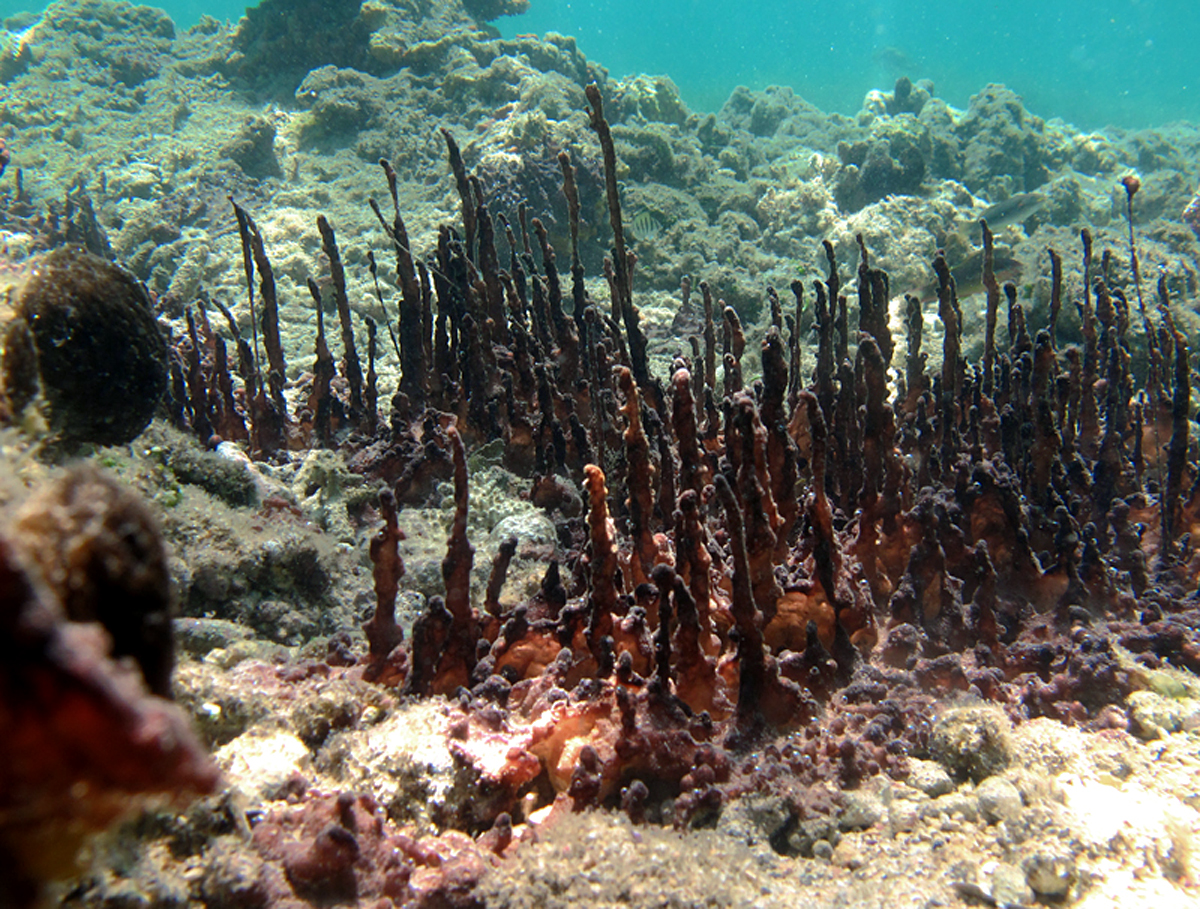
Image source: Wikipedia/Wikimedia
| Ecology, Host, and Life Cycle | |
|---|---|
| Oxygen requirements | Not Available |
| Optimal temperature | Not Available |
| Temperature range | Not Available |
| Habitat | Not Available |
| Biotic relationship | Not Available |
| Host(s) | Not Available |
| Cell arrangement | Not Available |
| Sporulation | Not Available |
| Energy source | Not Available |
| Pathogenicity | Not Available |
Gene Summary
Adenine Count
2091263 bp
Thymine Count
2098140 bp
Guanine Count
1943090 bp
Cytosine Count
1931671 bp
Genome Length
8064168 bp
Protein-coding Genes
7214 genes
Non-Coding Genes
66 genes
# of Chromosomes/Plasmids
1
Genes
| Name | Locus Tag | UniProt ID | Strand Orientation | Gene Start/End | Protein Molecular Weight |
|---|---|---|---|---|---|
| pep-cterm exosortase interaction domain-containing protein | N836_27130 | Not Available | Positive | 7703937 - 7704491 | 19362.8 |
| alkaline phosphatase | N836_27135 | Not Available | Positive | 7704622 - 7706205 | 58991.8 |
| hypothetical protein | N836_27140 | Not Available | Negative | 7706270 - 7706674 | 14807.3 |
| abc transporter substrate-binding protein | N836_27145 | Not Available | Negative | 7706678 - 7707730 | 39077.3 |
| adenine phosphoribosyltransferase | N836_27150 | Not Available | Negative | 7707906 - 7708433 | 19103.1 |
| metalloendopeptidase-like membrane protein | N836_27155 | Not Available | Positive | 7708582 - 7709535 | 33269.3 |
| tetratricopeptide tpr-1 repeat-containing protein | N836_27160 | Not Available | Negative | 7709577 - 7710071 | 18500.0 |
| pentapeptide repeat protein | N836_27165 | Not Available | Positive | 7710355 - 7710945 | 21537.9 |
| 4 -phosphopantetheinyl transferase | N836_27170 | Not Available | Negative | 7711077 - 7711835 | 28224.6 |
| fad-dependent pyridine nucleotide-disulfide oxidoreductase | N836_27175 | Not Available | Positive | 7712091 - 7713296 | 44846.4 |
Pathways
0 pathways
No pathways found
No metabolic pathways have been associated with this bacterium yet.
Health Effects
No health effects information available for this bacterium.