
Kingdom
Bacillati
Phylum
Cyanobacteriota
Class
Cyanophyceae
Order
Leptolyngbyales
Family
Leptolyngbyaceae
Genus
Leptolyngbya
Description
Taxonomy
| Kingdom | Bacillati |
|---|---|
| Phylum | Cyanobacteriota |
| Class | Cyanophyceae |
| Order | Leptolyngbyales |
| Family | Leptolyngbyaceae |
| Genus | Leptolyngbya |
| Species | Leptolyngbya sp. Heron Island J |
| Strain | No strain |
Profile
| Physiology | |
|---|---|
| Gram staining properties | Not Available |
| Shape | Filamentous |
| Mobility | Not Available |
| Flagellar presence | Not Available |
| Number of membranes | Not Available |
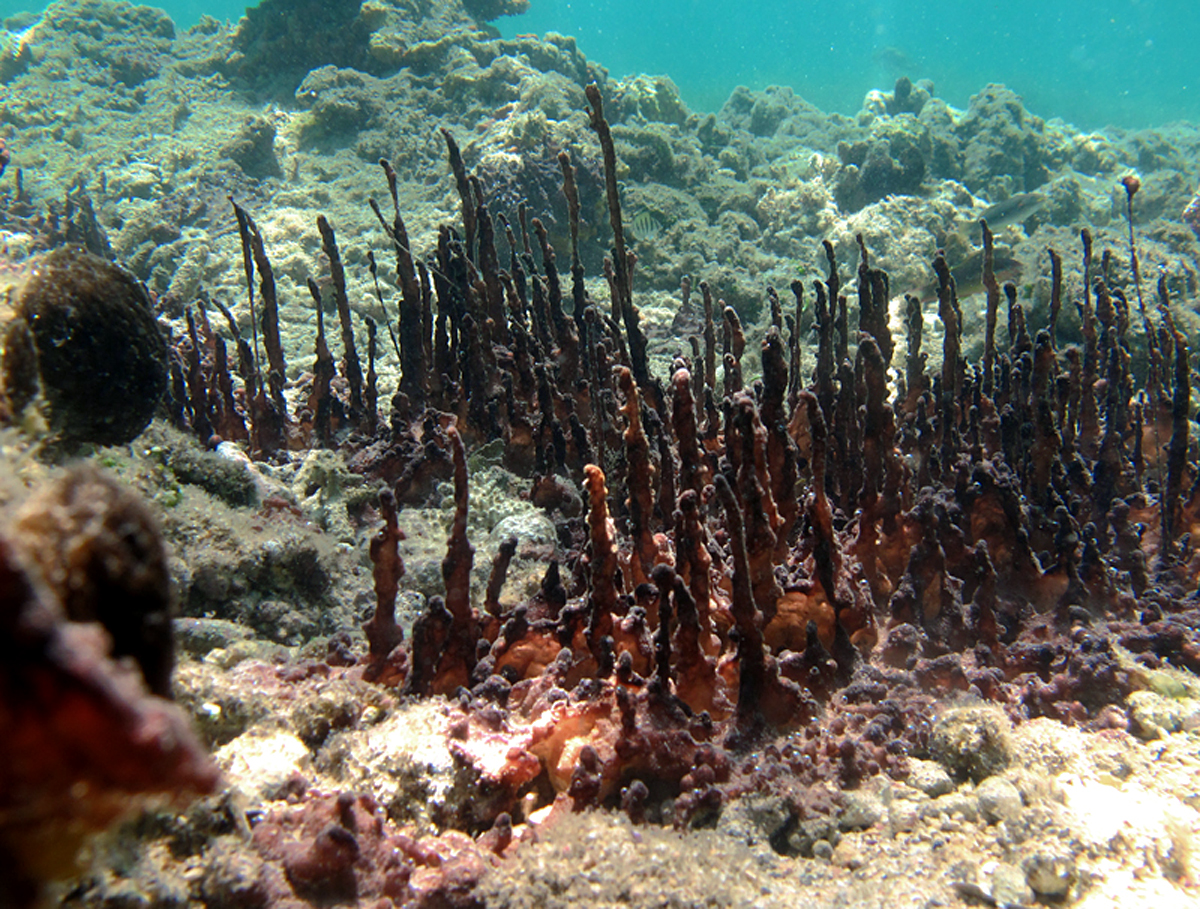
Image source: Wikipedia/Wikimedia
| Ecology, Host, and Life Cycle | |
|---|---|
| Oxygen requirements | Not Available |
| Optimal temperature | Not Available |
| Temperature range | Not Available |
| Habitat | Not Available |
| Biotic relationship | Not Available |
| Host(s) | Not Available |
| Cell arrangement | Not Available |
| Sporulation | Not Available |
| Energy source | Not Available |
| Pathogenicity | Not Available |
Gene Summary
Adenine Count
2091263 bp
Thymine Count
2098140 bp
Guanine Count
1943090 bp
Cytosine Count
1931671 bp
Genome Length
8064168 bp
Protein-coding Genes
7214 genes
Non-Coding Genes
66 genes
# of Chromosomes/Plasmids
1
Genes
| Name | Locus Tag | UniProt ID | Strand Orientation | Gene Start/End | Protein Molecular Weight |
|---|---|---|---|---|---|
| abc transporter atp-binding protein | N836_31820 | Not Available | Positive | 694100 - 696997 | 105228.0 |
| signal transduction protein with nacht domain protein | N836_31825 | Not Available | Negative | 697018 - 699852 | 108941.0 |
| metal-dependent phosphohydrolase | N836_31830 | Not Available | Negative | 700149 - 701042 | 33468.9 |
| hypothetical protein | N836_31835 | Not Available | Negative | 701225 - 701404 | 6590.21 |
| hypothetical protein | N836_31840 | Not Available | Positive | 701475 - 701726 | 9408.57 |
| hypothetical protein | N836_31845 | Not Available | Negative | 701757 - 701846 | 3346.1 |
| serine threonine protein kinase | N836_31850 | Not Available | Positive | 701845 - 703710 | 71232.9 |
| gaf domain-containing protein | N836_31855 | Not Available | Positive | 703746 - 707141 | 128857.0 |
| membrane protein | N836_31860 | Not Available | Positive | 707829 - 709052 | 45412.6 |
| ornithine cyclodeaminase | N836_31865 | Not Available | Positive | 709112 - 710218 | 39990.9 |
Pathways
0 pathways
No pathways found
No metabolic pathways have been associated with this bacterium yet.
Health Effects
No health effects information available for this bacterium.