
Kingdom
Bacillati
Phylum
Cyanobacteriota
Class
Cyanophyceae
Order
Leptolyngbyales
Family
Leptolyngbyaceae
Genus
Leptolyngbya
Description
Taxonomy
| Kingdom | Bacillati |
|---|---|
| Phylum | Cyanobacteriota |
| Class | Cyanophyceae |
| Order | Leptolyngbyales |
| Family | Leptolyngbyaceae |
| Genus | Leptolyngbya |
| Species | Leptolyngbya sp. Heron Island J |
| Strain | No strain |
Profile
| Physiology | |
|---|---|
| Gram staining properties | Not Available |
| Shape | Filamentous |
| Mobility | Not Available |
| Flagellar presence | Not Available |
| Number of membranes | Not Available |
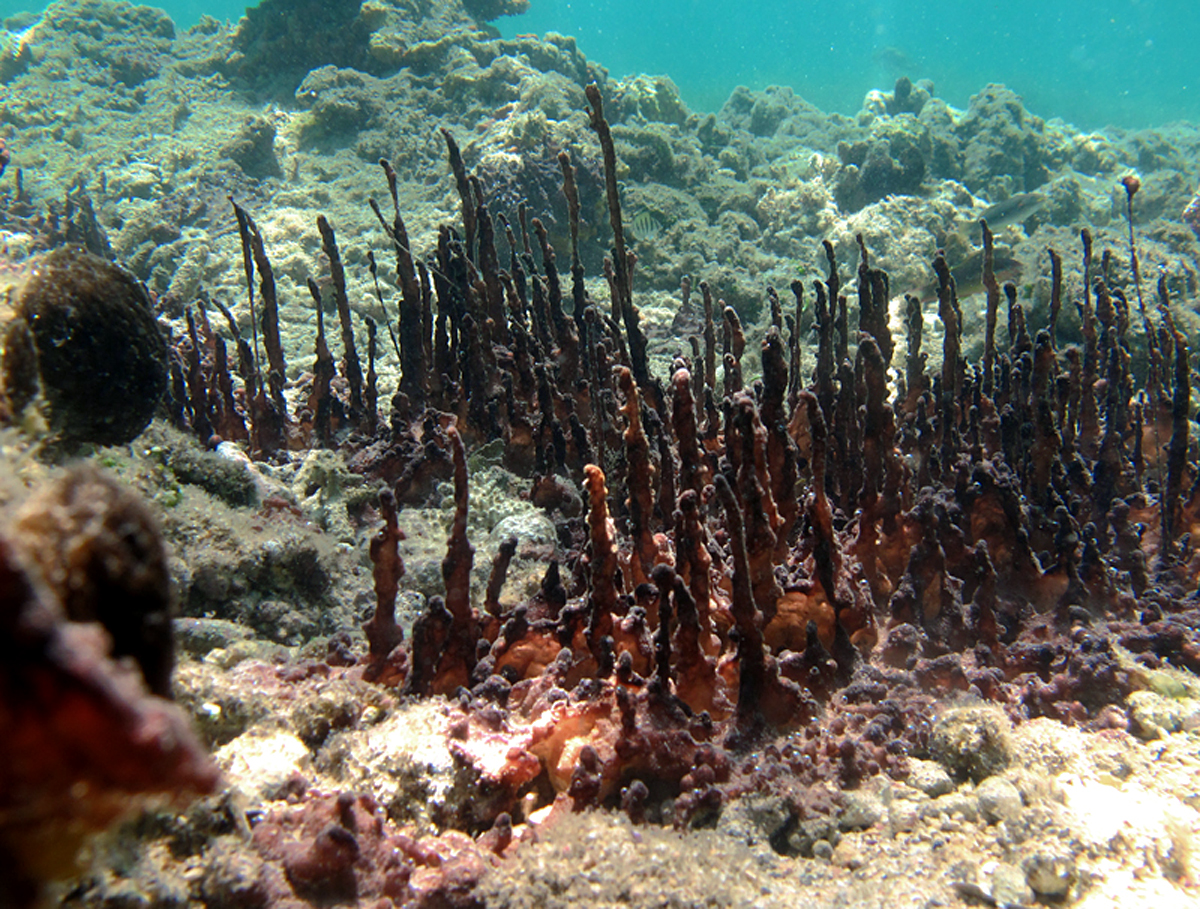
Image source: Wikipedia/Wikimedia
| Ecology, Host, and Life Cycle | |
|---|---|
| Oxygen requirements | Not Available |
| Optimal temperature | Not Available |
| Temperature range | Not Available |
| Habitat | Not Available |
| Biotic relationship | Not Available |
| Host(s) | Not Available |
| Cell arrangement | Not Available |
| Sporulation | Not Available |
| Energy source | Not Available |
| Pathogenicity | Not Available |
Gene Summary
Adenine Count
2091263 bp
Thymine Count
2098140 bp
Guanine Count
1943090 bp
Cytosine Count
1931671 bp
Genome Length
8064168 bp
Protein-coding Genes
7214 genes
Non-Coding Genes
66 genes
# of Chromosomes/Plasmids
1
Genes
| Name | Locus Tag | UniProt ID | Strand Orientation | Gene Start/End | Protein Molecular Weight |
|---|---|---|---|---|---|
| hypothetical protein | N836_29905 | Not Available | Positive | 281018 - 281551 | 19150.9 |
| hypothetical protein | N836_29910 | Not Available | Positive | 281598 - 282245 | 23697.1 |
| dna polymerase iv | N836_29915 | Not Available | Positive | 282886 - 283956 | 39747.9 |
| capsular exopolysaccharide biosynthesis protein | N836_29920 | Not Available | Negative | 283972 - 286275 | 84371.5 |
| polysaccharide export protein | N836_29925 | Not Available | Negative | 286451 - 287875 | 50319.0 |
| udp-n-acetylmuramyl pentapeptide phosphotransferase udp-n-acetylglucosamine-1-phosphate transferase | N836_29935 | Not Available | Positive | 289916 - 290977 | 37963.9 |
| glycosyltransferase | N836_29940 | Not Available | Positive | 291260 - 292546 | 48484.0 |
| abc transporter atp-binding protein | N836_29945 | Not Available | Positive | 292735 - 294531 | 66305.8 |
| hypothetical protein | N836_29950 | Not Available | Negative | 294851 - 295045 | 7624.43 |
| udp-n-acetylenolpyruvoylglucosamine reductase | N836_29955 | Not Available | Positive | 295278 - 296162 | 32726.5 |
Pathways
0 pathways
No pathways found
No metabolic pathways have been associated with this bacterium yet.
Health Effects
No health effects information available for this bacterium.