
Kingdom
Bacillati
Phylum
Cyanobacteriota
Class
Cyanophyceae
Order
Leptolyngbyales
Family
Leptolyngbyaceae
Genus
Leptolyngbya
Description
Taxonomy
| Kingdom | Bacillati |
|---|---|
| Phylum | Cyanobacteriota |
| Class | Cyanophyceae |
| Order | Leptolyngbyales |
| Family | Leptolyngbyaceae |
| Genus | Leptolyngbya |
| Species | Leptolyngbya sp. Heron Island J |
| Strain | No strain |
Profile
| Physiology | |
|---|---|
| Gram staining properties | Not Available |
| Shape | Filamentous |
| Mobility | Not Available |
| Flagellar presence | Not Available |
| Number of membranes | Not Available |
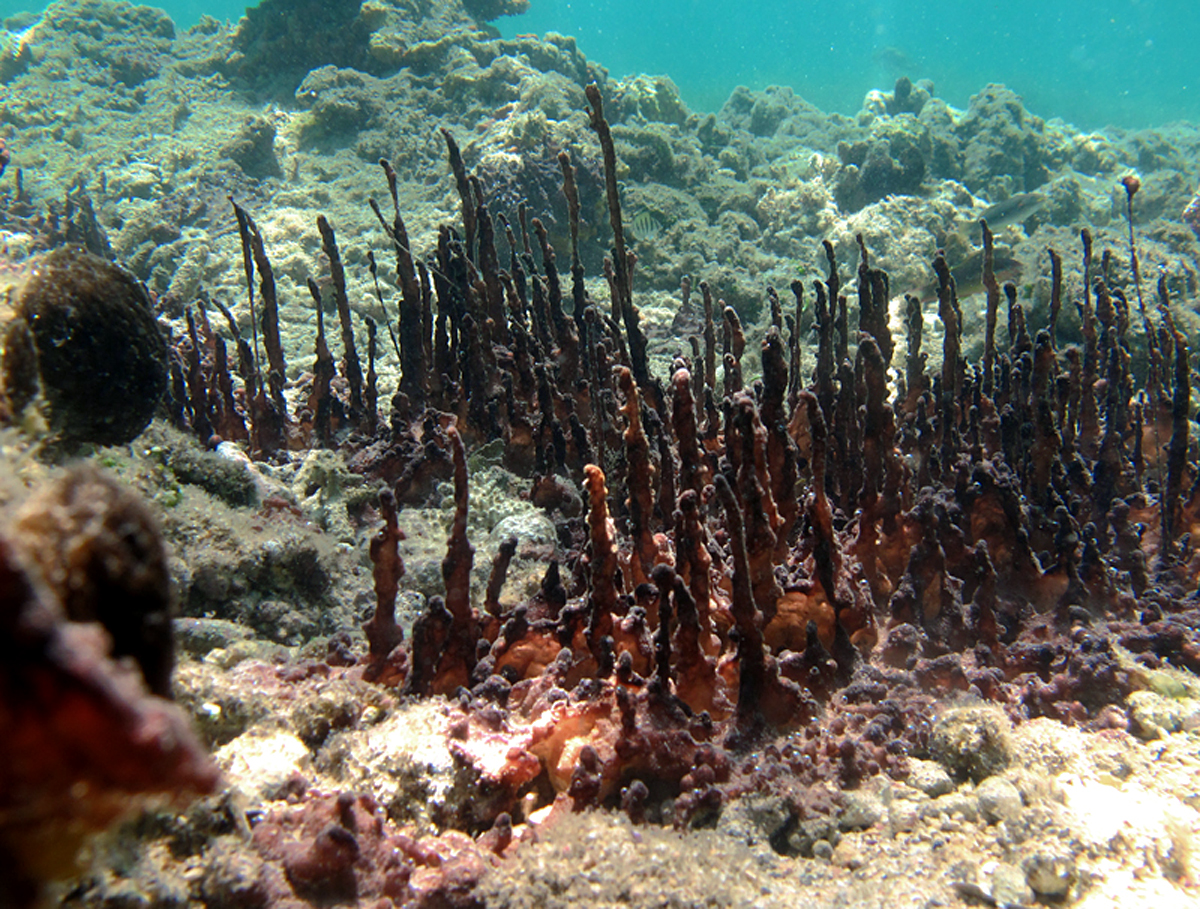
Image source: Wikipedia/Wikimedia
| Ecology, Host, and Life Cycle | |
|---|---|
| Oxygen requirements | Not Available |
| Optimal temperature | Not Available |
| Temperature range | Not Available |
| Habitat | Not Available |
| Biotic relationship | Not Available |
| Host(s) | Not Available |
| Cell arrangement | Not Available |
| Sporulation | Not Available |
| Energy source | Not Available |
| Pathogenicity | Not Available |
Gene Summary
Adenine Count
2091263 bp
Thymine Count
2098140 bp
Guanine Count
1943090 bp
Cytosine Count
1931671 bp
Genome Length
8064168 bp
Protein-coding Genes
7214 genes
Non-Coding Genes
66 genes
# of Chromosomes/Plasmids
1
Genes
| Name | Locus Tag | UniProt ID | Strand Orientation | Gene Start/End | Protein Molecular Weight |
|---|---|---|---|---|---|
| low temperature requirement a | N836_29705 | Not Available | Negative | 221845 - 223041 | 44599.1 |
| gcn5-related n-acetyltransferase | N836_29710 | Not Available | Positive | 223290 - 223766 | 17632.1 |
| thiopurine s- se te detoxification family | N836_29715 | Not Available | Positive | 223877 - 224515 | 23623.2 |
| multi-sensor hybrid histidine kinase | N836_29720 | Not Available | Negative | 225012 - 227744 | 100900.0 |
| abc-type phosphate phosphonate transport periplasmic component | N836_29725 | Not Available | Negative | 227916 - 228803 | 33041.0 |
| multi-sensor hybrid histidine kinase | N836_29730 | Not Available | Negative | 229047 - 229967 | 33973.6 |
| multi-sensor hybrid histidine kinase | N836_29735 | Not Available | Negative | 229967 - 231811 | 68735.2 |
| anti-sigma-factor antagonist | N836_29740 | Not Available | Negative | 231943 - 232266 | 12057.1 |
| cellulose synthase | N836_29745 | Not Available | Negative | 232427 - 234820 | 90644.6 |
| glycoside hydrolase | N836_29750 | Not Available | Negative | 235320 - 237536 | 86921.0 |
Pathways
0 pathways
No pathways found
No metabolic pathways have been associated with this bacterium yet.
Health Effects
No health effects information available for this bacterium.