
Kingdom
Bacillati
Phylum
Cyanobacteriota
Class
Cyanophyceae
Order
Leptolyngbyales
Family
Leptolyngbyaceae
Genus
Leptolyngbya
Description
Taxonomy
| Kingdom | Bacillati |
|---|---|
| Phylum | Cyanobacteriota |
| Class | Cyanophyceae |
| Order | Leptolyngbyales |
| Family | Leptolyngbyaceae |
| Genus | Leptolyngbya |
| Species | Leptolyngbya sp. Heron Island J |
| Strain | No strain |
Profile
| Physiology | |
|---|---|
| Gram staining properties | Not Available |
| Shape | Filamentous |
| Mobility | Not Available |
| Flagellar presence | Not Available |
| Number of membranes | Not Available |
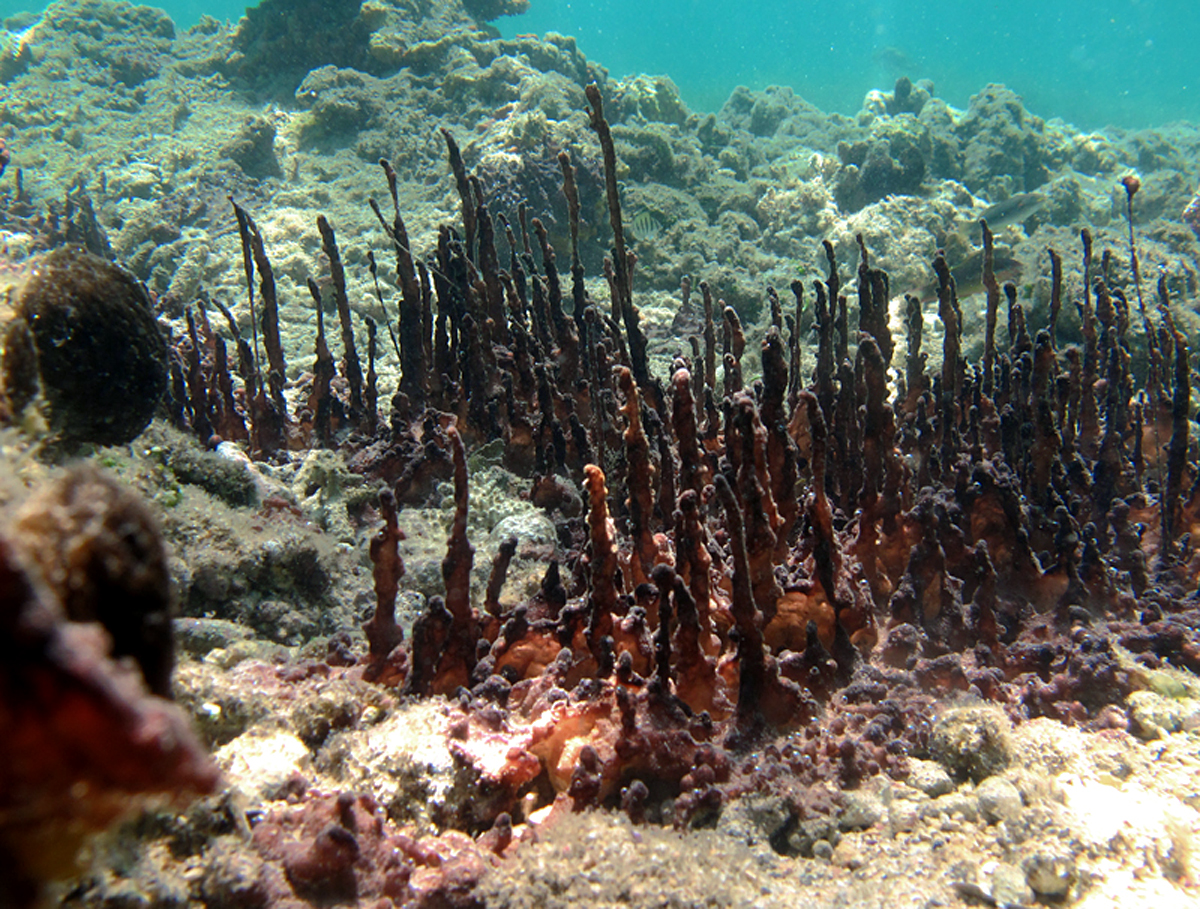
Image source: Wikipedia/Wikimedia
| Ecology, Host, and Life Cycle | |
|---|---|
| Oxygen requirements | Not Available |
| Optimal temperature | Not Available |
| Temperature range | Not Available |
| Habitat | Not Available |
| Biotic relationship | Not Available |
| Host(s) | Not Available |
| Cell arrangement | Not Available |
| Sporulation | Not Available |
| Energy source | Not Available |
| Pathogenicity | Not Available |
Gene Summary
Adenine Count
2091263 bp
Thymine Count
2098140 bp
Guanine Count
1943090 bp
Cytosine Count
1931671 bp
Genome Length
8064168 bp
Protein-coding Genes
7214 genes
Non-Coding Genes
66 genes
# of Chromosomes/Plasmids
1
Genes
| Name | Locus Tag | UniProt ID | Strand Orientation | Gene Start/End | Protein Molecular Weight |
|---|---|---|---|---|---|
| n-acetylglutamate synthase | N836_29555 | Not Available | Positive | 189014 - 189478 | 17727.1 |
| cation or drug efflux system protein | N836_29560 | Not Available | Negative | 189647 - 192799 | 111613.0 |
| cobalt transporter | N836_29565 | Not Available | Negative | 192804 - 193427 | 21151.1 |
| family transcriptional regulator | N836_29570 | Not Available | Positive | 193556 - 194254 | 26520.2 |
| integral membrane sensor signal transduction histidine kinase | N836_29575 | Not Available | Positive | 194247 - 195614 | 50290.1 |
| aspartate racemase | N836_29580 | Not Available | Positive | 195840 - 196625 | 28695.8 |
| amino acid abc transporter substrate-binding protein | N836_29585 | Not Available | Positive | 196636 - 197733 | 40654.5 |
| sodium:dicarboxylate symporter | N836_29590 | Not Available | Positive | 197739 - 199040 | 46409.5 |
| hypothetical protein | N836_29595 | Not Available | Positive | 199277 - 199468 | 7263.15 |
| hypothetical protein | N836_29600 | Not Available | Positive | 199458 - 200408 | 35598.6 |
Pathways
0 pathways
No pathways found
No metabolic pathways have been associated with this bacterium yet.
Health Effects
No health effects information available for this bacterium.