
Kingdom
Bacillati
Phylum
Cyanobacteriota
Class
Cyanophyceae
Order
Leptolyngbyales
Family
Leptolyngbyaceae
Genus
Leptolyngbya
Description
Taxonomy
| Kingdom | Bacillati |
|---|---|
| Phylum | Cyanobacteriota |
| Class | Cyanophyceae |
| Order | Leptolyngbyales |
| Family | Leptolyngbyaceae |
| Genus | Leptolyngbya |
| Species | Leptolyngbya sp. Heron Island J |
| Strain | No strain |
Profile
| Physiology | |
|---|---|
| Gram staining properties | Not Available |
| Shape | Filamentous |
| Mobility | Not Available |
| Flagellar presence | Not Available |
| Number of membranes | Not Available |
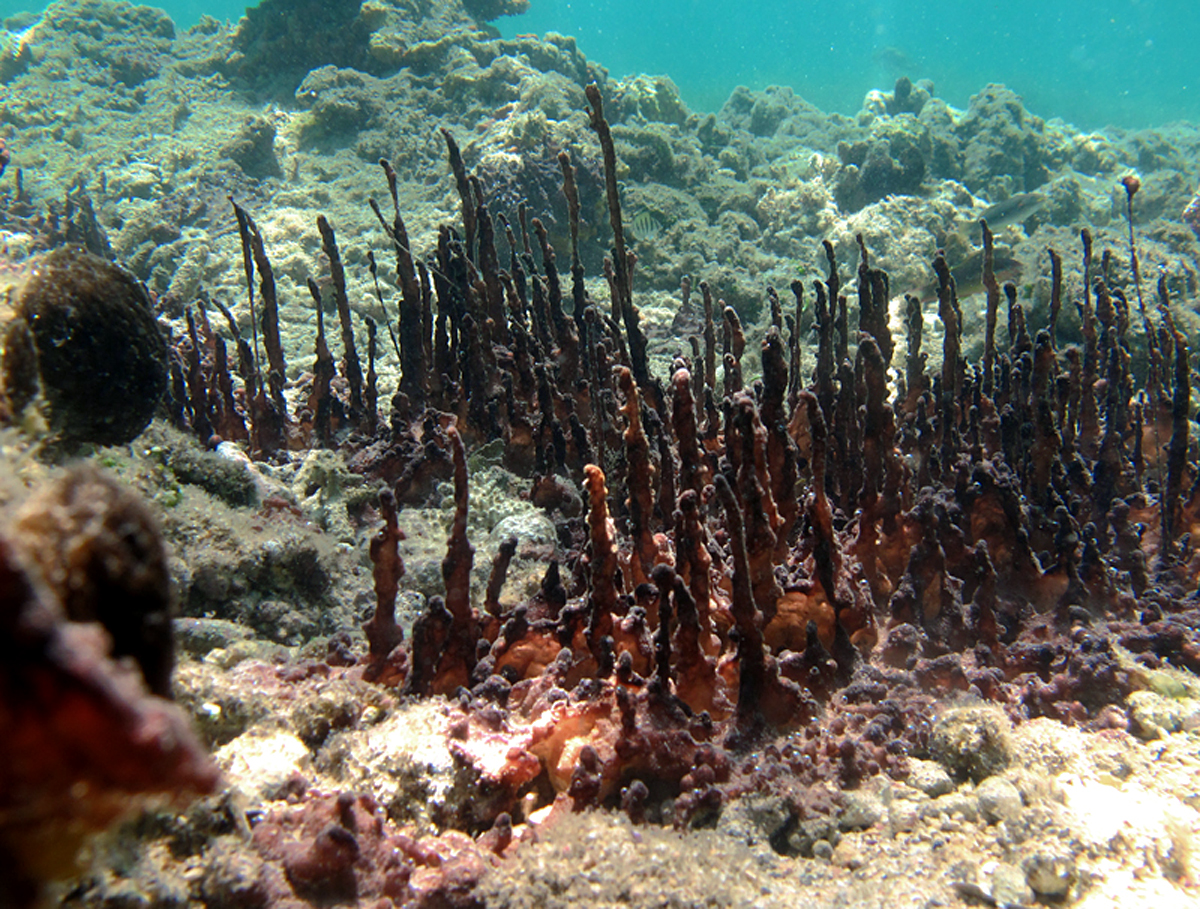
Image source: Wikipedia/Wikimedia
| Ecology, Host, and Life Cycle | |
|---|---|
| Oxygen requirements | Not Available |
| Optimal temperature | Not Available |
| Temperature range | Not Available |
| Habitat | Not Available |
| Biotic relationship | Not Available |
| Host(s) | Not Available |
| Cell arrangement | Not Available |
| Sporulation | Not Available |
| Energy source | Not Available |
| Pathogenicity | Not Available |
Gene Summary
Adenine Count
2091263 bp
Thymine Count
2098140 bp
Guanine Count
1943090 bp
Cytosine Count
1931671 bp
Genome Length
8064168 bp
Protein-coding Genes
7214 genes
Non-Coding Genes
66 genes
# of Chromosomes/Plasmids
1
Genes
| Name | Locus Tag | UniProt ID | Strand Orientation | Gene Start/End | Protein Molecular Weight |
|---|---|---|---|---|---|
| membrane bound o-acyl transferase mboat family protein | N836_36120 | Not Available | Positive | 1662339 - 1663745 | 53816.9 |
| c4-dicarboxylate abc transporter | N836_36125 | Not Available | Negative | 1663788 - 1665119 | 46632.2 |
| c4-dicarboxylate abc transporter substrate-binding protein | N836_36130 | Not Available | Negative | 1665109 - 1665597 | 18209.1 |
| histidine ammonia-lyase | N836_36135 | Not Available | Negative | 1665841 - 1667115 | 47104.3 |
| glycine betaine abc transporter substrate-binding protein | N836_36140 | Not Available | Negative | 1667290 - 1668513 | 45918.5 |
| abc transporter substrate-binding protein | N836_36145 | Not Available | Negative | 1668553 - 1669662 | 41919.3 |
| glutamine amidotransferase | N836_36150 | Not Available | Negative | 1669676 - 1670473 | 30058.2 |
| small membrane protein | N836_36155 | Not Available | Negative | 1670572 - 1670952 | 13169.5 |
| filamentous hemagglutinin family n-terminal domain protein | N836_36160 | Not Available | Positive | 1671249 - 1675814 | 160287.0 |
| hypothetical protein | N836_36165 | Not Available | Positive | 1676029 - 1676772 | 27192.1 |
Pathways
0 pathways
No pathways found
No metabolic pathways have been associated with this bacterium yet.
Health Effects
No health effects information available for this bacterium.