
Kingdom
Bacillati
Phylum
Cyanobacteriota
Class
Cyanophyceae
Order
Leptolyngbyales
Family
Leptolyngbyaceae
Genus
Leptolyngbya
Description
Taxonomy
| Kingdom | Bacillati |
|---|---|
| Phylum | Cyanobacteriota |
| Class | Cyanophyceae |
| Order | Leptolyngbyales |
| Family | Leptolyngbyaceae |
| Genus | Leptolyngbya |
| Species | Leptolyngbya sp. Heron Island J |
| Strain | No strain |
Profile
| Physiology | |
|---|---|
| Gram staining properties | Not Available |
| Shape | Filamentous |
| Mobility | Not Available |
| Flagellar presence | Not Available |
| Number of membranes | Not Available |
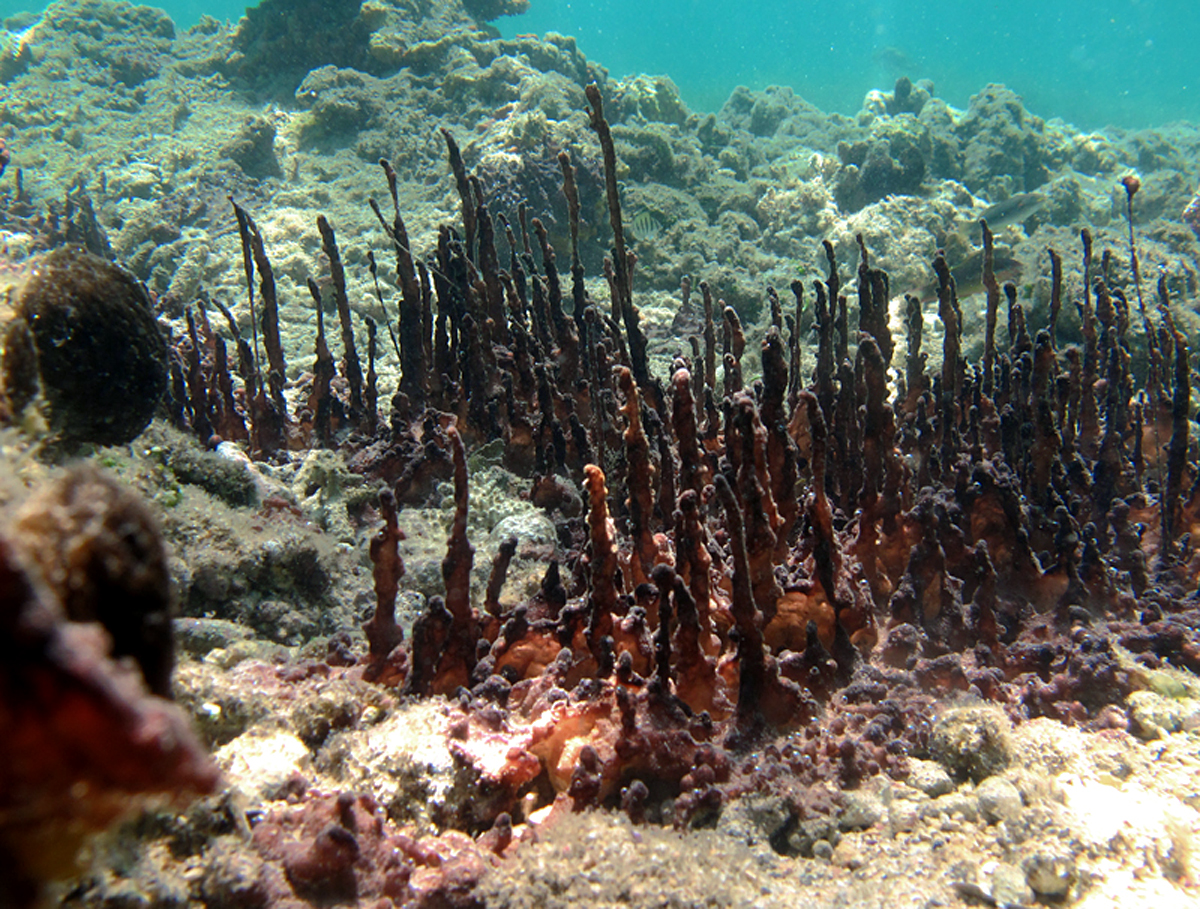
Image source: Wikipedia/Wikimedia
| Ecology, Host, and Life Cycle | |
|---|---|
| Oxygen requirements | Not Available |
| Optimal temperature | Not Available |
| Temperature range | Not Available |
| Habitat | Not Available |
| Biotic relationship | Not Available |
| Host(s) | Not Available |
| Cell arrangement | Not Available |
| Sporulation | Not Available |
| Energy source | Not Available |
| Pathogenicity | Not Available |
Gene Summary
Adenine Count
2091263 bp
Thymine Count
2098140 bp
Guanine Count
1943090 bp
Cytosine Count
1931671 bp
Genome Length
8064168 bp
Protein-coding Genes
7214 genes
Non-Coding Genes
66 genes
# of Chromosomes/Plasmids
1
Genes
| Name | Locus Tag | UniProt ID | Strand Orientation | Gene Start/End | Protein Molecular Weight |
|---|---|---|---|---|---|
| sulfotransferase domain family protein | N836_35615 | Not Available | Positive | 1571445 - 1572326 | 33516.0 |
| group 1 glycosyl transferase | N836_35620 | Not Available | Positive | 1572377 - 1573618 | 46255.4 |
| group 1 glycosyl transferase | N836_35625 | Not Available | Positive | 1573642 - 1574775 | 42743.3 |
| hypothetical protein | N836_35630 | Not Available | Positive | 1574793 - 1576187 | 51834.2 |
| ferric uptake regulation protein | N836_35635 | Not Available | Negative | 1576323 - 1576712 | 14462.6 |
| abc transporter substrate-binding protein | N836_35640 | Not Available | Positive | 1576839 - 1578032 | 42992.1 |
| abc transporter atp-binding protein | N836_35645 | Not Available | Positive | 1578075 - 1578839 | 28373.5 |
| abc transporter permease | N836_35650 | Not Available | Positive | 1578848 - 1579687 | 30001.1 |
| flavoprotein involved in k+ transport | N836_35655 | Not Available | Negative | 1579738 - 1580991 | 46989.3 |
| g3e family | N836_35660 | Not Available | Positive | 1581099 - 1581878 | 28771.4 |
Pathways
0 pathways
No pathways found
No metabolic pathways have been associated with this bacterium yet.
Health Effects
No health effects information available for this bacterium.