
Kingdom
Bacillati
Phylum
Cyanobacteriota
Class
Cyanophyceae
Order
Leptolyngbyales
Family
Leptolyngbyaceae
Genus
Leptolyngbya
Description
Taxonomy
| Kingdom | Bacillati |
|---|---|
| Phylum | Cyanobacteriota |
| Class | Cyanophyceae |
| Order | Leptolyngbyales |
| Family | Leptolyngbyaceae |
| Genus | Leptolyngbya |
| Species | Leptolyngbya sp. Heron Island J |
| Strain | No strain |
Profile
| Physiology | |
|---|---|
| Gram staining properties | Not Available |
| Shape | Filamentous |
| Mobility | Not Available |
| Flagellar presence | Not Available |
| Number of membranes | Not Available |
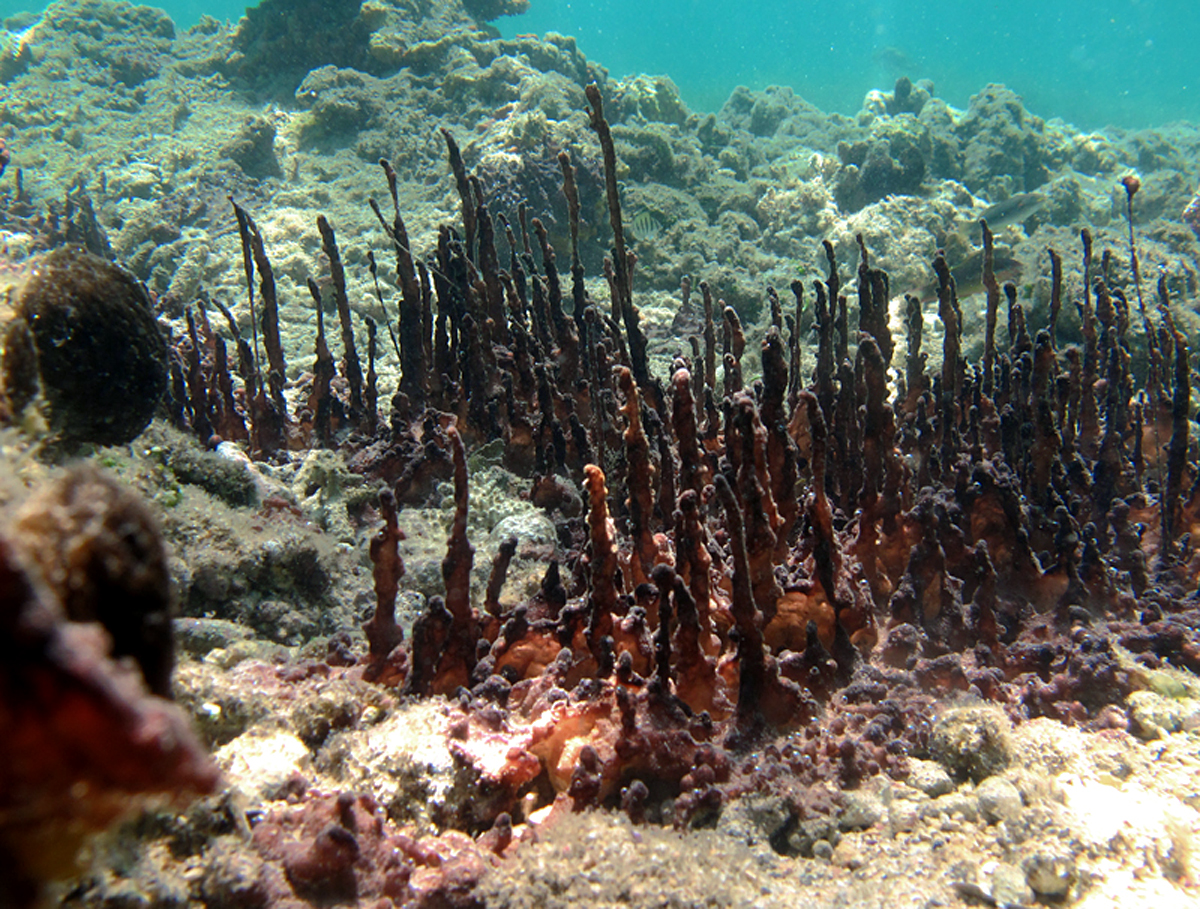
Image source: Wikipedia/Wikimedia
| Ecology, Host, and Life Cycle | |
|---|---|
| Oxygen requirements | Not Available |
| Optimal temperature | Not Available |
| Temperature range | Not Available |
| Habitat | Not Available |
| Biotic relationship | Not Available |
| Host(s) | Not Available |
| Cell arrangement | Not Available |
| Sporulation | Not Available |
| Energy source | Not Available |
| Pathogenicity | Not Available |
Gene Summary
Adenine Count
2091263 bp
Thymine Count
2098140 bp
Guanine Count
1943090 bp
Cytosine Count
1931671 bp
Genome Length
8064168 bp
Protein-coding Genes
7214 genes
Non-Coding Genes
66 genes
# of Chromosomes/Plasmids
1
Genes
| Name | Locus Tag | UniProt ID | Strand Orientation | Gene Start/End | Protein Molecular Weight |
|---|---|---|---|---|---|
| methyltransferase | N836_34295 | Not Available | Negative | 1308923 - 1309741 | 30221.8 |
| hypothetical protein | N836_34300 | Not Available | Negative | 1310033 - 1310131 | 3444.23 |
| hypothetical protein | N836_34305 | Not Available | Negative | 1310239 - 1310586 | 11815.1 |
| hypothetical protein | N836_34310 | Not Available | Negative | 1310599 - 1311168 | 22206.5 |
| hypothetical protein | N836_34315 | Not Available | Negative | 1311536 - 1311745 | 7838.23 |
| hypothetical protein | N836_34320 | Not Available | Positive | 1311827 - 1312060 | 8851.72 |
| hypothetical protein | N836_34325 | Not Available | Positive | 1312309 - 1312956 | 24198.0 |
| hypothetical protein | N836_34330 | Not Available | Positive | 1313002 - 1313535 | 19474.1 |
| hypothetical protein | N836_34335 | Not Available | Positive | 1313584 - 1313889 | 11424.5 |
| hypothetical protein | N836_34340 | Not Available | Positive | 1313892 - 1316090 | 81297.9 |
Pathways
0 pathways
No pathways found
No metabolic pathways have been associated with this bacterium yet.
Health Effects
No health effects information available for this bacterium.