
Kingdom
Bacillati
Phylum
Cyanobacteriota
Class
Cyanophyceae
Order
Leptolyngbyales
Family
Leptolyngbyaceae
Genus
Leptolyngbya
Description
Taxonomy
| Kingdom | Bacillati |
|---|---|
| Phylum | Cyanobacteriota |
| Class | Cyanophyceae |
| Order | Leptolyngbyales |
| Family | Leptolyngbyaceae |
| Genus | Leptolyngbya |
| Species | Leptolyngbya sp. Heron Island J |
| Strain | No strain |
Profile
| Physiology | |
|---|---|
| Gram staining properties | Not Available |
| Shape | Filamentous |
| Mobility | Not Available |
| Flagellar presence | Not Available |
| Number of membranes | Not Available |
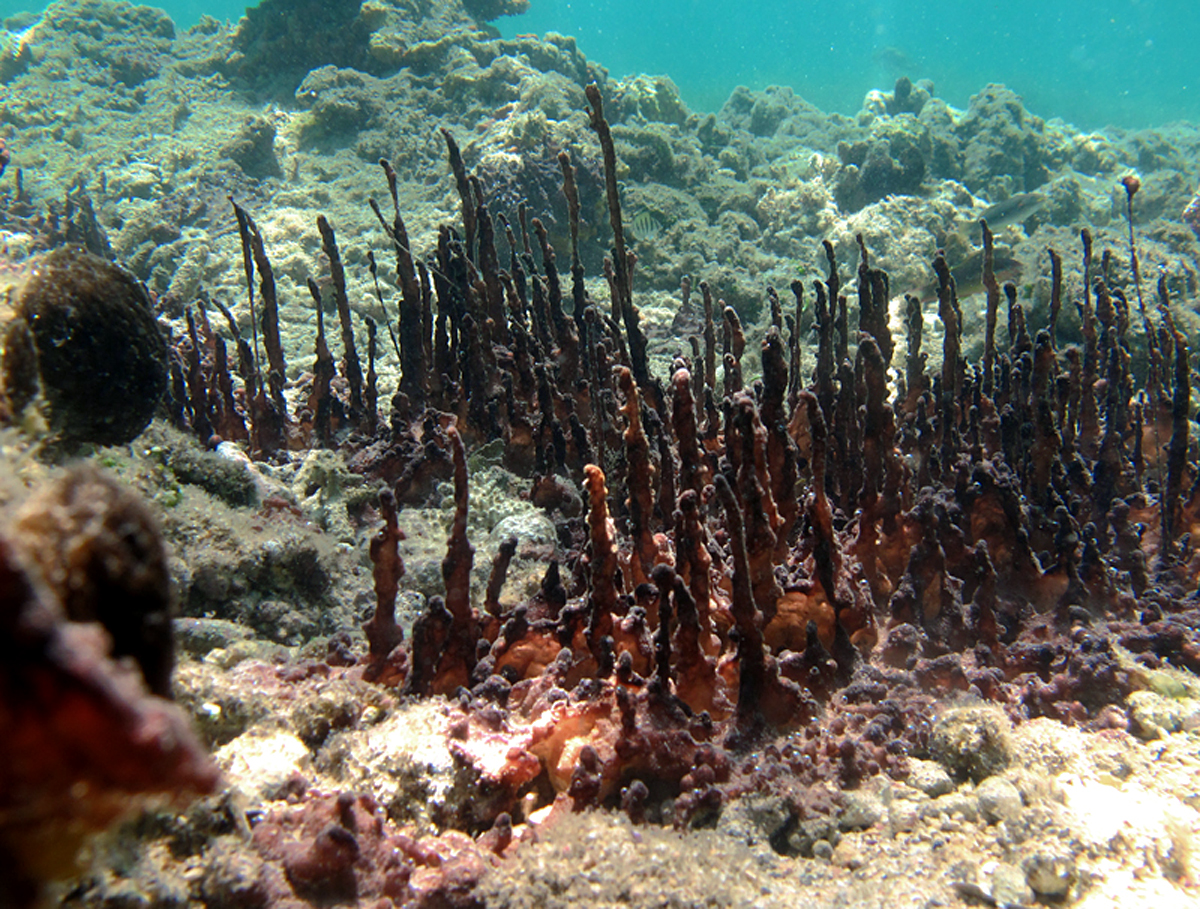
Image source: Wikipedia/Wikimedia
| Ecology, Host, and Life Cycle | |
|---|---|
| Oxygen requirements | Not Available |
| Optimal temperature | Not Available |
| Temperature range | Not Available |
| Habitat | Not Available |
| Biotic relationship | Not Available |
| Host(s) | Not Available |
| Cell arrangement | Not Available |
| Sporulation | Not Available |
| Energy source | Not Available |
| Pathogenicity | Not Available |
Gene Summary
Adenine Count
2091263 bp
Thymine Count
2098140 bp
Guanine Count
1943090 bp
Cytosine Count
1931671 bp
Genome Length
8064168 bp
Protein-coding Genes
7214 genes
Non-Coding Genes
66 genes
# of Chromosomes/Plasmids
1
Genes
| Name | Locus Tag | UniProt ID | Strand Orientation | Gene Start/End | Protein Molecular Weight |
|---|---|---|---|---|---|
| acyl carrier protein | N836_33885 | Not Available | Negative | 1227608 - 1227850 | 8533.96 |
| cell division protein | N836_33890 | Not Available | Negative | 1228645 - 1229550 | 33146.8 |
| peptide deformylase | N836_33895 | Not Available | Positive | 1229739 - 1230296 | 20495.1 |
| hypothetical protein | N836_33900 | Not Available | Positive | 1230377 - 1230577 | 6971.6 |
| delta -sterol c-methyltransferase | N836_33905 | Not Available | Positive | 1230865 - 1231854 | 36420.9 |
| 2-polyprenyl-6-methoxyphenol hydroxylase-like oxidoreductase | N836_33910 | Not Available | Positive | 1231870 - 1233084 | 44705.5 |
| n-acetylmuramoyl-l-alanine amidase | N836_33915 | Not Available | Negative | 1233646 - 1235400 | 63197.1 |
| response regulator receiver modulated diguanylate cyclase phosphodiesterase with pas pac sensor | N836_33920 | Not Available | Negative | 1235848 - 1239261 | 127447.0 |
| snf2-related protein | N836_33925 | Not Available | Negative | 1239705 - 1243907 | 156763.0 |
| hypothetical protein | N836_33930 | Not Available | Negative | 1244049 - 1245053 | 37448.8 |
Pathways
0 pathways
No pathways found
No metabolic pathways have been associated with this bacterium yet.
Health Effects
No health effects information available for this bacterium.