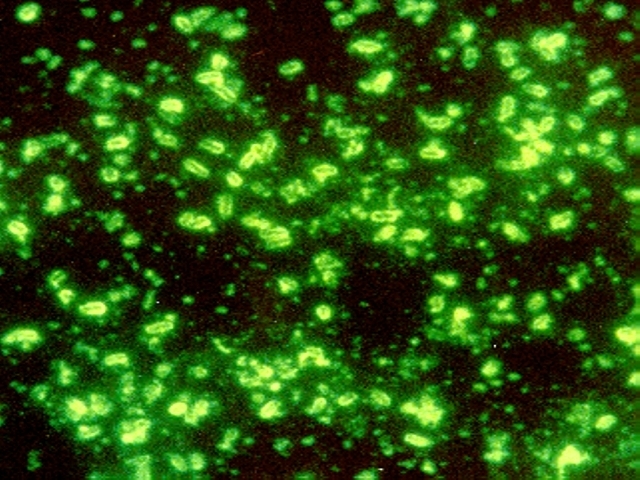
Yersinia wautersii

Rod

Kingdom

Pseudomonadati

Phylum

Pseudomonadota

Class

Gammaproteobacteria

Order

Enterobacterales

Family

Yersiniaceae

Genus

Yersinia

Description

Yersinia wautersii is a rod-shaped bacterium characterized by the presence of flagella, which facilitate its motility. This organism possesses a single replicon, indicating a simplified genomic structure that may influence its replication and functioning. Yersinia wautersii is known to infect Homo sapiens, suggesting a potential pathogenic role in human health. The bacterium is classified under the genus Yersinia, which is recognized for containing species that can cause diseases in humans. While the specific pathogenic mechanisms and clinical implications of Yersinia wautersii are not detailed in the provided traits, its association with human hosts highlights the importance of understanding this organism’s biology and ecology. The accession number CVMG00000000.1 indicates that genomic information is available for Yersinia wautersii, which may provide insights into its genetic makeup and potential virulence factors. Further study of this bacterium could elucidate its ecological niche and interactions within human environments, particularly as it relates to its capacity to thrive in specific conditions and its role in microbial communities. Analyzing these aspects could improve our understanding of not only Yersinia wautersii but also the broader implications of rod-shaped, flagellated bacteria in human health and disease dynamics.

Taxonomy

KingdomPseudomonadati
PhylumPseudomonadota
ClassGammaproteobacteria
OrderEnterobacterales
FamilyYersiniaceae
GenusYersinia
SpeciesYersinia wautersii
StrainNo strain

Profile

Physiology
Gram staining propertiesNot Available
ShapeRod
MobilityNot Available
Flagellar presenceYes
Number of membranesNot Available
Image of Yersinia wautersii
Image source: Wikipedia/Wikimedia
Ecology, Host, and Life Cycle
Oxygen requirementsNot Available
Optimal temperatureNot Available
Temperature rangeNot Available
HabitatNot Available
Biotic relationshipNot Available
Host(s)Homo sapiens
Cell arrangementNot Available
SporulationNot Available
Energy sourceNot Available
PathogenicityNot Available

Genome Summary

Yersinia pseudotuberculosis genome assembly 5139_1#1, scaffold

Gene Summary

Adenine Count

1272900 bp

Thymine Count

1286295 bp

Guanine Count

1164511 bp

Cytosine Count

1135122 bp

Genome Length

4858848 bp

Protein-coding Genes

4071 genes

Non-Coding Genes

207 genes

# of Chromosomes/Plasmids

1

Genes

NameLocus TagUniProt IDStrand OrientationGene Start/EndProtein Molecular Weight
yfcl proteinERS008478_01625P64541Positive1768504 - 176878210122.9
bifunctional trna (mnm(5)s(2)u34)-methyltransferase/fad-dependent cmnm(5)s(2)u34 oxidoreductaseERS008478_01626Q1C669Negative1768961 - 177103076557.0
3-oxoacyl-acp synthaseERS008478_01627P0A954Positive1771202 - 177242542880.1
diguanylate cyclaseERS008478_01628A0A0H3AFM6Positive1772932 - 177393939122.6
resistance proteinERS008478_01629A0A0H3JGH6Negative1774008 - 177470325446.8
putative mannose-resistant/proteus-like fimbrial proteinERS008478_01630Not AvailablePositive1775491 - 177602117869.1
flagella biosynthesis regulatorERS008478_01631Q7CQ37Negative1776353 - 177739038108.2
integral membrane proteinERS008478_01632O31448Negative1777677 - 177859433404.3
putative arac family regulatory proteinERS008478_01633Not AvailablePositive1778799 - 177958429340.4
erythronate-4-phosphate dehydrogenaseERS008478_01634A7FGL9Positive1779632 - 178075941125.5

Displaying genes 1661 – 1670 of 4278 in total

Pathways

0 pathways

No pathways found

No metabolic pathways have been associated with this bacterium yet.

Metabolites

286 records
Metabolite IDMetabolite nameStructureCAS number
BASm0000232(4S)-perillyl alcoholC10H16OChemical structure of (4S)-perillyl alcoholNot available
Average152.237Da
Monoisotopic152.1201151Da
BASm0000237(R)-4'-phosphopantothenateC9H18NO8PChemical structure of (R)-4'-phosphopantothenateNot available
Average299.2149Da
Monoisotopic299.0770031Da
BASm00002502,5-didehydro-D-gluconateC6H7O7Chemical structure of 2,5-didehydro-D-gluconate53736-12-2
Average191.1156Da
Monoisotopic191.019177578Da
BASm00002512-dehydropantoateC6H9O4Chemical structure of 2-dehydropantoateNot available
Average145.1333Da
Monoisotopic145.050083776Da
BASm0000274aldehydo-D-galacturonateC6H9O7Chemical structure of aldehydo-D-galacturonateNot available
Average193.132Da
Monoisotopic193.0353762Da
BASm0000377(S)-malateC4H4O5Chemical structure of (S)-malateNot available
Average132.0716Da
Monoisotopic132.005873238Da
BASm0000387(6R)-5,10-methylene-5,6,7,8-tetrahydrofolateC20H21N7O6Chemical structure of (6R)-5,10-methylene-5,6,7,8-tetrahydrofolateNot available
Average455.432Da
Monoisotopic455.1564286Da
BASm0000401(S)-2-succinylamino-6-oxoheptanedioateC11H12NO8Chemical structure of (S)-2-succinylamino-6-oxoheptanedioateNot available
Average286.218Da
Monoisotopic286.0579371Da
BASm0000491D-erythruloseC4H8O4Chemical structure of D-erythruloseNot available
Average120.104Da
Monoisotopic120.0422587Da
BASm00005275-oxopentanoateC5H7O3Chemical structure of 5-oxopentanoateNot available
Average115.109Da
Monoisotopic115.040067665Da

Displaying 1–10 of 286 metabolites

Health Effects

No health effects information available for this bacterium.