
Kingdom
Pseudomonadati
Phylum
Pseudomonadota
Class
Gammaproteobacteria
Order
Vibrionales
Family
Vibrionaceae
Genus
Vibrio
Description
Taxonomy
| Kingdom | Pseudomonadati |
|---|---|
| Phylum | Pseudomonadota |
| Class | Gammaproteobacteria |
| Order | Vibrionales |
| Family | Vibrionaceae |
| Genus | Vibrio |
| Species | Vibrio parahaemolyticus |
| Strain | O1:Kuk FDA_R31 |
Profile
| Physiology | |
|---|---|
| Gram staining properties | Negative |
| Shape | Rod |
| Mobility | Yes |
| Flagellar presence | Yes |
| Number of membranes | 2 |
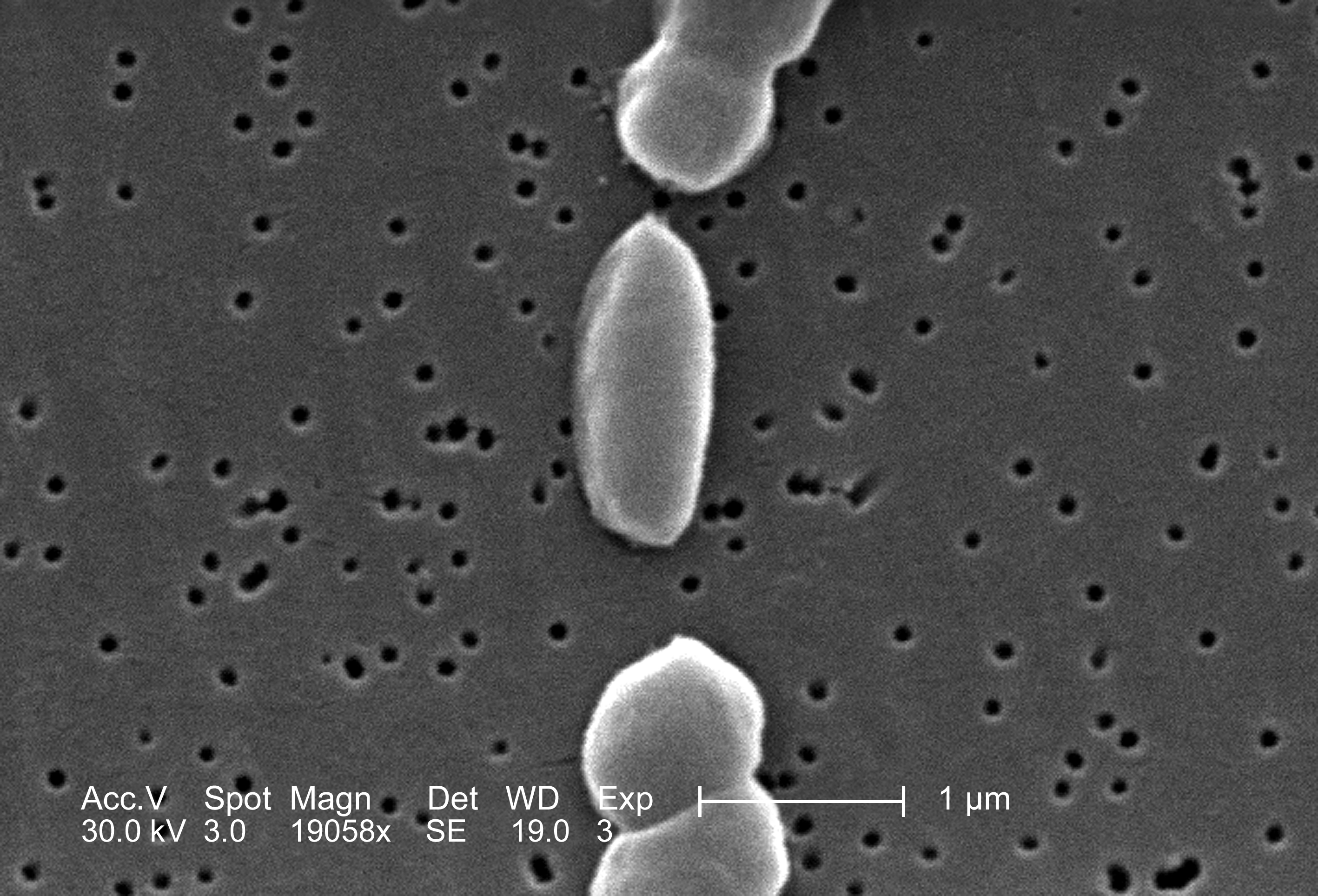
Image source: Wikipedia/Wikimedia
| Ecology, Host, and Life Cycle | |
|---|---|
| Oxygen requirements | Facultative anaerobe |
| Optimal temperature | 20 |
| Temperature range | Mesophilic |
| Habitat | Aquatic |
| Biotic relationship | Free living |
| Host(s) | Not Available |
| Cell arrangement | Singles |
| Sporulation | Not Available |
| Energy source | Heterotroph |
| Pathogenicity | Not Available |
Gene Summary
Adenine Count
512262 bp
Thymine Count
508020 bp
Guanine Count
419811 bp
Cytosine Count
421241 bp
Genome Length
1861334 bp
Protein-coding Genes
1636 genes
Non-Coding Genes
28 genes
# of Chromosomes/Plasmids
2
Genes
| Name | Locus Tag | UniProt ID | Strand Orientation | Gene Start/End | Protein Molecular Weight |
|---|---|---|---|---|---|
| pleiotropic regulatory protein rsms | HK86_RS06830 | Not Available | Negative | 1448609 - 1448773 | 6005.2 |
| primosomal replication protein | HK86_RS06835 | Not Available | Negative | 1448773 - 1449318 | 21170.5 |
| sulfite exporter taue/safe family protein | HK86_RS06840 | Not Available | Negative | 1449315 - 1450100 | 27782.6 |
| atp-dependent dna helicase ding | HK86_RS06845 | Not Available | Negative | 1450115 - 1452190 | 77712.2 |
| porin | HK86_RS06850 | Not Available | Positive | 1452705 - 1453730 | 37373.9 |
| duf2057 family protein | HK86_RS06855 | Not Available | Positive | 1453807 - 1454484 | 25014.7 |
| pseudouridine synthase | HK86_RS06860 | Not Available | Negative | 1454597 - 1455295 | 26414.8 |
| nadp-dependent isocitrate dehydrogenase | HK86_RS06865 | Not Available | Positive | 1455607 - 1457832 | 80604.1 |
| cold shock domain-containing protein cspd | HK86_RS06870 | Not Available | Negative | 1457963 - 1458181 | 7875.23 |
| atp-dependent clp protease adapter clps | HK86_RS06875 | Not Available | Positive | 1458881 - 1459201 | 12248.5 |
Pathways
0 pathways
No pathways found
No metabolic pathways have been associated with this bacterium yet.
Health Effects
No health effects information available for this bacterium.


