
Kingdom
Pseudomonadati
Phylum
Pseudomonadota
Class
Gammaproteobacteria
Order
Vibrionales
Family
Vibrionaceae
Genus
Vibrio
Description
Taxonomy
| Kingdom | Pseudomonadati |
|---|---|
| Phylum | Pseudomonadota |
| Class | Gammaproteobacteria |
| Order | Vibrionales |
| Family | Vibrionaceae |
| Genus | Vibrio |
| Species | Vibrio parahaemolyticus |
| Strain | O1:Kuk FDA_R31 |
Profile
| Physiology | |
|---|---|
| Gram staining properties | Negative |
| Shape | Rod |
| Mobility | Yes |
| Flagellar presence | Yes |
| Number of membranes | 2 |
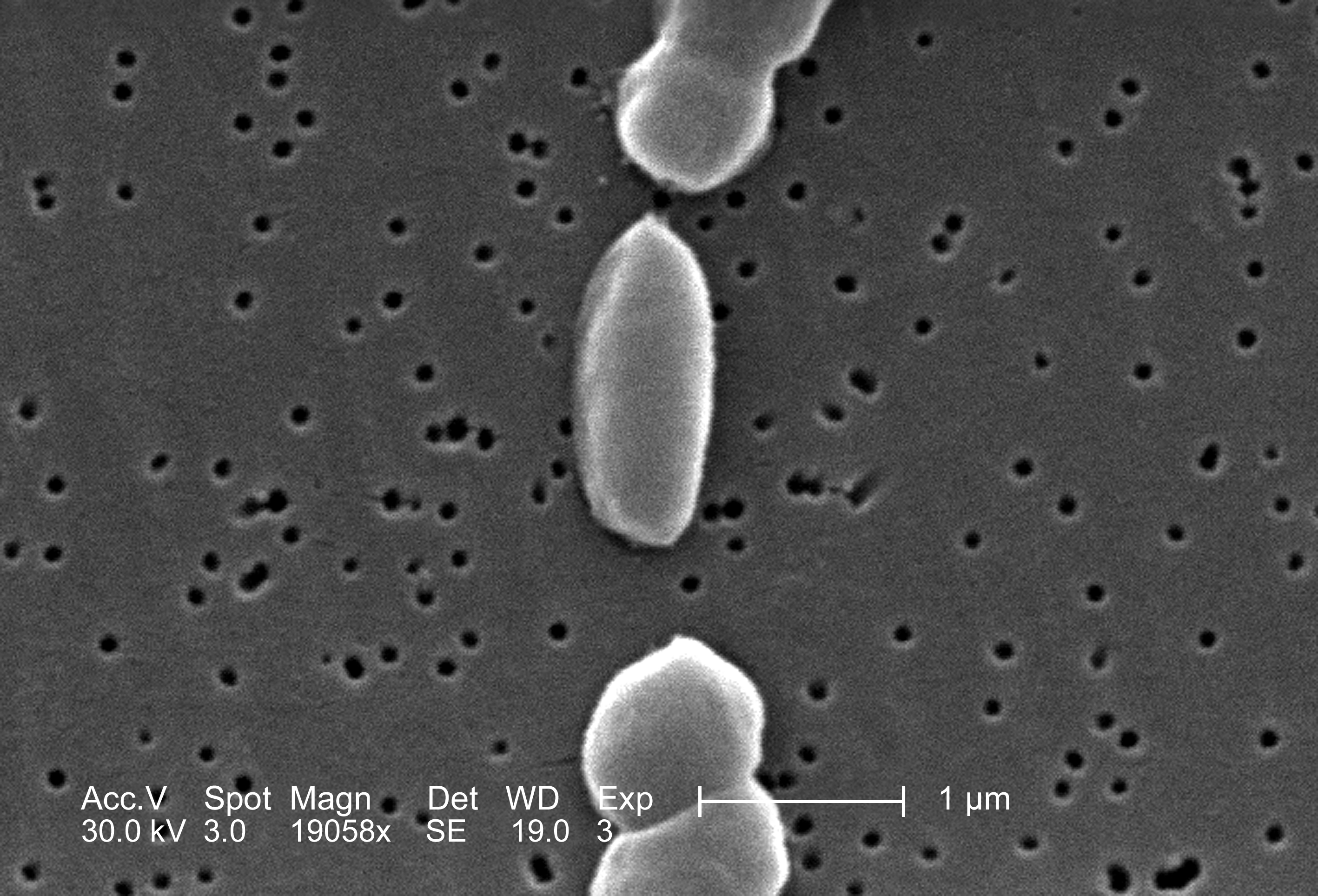
Image source: Wikipedia/Wikimedia
| Ecology, Host, and Life Cycle | |
|---|---|
| Oxygen requirements | Facultative anaerobe |
| Optimal temperature | 20 |
| Temperature range | Mesophilic |
| Habitat | Aquatic |
| Biotic relationship | Free living |
| Host(s) | Not Available |
| Cell arrangement | Singles |
| Sporulation | Not Available |
| Energy source | Heterotroph |
| Pathogenicity | Not Available |
Gene Summary
Adenine Count
512262 bp
Thymine Count
508020 bp
Guanine Count
419811 bp
Cytosine Count
421241 bp
Genome Length
1861334 bp
Protein-coding Genes
1636 genes
Non-Coding Genes
28 genes
# of Chromosomes/Plasmids
2
Genes
| Name | Locus Tag | UniProt ID | Strand Orientation | Gene Start/End | Protein Molecular Weight |
|---|---|---|---|---|---|
| transcriptional regulator toxr | HK86_RS05935 | Not Available | Negative | 1245396 - 1246274 | 32609.5 |
| molecular chaperone htpg | HK86_RS05940 | Not Available | Positive | 1246545 - 1248449 | 72165.0 |
| adenylate kinase | HK86_RS05945 | Not Available | Positive | 1248770 - 1249414 | 23295.9 |
| ferrochelatase | HK86_RS05950 | Not Available | Positive | 1249520 - 1250482 | 36251.6 |
| peptide mfs transporter | HK86_RS05955 | Not Available | Negative | 1250559 - 1251947 | 50185.7 |
| transcription/translation regulatory transformer protein rfah | HK86_RS05960 | Not Available | Positive | 1252281 - 1252781 | 19276.3 |
| asparagine synthase b | HK86_RS05965 | Not Available | Negative | 1252897 - 1254561 | 62315.9 |
| cation:proton antiporter family protein | HK86_RS05970 | Not Available | Negative | 1254804 - 1256393 | 57531.3 |
| rok family protein | HK86_RS05975 | Not Available | Negative | 1256475 - 1257689 | 43829.0 |
| n-acetylglucosamine-6-phosphate deacetylase | HK86_RS05980 | Not Available | Negative | 1257692 - 1258828 | 40720.9 |
Pathways
0 pathways
No pathways found
No metabolic pathways have been associated with this bacterium yet.
Health Effects
No health effects information available for this bacterium.


