
Kingdom
Pseudomonadati
Phylum
Pseudomonadota
Class
Gammaproteobacteria
Order
Vibrionales
Family
Vibrionaceae
Genus
Vibrio
Description
Taxonomy
| Kingdom | Pseudomonadati |
|---|---|
| Phylum | Pseudomonadota |
| Class | Gammaproteobacteria |
| Order | Vibrionales |
| Family | Vibrionaceae |
| Genus | Vibrio |
| Species | Vibrio parahaemolyticus |
| Strain | O1:Kuk FDA_R31 |
Profile
| Physiology | |
|---|---|
| Gram staining properties | Negative |
| Shape | Rod |
| Mobility | Yes |
| Flagellar presence | Yes |
| Number of membranes | 2 |
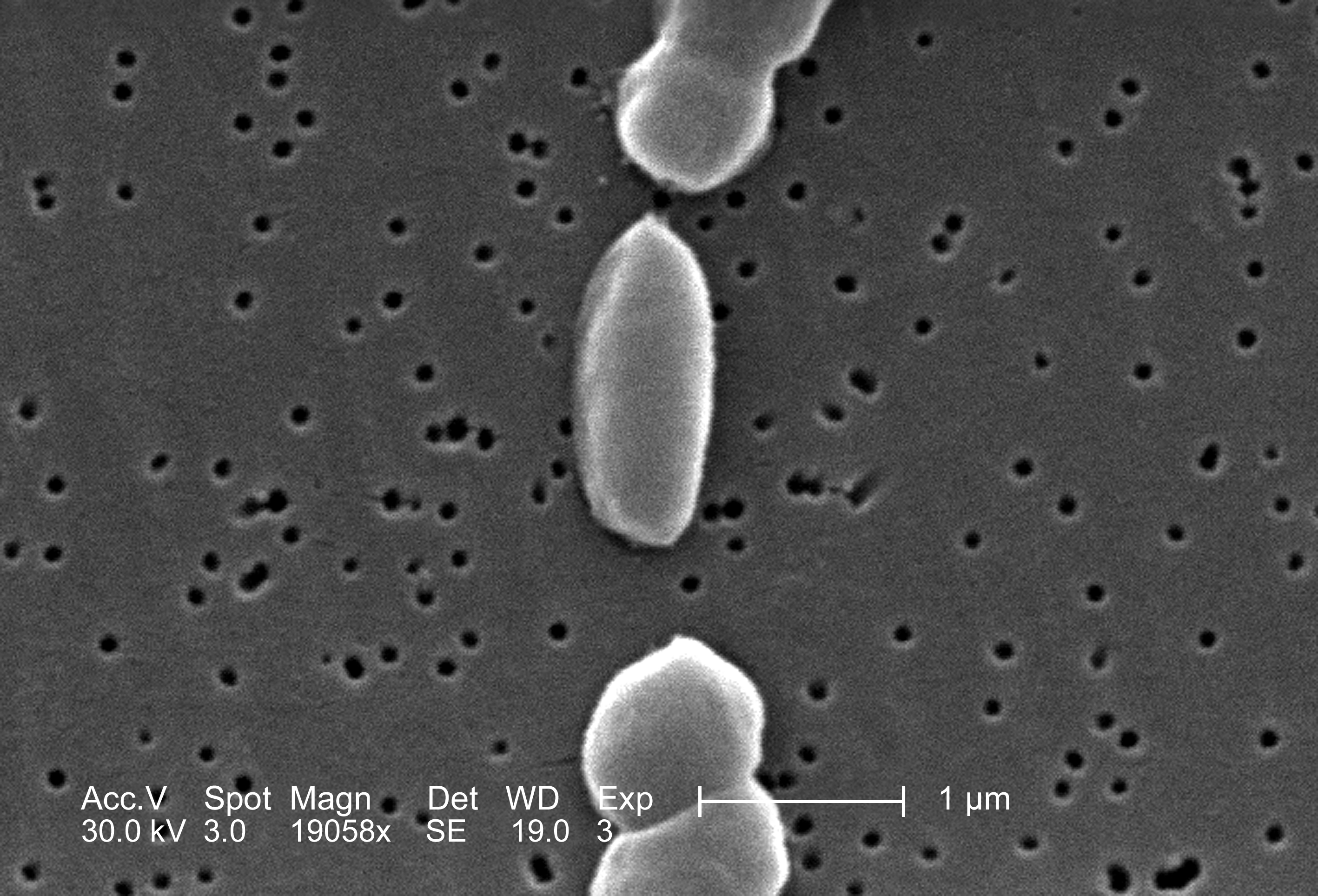
Image source: Wikipedia/Wikimedia
| Ecology, Host, and Life Cycle | |
|---|---|
| Oxygen requirements | Facultative anaerobe |
| Optimal temperature | 20 |
| Temperature range | Mesophilic |
| Habitat | Aquatic |
| Biotic relationship | Free living |
| Host(s) | Not Available |
| Cell arrangement | Singles |
| Sporulation | Not Available |
| Energy source | Heterotroph |
| Pathogenicity | Not Available |
Gene Summary
Adenine Count
512262 bp
Thymine Count
508020 bp
Guanine Count
419811 bp
Cytosine Count
421241 bp
Genome Length
1861334 bp
Protein-coding Genes
1636 genes
Non-Coding Genes
28 genes
# of Chromosomes/Plasmids
2
Genes
| Name | Locus Tag | UniProt ID | Strand Orientation | Gene Start/End | Protein Molecular Weight |
|---|---|---|---|---|---|
| flagellar biosynthesis anti-sigma factor flgm | HK86_RS05695 | Not Available | Negative | 1190962 - 1191279 | 11081.9 |
| flagellar basal body p-ring formation chaperone flga | HK86_RS05700 | Not Available | Negative | 1191407 - 1192153 | 26978.4 |
| chemotaxis protein chev | HK86_RS05705 | Not Available | Positive | 1192230 - 1193156 | 34128.4 |
| protein-glutamate o-methyltransferase | HK86_RS05710 | Not Available | Positive | 1193168 - 1193995 | 30824.5 |
| flagellar basal body rod protein flgb | HK86_RS05715 | Not Available | Positive | 1194308 - 1194703 | 14223.9 |
| flagellar basal body rod protein flgc | HK86_RS05720 | Not Available | Positive | 1194709 - 1195122 | 14768.4 |
| flagellar hook assembly protein flgd | HK86_RS05725 | Not Available | Positive | 1195140 - 1195847 | 24897.5 |
| flagellar hook protein flge | HK86_RS05730 | Not Available | Positive | 1195879 - 1197192 | 47358.4 |
| flagellar basal body rod protein flgf | HK86_RS05735 | Not Available | Positive | 1197486 - 1198235 | 26939.1 |
| flagellar basal-body rod protein flgg | HK86_RS05740 | Not Available | Positive | 1198254 - 1199042 | 27894.8 |
Pathways
0 pathways
No pathways found
No metabolic pathways have been associated with this bacterium yet.
Health Effects
No health effects information available for this bacterium.


