
Kingdom
Pseudomonadati
Phylum
Pseudomonadota
Class
Gammaproteobacteria
Order
Vibrionales
Family
Vibrionaceae
Genus
Vibrio
Description
Taxonomy
| Kingdom | Pseudomonadati |
|---|---|
| Phylum | Pseudomonadota |
| Class | Gammaproteobacteria |
| Order | Vibrionales |
| Family | Vibrionaceae |
| Genus | Vibrio |
| Species | Vibrio parahaemolyticus |
| Strain | O1:Kuk FDA_R31 |
Profile
| Physiology | |
|---|---|
| Gram staining properties | Negative |
| Shape | Rod |
| Mobility | Yes |
| Flagellar presence | Yes |
| Number of membranes | 2 |
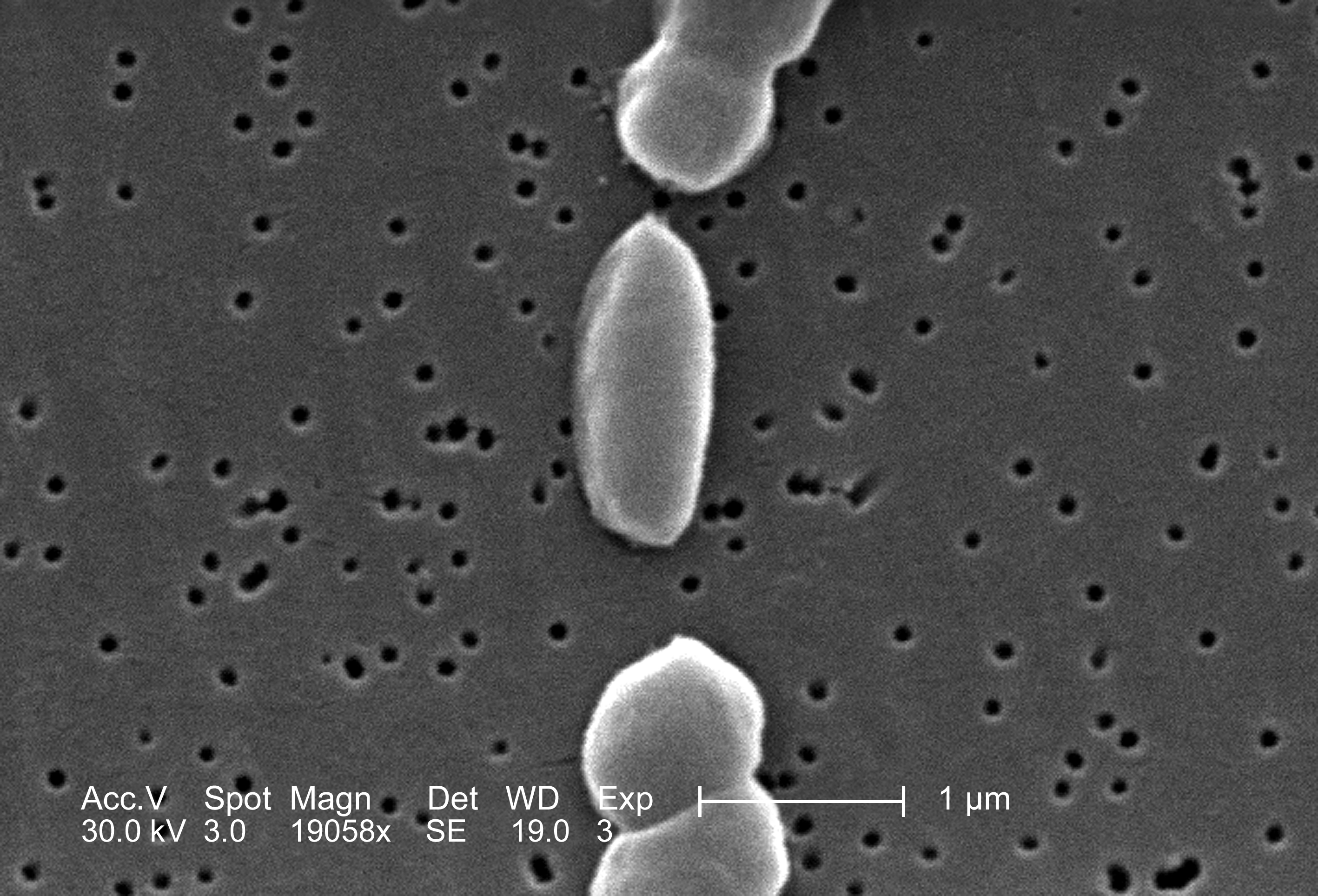
Image source: Wikipedia/Wikimedia
| Ecology, Host, and Life Cycle | |
|---|---|
| Oxygen requirements | Facultative anaerobe |
| Optimal temperature | 20 |
| Temperature range | Mesophilic |
| Habitat | Aquatic |
| Biotic relationship | Free living |
| Host(s) | Not Available |
| Cell arrangement | Singles |
| Sporulation | Not Available |
| Energy source | Heterotroph |
| Pathogenicity | Not Available |
Gene Summary
Adenine Count
512262 bp
Thymine Count
508020 bp
Guanine Count
419811 bp
Cytosine Count
421241 bp
Genome Length
1861334 bp
Protein-coding Genes
1636 genes
Non-Coding Genes
28 genes
# of Chromosomes/Plasmids
2
Genes
| Name | Locus Tag | UniProt ID | Strand Orientation | Gene Start/End | Protein Molecular Weight |
|---|---|---|---|---|---|
| apolipoprotein n-acyltransferase | HK86_RS05395 | Not Available | Negative | 1147584 - 1149101 | 56797.4 |
| cnnm family magnesium/cobalt transport protein corc | HK86_RS05400 | Not Available | Negative | 1149141 - 1150040 | 33940.8 |
| rrna maturation rnase ybey | HK86_RS05405 | Not Available | Negative | 1150147 - 1150611 | 17693.9 |
| phoh family protein | HK86_RS05410 | Not Available | Negative | 1150614 - 1151711 | 40960.1 |
| trna (n6-isopentenyl adenosine(37)-c2)-methylthiotransferase miab | HK86_RS05415 | Not Available | Negative | 1151785 - 1153209 | 53702.5 |
| 2-octaprenyl-3-methyl-6-methoxy-1,4-benzoquinol hydroxylase | HK86_RS05420 | Not Available | Positive | 1153468 - 1154643 | 43547.1 |
| Trna-leu | Not Available | Not Available | Positive | 1154783 - 1154867 | Not Available |
| Trna-gln | Not Available | Not Available | Positive | 1154922 - 1154996 | Not Available |
| Trna-leu | Not Available | Not Available | Positive | 1155045 - 1155129 | Not Available |
| Trna-leu | Not Available | Not Available | Positive | 1155159 - 1155243 | Not Available |
Pathways
0 pathways
No pathways found
No metabolic pathways have been associated with this bacterium yet.
Health Effects
No health effects information available for this bacterium.


