
Kingdom
Pseudomonadati
Phylum
Pseudomonadota
Class
Gammaproteobacteria
Order
Vibrionales
Family
Vibrionaceae
Genus
Vibrio
Description
Taxonomy
| Kingdom | Pseudomonadati |
|---|---|
| Phylum | Pseudomonadota |
| Class | Gammaproteobacteria |
| Order | Vibrionales |
| Family | Vibrionaceae |
| Genus | Vibrio |
| Species | Vibrio parahaemolyticus |
| Strain | O1:Kuk FDA_R31 |
Profile
| Physiology | |
|---|---|
| Gram staining properties | Negative |
| Shape | Rod |
| Mobility | Yes |
| Flagellar presence | Yes |
| Number of membranes | 2 |
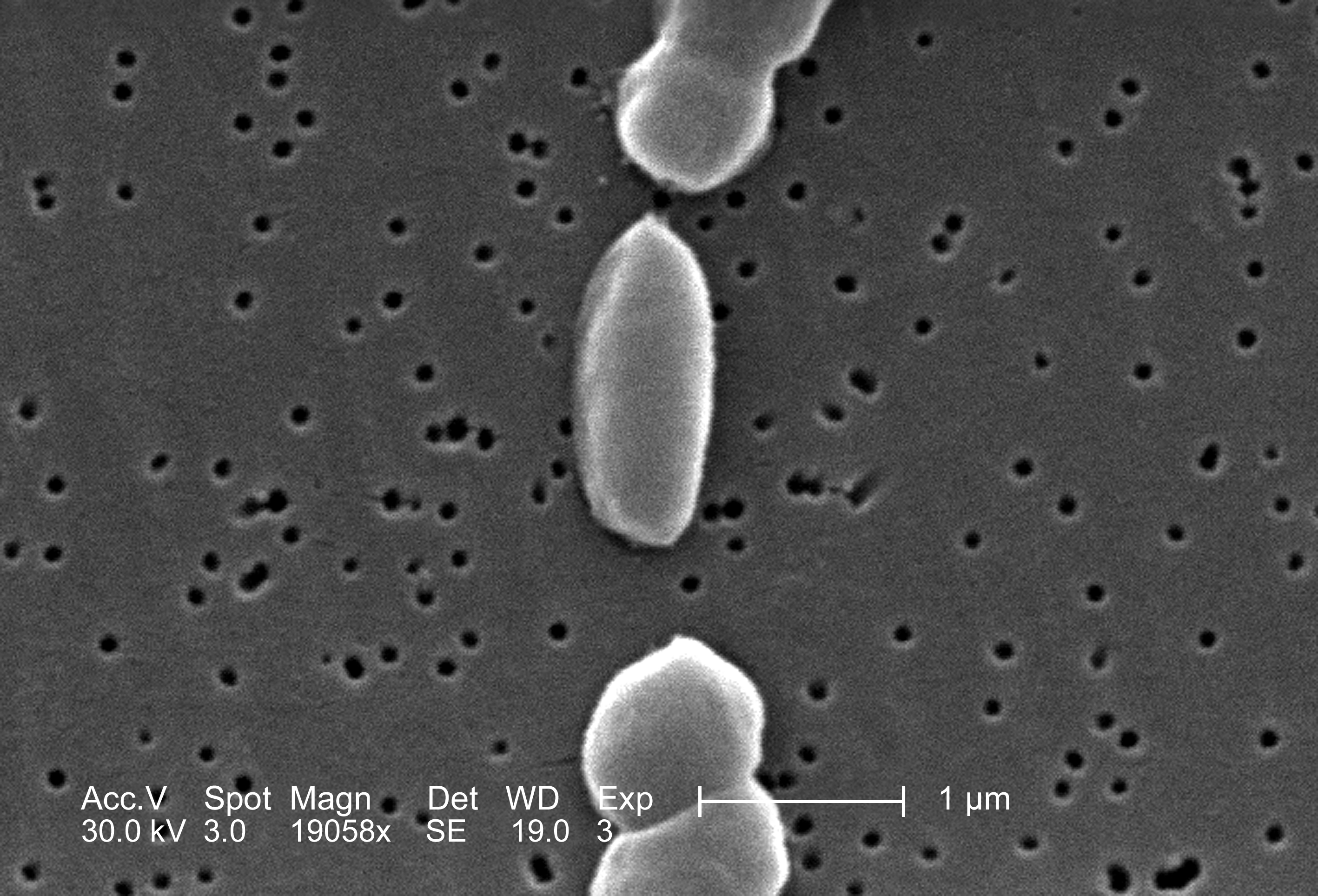
Image source: Wikipedia/Wikimedia
| Ecology, Host, and Life Cycle | |
|---|---|
| Oxygen requirements | Facultative anaerobe |
| Optimal temperature | 20 |
| Temperature range | Mesophilic |
| Habitat | Aquatic |
| Biotic relationship | Free living |
| Host(s) | Not Available |
| Cell arrangement | Singles |
| Sporulation | Not Available |
| Energy source | Heterotroph |
| Pathogenicity | Not Available |
Gene Summary
Adenine Count
512262 bp
Thymine Count
508020 bp
Guanine Count
419811 bp
Cytosine Count
421241 bp
Genome Length
1861334 bp
Protein-coding Genes
1636 genes
Non-Coding Genes
28 genes
# of Chromosomes/Plasmids
2
Genes
| Name | Locus Tag | UniProt ID | Strand Orientation | Gene Start/End | Protein Molecular Weight |
|---|---|---|---|---|---|
| phosphate regulon transcriptional regulator phob | HK86_RS04615 | Not Available | Positive | 967290 - 967979 | 26122.6 |
| phosphate regulon sensor histidine kinase phor | HK86_RS04620 | Not Available | Positive | 968020 - 969318 | 49764.0 |
| psts family phosphate abc transporter substrate-binding protein | HK86_RS04625 | Not Available | Positive | 969318 - 970277 | 34779.8 |
| exopolyphosphatase | HK86_RS04630 | Not Available | Negative | 970303 - 971808 | 56688.6 |
| polyphosphate kinase 1 | HK86_RS04635 | Not Available | Negative | 971792 - 973882 | 81065.0 |
| abc transporter permease subunit | HK86_RS04640 | Not Available | Positive | 974091 - 976295 | 81304.0 |
| phosphate abc transporter permease psta | HK86_RS04645 | Not Available | Positive | 976326 - 977999 | 62224.9 |
| phosphate abc transporter atp-binding protein pstb | HK86_RS04650 | Not Available | Positive | 978002 - 978820 | 30516.6 |
| phosphate signaling complex protein phou | HK86_RS04655 | Not Available | Positive | 978851 - 979549 | 26583.3 |
| polyphosphate kinase 2 | HK86_RS04660 | Not Available | Negative | 979610 - 980386 | 30575.9 |
Pathways
0 pathways
No pathways found
No metabolic pathways have been associated with this bacterium yet.
Health Effects
No health effects information available for this bacterium.


