Kingdom
Pseudomonadati
Phylum
Pseudomonadota
Class
Betaproteobacteria
Order
Burkholderiales
Family
Comamonadaceae
Genus
Lampropedia
Description
Taxonomy
| Kingdom | Pseudomonadati |
|---|---|
| Phylum | Pseudomonadota |
| Class | Betaproteobacteria |
| Order | Burkholderiales |
| Family | Comamonadaceae |
| Genus | Lampropedia |
| Species | Lampropedia puyangensis |
| Strain | 2-bin |
Profile
| Physiology | |
|---|---|
| Gram staining properties | Not Available |
| Shape | Not Available |
| Mobility | Not Available |
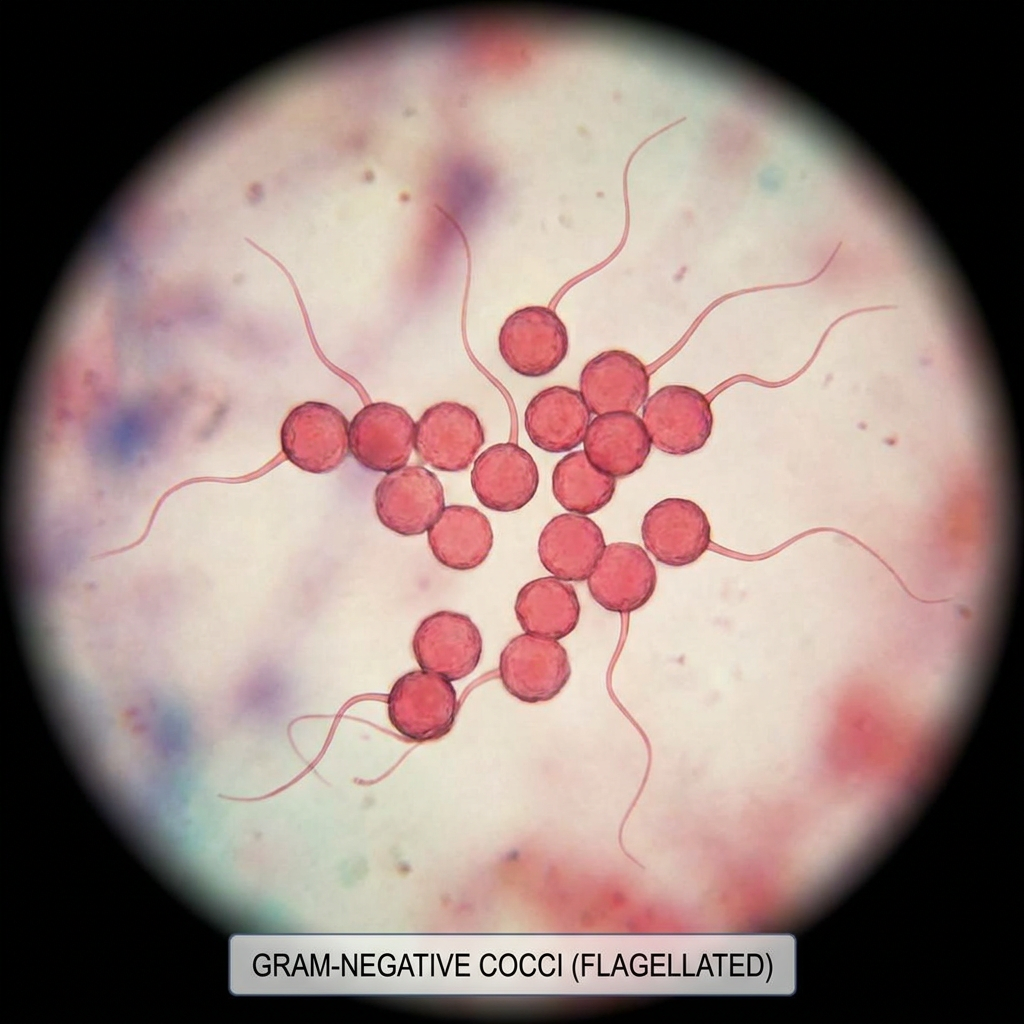
| Flagellar presence | Yes |
| Number of membranes | Not Available |
| Ecology, Host, and Life Cycle | |
|---|---|
| Oxygen requirements | Not Available |
| Optimal temperature | Not Available |
| Temperature range | Not Available |
| Habitat | Not Available |
| Biotic relationship | Not Available |
| Host(s) | Not Available |
| Cell arrangement | Not Available |
| Sporulation | Not Available |
| Energy source | Not Available |
| Pathogenicity | Not Available |
Gene Summary
Adenine Count
913152 bp
Thymine Count
916465 bp
Guanine Count
1076558 bp
Cytosine Count
1068236 bp
Genome Length
3974686 bp
Protein-coding Genes
3367 genes
Non-Coding Genes
59 genes
# of Chromosomes/Plasmids
1
Genes
| Name | Locus Tag | UniProt ID | Strand Orientation | Gene Start/End | Protein Molecular Weight |
|---|---|---|---|---|---|
| metal abc transporter substrate-binding protein | E9531_12410 | Not Available | Positive | 2830234 - 2831046 | 29322.2 |
| dass family sodium-coupled anion symporter | E9531_12415 | Not Available | Positive | 2831228 - 2832727 | 53181.3 |
| nudix domain-containing protein | E9531_12420 | Not Available | Negative | 2832792 - 2833886 | 41207.2 |
| gnat family n-acetyltransferase | E9531_12425 | Not Available | Negative | 2833980 - 2834453 | 17388.9 |
| nicotinate phosphoribosyltransferase | E9531_12430 | Not Available | Negative | 2834450 - 2835670 | 46772.3 |
| zinc ribbon domain-containing protein | E9531_12435 | Not Available | Positive | 2835972 - 2836307 | 11088.8 |
| aspartate--trna ligase | E9531_12440 | Not Available | Positive | 2836394 - 2838193 | 67536.8 |
| methyltransferase domain-containing protein | E9531_12445 | Not Available | Negative | 2838318 - 2839109 | 28911.5 |
| duf1090 domain-containing protein | E9531_12450 | Not Available | Negative | 2839161 - 2839553 | 13941.5 |
| rraa family protein | E9531_12455 | Not Available | Positive | 2840019 - 2840693 | 23586.6 |
Pathways
0 pathways
No pathways found
No metabolic pathways have been associated with this bacterium yet.
Health Effects
No health effects information available for this bacterium.