
Kingdom
Pseudomonadati
Phylum
Pseudomonadota
Class
Gammaproteobacteria
Order
Moraxellales
Family
Moraxellaceae
Genus
Acinetobacter
Description
Taxonomy
| Kingdom | Pseudomonadati |
|---|---|
| Phylum | Pseudomonadota |
| Class | Gammaproteobacteria |
| Order | Moraxellales |
| Family | Moraxellaceae |
| Genus | Acinetobacter |
| Species | Acinetobacter baumannii |
| Strain | 940793 |
Profile
| Physiology | |
|---|---|
| Gram staining properties | Negative |
| Shape | Rod |
| Mobility | No |
| Flagellar presence | Yes |
| Number of membranes | 2 |
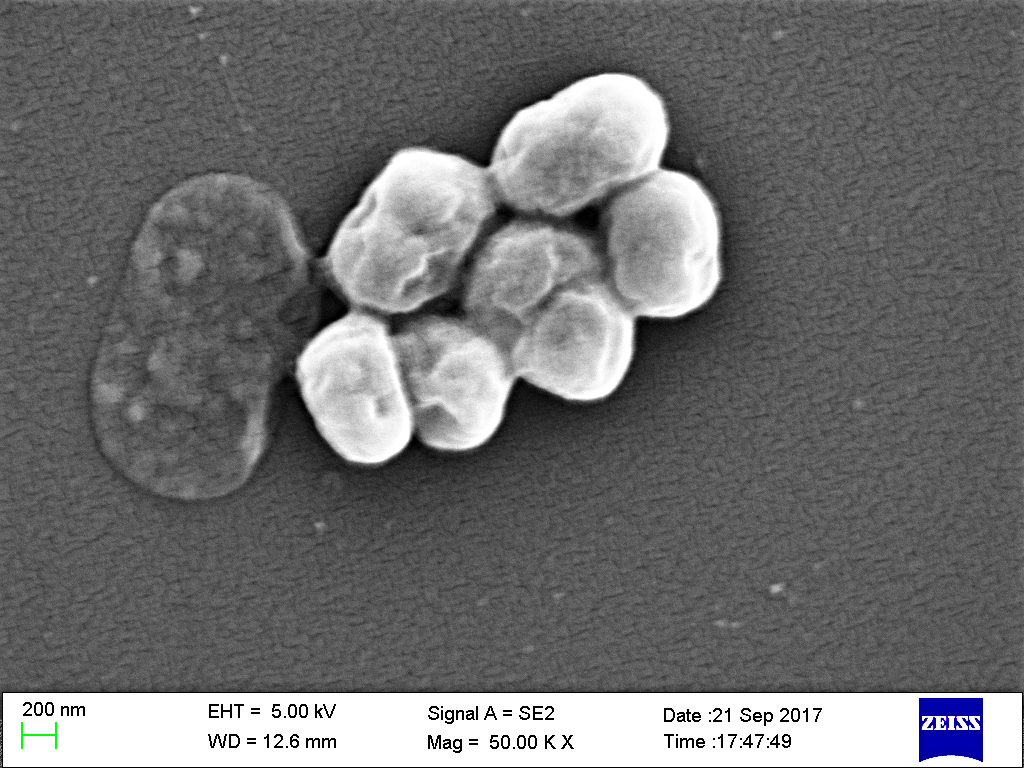
Image source: Wikipedia/Wikimedia
| Ecology, Host, and Life Cycle | |
|---|---|
| Oxygen requirements | Aerobe |
| Optimal temperature | 37 |
| Temperature range | Mesophilic |
| Habitat | Multiple |
| Biotic relationship | Free living |
| Host(s) | Not Available |
| Cell arrangement | Singles |
| Sporulation | Not Available |
| Energy source | Heterotroph - Chemoheterotroph |
| Pathogenicity | Not Available |
Gene Summary
Adenine Count
1322646 bp
Thymine Count
1328987 bp
Guanine Count
841524 bp
Cytosine Count
847798 bp
Genome Length
4340955 bp
Protein-coding Genes
4345 genes
Non-Coding Genes
280 genes
# of Chromosomes/Plasmids
1
Genes
| Name | Locus Tag | UniProt ID | Strand Orientation | Gene Start/End | Protein Molecular Weight |
|---|---|---|---|---|---|
| cslrea domain protein | J532_2261 | Not Available | Negative | 2334065 - 2335918 | 65713.4 |
| dnaa regulatory inactivator hda | J532_2262 | Not Available | Negative | 2336235 - 2336933 | 25765.1 |
| hypothetical protein | J532_2263 | Not Available | Negative | 2336954 - 2338147 | 44043.4 |
| phosphoribosylformylglycinamidine cyclo-ligase | J532_2264 | Not Available | Positive | 2338283 - 2339353 | 37877.4 |
| phosphoribosylglycinamide formyltransferase | J532_2265 | Not Available | Positive | 2339350 - 2339979 | 23310.9 |
| alpha/beta hydrolase family protein | J532_2266 | Not Available | Negative | 2340043 - 2340852 | 30995.0 |
| signal peptide peptidase sppa, 36k type | J532_2267 | Not Available | Negative | 2340871 - 2341887 | 36928.1 |
| bacterial lipid a biosynthesis acyltransferase family protein | J532_2268 | Not Available | Positive | 2342048 - 2343007 | 36412.8 |
| dna internalization-related competence protein comec/rec2 | J532_2269 | Not Available | Negative | 2342960 - 2345392 | 92412.1 |
| liporeleasing system, atp-binding protein | J532_2270 | Not Available | Negative | 2345478 - 2346164 | 25100.3 |
Pathways
0 pathways
No pathways found
No metabolic pathways have been associated with this bacterium yet.
Health Effects
No health effects information available for this bacterium.

