Kingdom
Pseudomonadati
Phylum
Pseudomonadota
Class
Gammaproteobacteria
Order
Enterobacterales
Family
Yersiniaceae
Genus
Yersinia
Description
Taxonomy
| Kingdom | Pseudomonadati |
|---|---|
| Phylum | Pseudomonadota |
| Class | Gammaproteobacteria |
| Order | Enterobacterales |
| Family | Yersiniaceae |
| Genus | Yersinia |
| Species | Yersinia pekkanenii |
| Strain | No strain |
Profile
| Physiology | |
|---|---|
| Gram staining properties | Not Available |
| Shape | Rod |
| Mobility | Not Available |
| Flagellar presence | Yes |
| Number of membranes | Not Available |

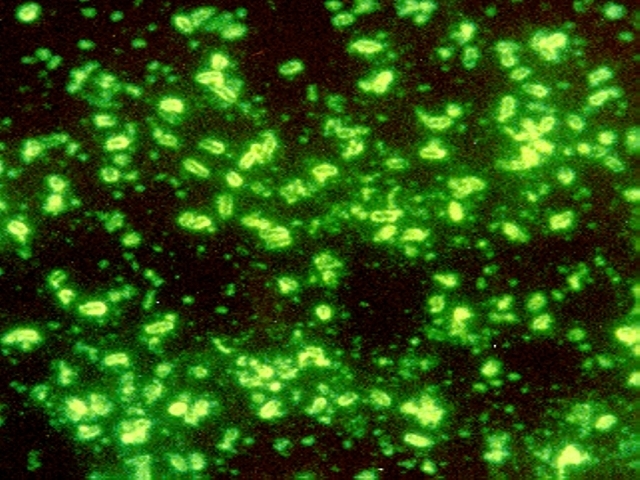
Image source: Wikipedia/Wikimedia
| Ecology, Host, and Life Cycle | |
|---|---|
| Oxygen requirements | aerobic |
| Optimal temperature | Not Available |
| Temperature range | Not Available |
| Habitat | Not Available |
| Biotic relationship | Not Available |
| Host(s) | Homo sapiens, Metazoa |
| Cell arrangement | Not Available |
| Sporulation | Not Available |
| Energy source | Not Available |
| Pathogenicity | Not Available |
Gene Summary
Adenine Count
1333324 bp
Thymine Count
1323157 bp
Guanine Count
1185576 bp
Cytosine Count
1203682 bp
Genome Length
5046986 bp
Protein-coding Genes
4472 genes
Non-Coding Genes
386 genes
# of Chromosomes/Plasmids
1
Genes
| Name | Locus Tag | UniProt ID | Strand Orientation | Gene Start/End | Protein Molecular Weight |
|---|---|---|---|---|---|
| antitoxin maze | ERS008529_02954 | Not Available | Positive | 3144392 - 3144640 | 9131.83 |
| mrna interferase mazf | ERS008529_02955 | Not Available | Positive | 3144640 - 3145002 | 13403.4 |
| long-chain fatty acid outer membrane transporter | ERS008529_02956 | Not Available | Negative | 3145058 - 3146323 | 45670.9 |
| conserved hypothetical protein | ERS008529_02957 | Not Available | Positive | 3146753 - 3147064 | 11317.3 |
| 3-ketoacyl-coa thiolase | ERS008529_02958 | Not Available | Positive | 3147342 - 3148652 | 46207.8 |
| multifunctional fatty acid oxidation complex subunit alpha | ERS008529_02959 | Not Available | Positive | 3148652 - 3150886 | 80035.4 |
| phosphohistidine phosphatase | ERS008529_02960 | Not Available | Positive | 3151346 - 3151837 | 17520.1 |
| probable dna endonuclease smra | ERS008529_02961 | Not Available | Negative | 3151940 - 3152470 | 20063.3 |
| n5-glutamine s-adenosyl-l-methionine-dependent methyltransferase | ERS008529_02962 | Not Available | Positive | 3152677 - 3153642 | 36471.4 |
| chorismate synthase | ERS008529_02963 | Not Available | Positive | 3153737 - 3154822 | 39117.9 |
Pathways
0 pathways
No pathways found
No metabolic pathways have been associated with this bacterium yet.
Health Effects
No health effects information available for this bacterium.