Kingdom
Pseudomonadati
Phylum
Pseudomonadota
Class
Gammaproteobacteria
Order
Enterobacterales
Family
Yersiniaceae
Genus
Yersinia
Description
Taxonomy
| Kingdom | Pseudomonadati |
|---|---|
| Phylum | Pseudomonadota |
| Class | Gammaproteobacteria |
| Order | Enterobacterales |
| Family | Yersiniaceae |
| Genus | Yersinia |
| Species | Yersinia pekkanenii |
| Strain | No strain |
Profile
| Physiology | |
|---|---|
| Gram staining properties | Not Available |
| Shape | Rod |
| Mobility | Not Available |
| Flagellar presence | Yes |
| Number of membranes | Not Available |

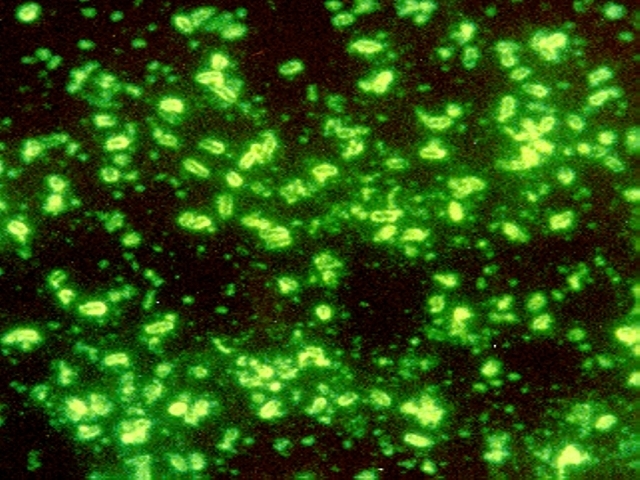
Image source: Wikipedia/Wikimedia
| Ecology, Host, and Life Cycle | |
|---|---|
| Oxygen requirements | aerobic |
| Optimal temperature | Not Available |
| Temperature range | Not Available |
| Habitat | Not Available |
| Biotic relationship | Not Available |
| Host(s) | Homo sapiens, Metazoa |
| Cell arrangement | Not Available |
| Sporulation | Not Available |
| Energy source | Not Available |
| Pathogenicity | Not Available |
Gene Summary
Adenine Count
1333324 bp
Thymine Count
1323157 bp
Guanine Count
1185576 bp
Cytosine Count
1203682 bp
Genome Length
5046986 bp
Protein-coding Genes
4472 genes
Non-Coding Genes
386 genes
# of Chromosomes/Plasmids
1
Genes
| Name | Locus Tag | UniProt ID | Strand Orientation | Gene Start/End | Protein Molecular Weight |
|---|---|---|---|---|---|
| major facilitator transporter | ERS008529_02842 | Not Available | Negative | 3028815 - 3030155 | 47934.7 |
| competence damage-inducible protein a | ERS008529_02843 | Not Available | Positive | 3030391 - 3030879 | 17003.2 |
| recombinase a | ERS008529_02844 | Not Available | Positive | 3030994 - 3032061 | 37879.6 |
| Trna-thr | Not Available | Not Available | Positive | 3032359 - 3032434 | Not Available |
| homoserine o-succinyltransferase | ERS008529_02847 | Not Available | Positive | 3033087 - 3034016 | 35457.3 |
| malate synthase | ERS008529_02848 | Not Available | Positive | 3034422 - 3036020 | 60110.0 |
| isocitrate lyase | ERS008529_02849 | Not Available | Positive | 3036193 - 3037500 | 47574.1 |
| isocitrate dehydrogenase kinase/phosphatase | ERS008529_02850 | Not Available | Positive | 3037760 - 3039487 | 67558.2 |
| iclr family transcriptional regulator | ERS008529_02851 | Not Available | Negative | 3039659 - 3040513 | 30613.0 |
| b12-dependent methionine synthase | ERS008529_02852 | Not Available | Positive | 3040807 - 3044499 | 136088.0 |
Pathways
0 pathways
No pathways found
No metabolic pathways have been associated with this bacterium yet.
Health Effects
No health effects information available for this bacterium.