Kingdom
Pseudomonadati
Phylum
Pseudomonadota
Class
Gammaproteobacteria
Order
Enterobacterales
Family
Yersiniaceae
Genus
Yersinia
Description
Taxonomy
| Kingdom | Pseudomonadati |
|---|---|
| Phylum | Pseudomonadota |
| Class | Gammaproteobacteria |
| Order | Enterobacterales |
| Family | Yersiniaceae |
| Genus | Yersinia |
| Species | Yersinia pekkanenii |
| Strain | No strain |
Profile
| Physiology | |
|---|---|
| Gram staining properties | Not Available |
| Shape | Rod |
| Mobility | Not Available |
| Flagellar presence | Yes |
| Number of membranes | Not Available |

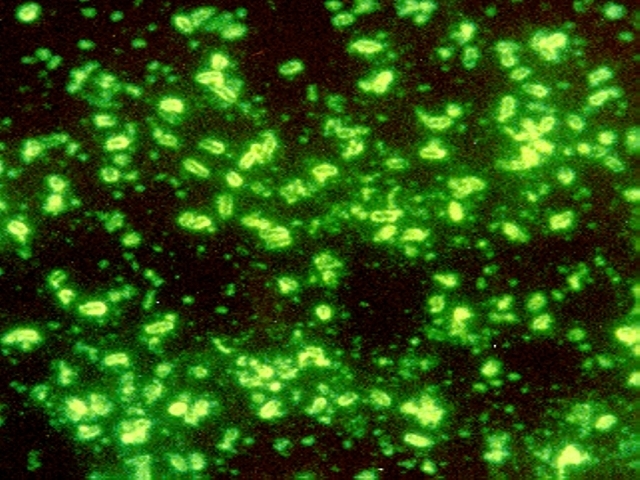
Image source: Wikipedia/Wikimedia
| Ecology, Host, and Life Cycle | |
|---|---|
| Oxygen requirements | aerobic |
| Optimal temperature | Not Available |
| Temperature range | Not Available |
| Habitat | Not Available |
| Biotic relationship | Not Available |
| Host(s) | Homo sapiens, Metazoa |
| Cell arrangement | Not Available |
| Sporulation | Not Available |
| Energy source | Not Available |
| Pathogenicity | Not Available |
Gene Summary
Adenine Count
1333324 bp
Thymine Count
1323157 bp
Guanine Count
1185576 bp
Cytosine Count
1203682 bp
Genome Length
5046986 bp
Protein-coding Genes
4472 genes
Non-Coding Genes
386 genes
# of Chromosomes/Plasmids
1
Genes
| Name | Locus Tag | UniProt ID | Strand Orientation | Gene Start/End | Protein Molecular Weight |
|---|---|---|---|---|---|
| protein impf | ERS008529_02732 | Not Available | Negative | 2904500 - 2904979 | 18641.5 |
| protein of avirulence locus impe | ERS008529_02733 | Not Available | Negative | 2904979 - 2905785 | 30013.5 |
| uncharacterised protein | ERS008529_02734 | Not Available | Negative | 2905806 - 2906306 | 19125.6 |
| rhs-family protein | ERS008529_02735 | Not Available | Negative | 2906314 - 2906574 | 8031.59 |
| impa family type vi secretion-associated protein | ERS008529_02736 | Not Available | Negative | 2906691 - 2908979 | 82392.0 |
| icmf-related protein | ERS008529_02737 | Not Available | Negative | 2909098 - 2912940 | 143938.0 |
| putative ompa family protein | ERS008529_02738 | Not Available | Negative | 2912949 - 2914346 | 51259.5 |
| protein impj/vase | ERS008529_02739 | Not Available | Negative | 2914343 - 2915692 | 50661.2 |
| type vi secretion lipoprotein/vasd | ERS008529_02740 | Not Available | Negative | 2915696 - 2916235 | 20440.9 |
| hcp1 family type vi secretion system effector | ERS008529_02741 | Not Available | Negative | 2916489 - 2916974 | 17922.2 |
Pathways
0 pathways
No pathways found
No metabolic pathways have been associated with this bacterium yet.
Health Effects
No health effects information available for this bacterium.