Kingdom
Pseudomonadati
Phylum
Pseudomonadota
Class
Gammaproteobacteria
Order
Enterobacterales
Family
Yersiniaceae
Genus
Yersinia
Description
Taxonomy
| Kingdom | Pseudomonadati |
|---|---|
| Phylum | Pseudomonadota |
| Class | Gammaproteobacteria |
| Order | Enterobacterales |
| Family | Yersiniaceae |
| Genus | Yersinia |
| Species | Yersinia pekkanenii |
| Strain | No strain |
Profile
| Physiology | |
|---|---|
| Gram staining properties | Not Available |
| Shape | Rod |
| Mobility | Not Available |
| Flagellar presence | Yes |
| Number of membranes | Not Available |

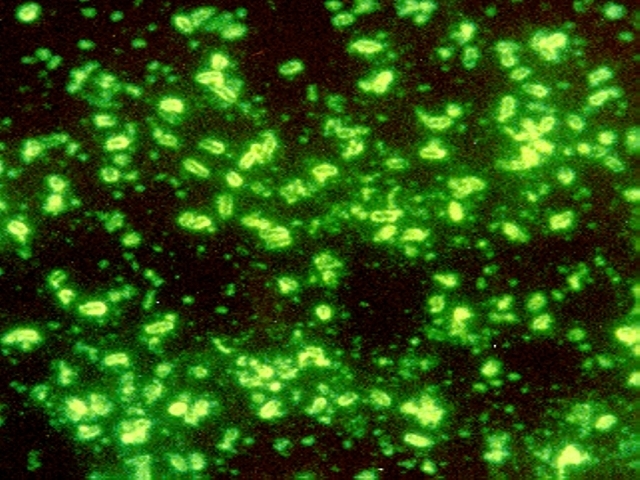
Image source: Wikipedia/Wikimedia
| Ecology, Host, and Life Cycle | |
|---|---|
| Oxygen requirements | aerobic |
| Optimal temperature | Not Available |
| Temperature range | Not Available |
| Habitat | Not Available |
| Biotic relationship | Not Available |
| Host(s) | Homo sapiens, Metazoa |
| Cell arrangement | Not Available |
| Sporulation | Not Available |
| Energy source | Not Available |
| Pathogenicity | Not Available |
Gene Summary
Adenine Count
1333324 bp
Thymine Count
1323157 bp
Guanine Count
1185576 bp
Cytosine Count
1203682 bp
Genome Length
5046986 bp
Protein-coding Genes
4472 genes
Non-Coding Genes
386 genes
# of Chromosomes/Plasmids
1
Genes
| Name | Locus Tag | UniProt ID | Strand Orientation | Gene Start/End | Protein Molecular Weight |
|---|---|---|---|---|---|
| siroheme synthase | ERS008529_02335 | Not Available | Negative | 2535161 - 2536579 | 50760.1 |
| alkaline phosphatase isozyme conversion aminopeptidase | ERS008529_02336 | Not Available | Positive | 2536981 - 2538051 | 39445.1 |
| uncharacterised protein | ERS008529_02337 | Not Available | Negative | 2538248 - 2538391 | 5812.42 |
| yersiniabactin synthetase%2c hmwp1 component | ERS008529_02338 | Not Available | Positive | 2538511 - 2545674 | 265697.0 |
| siderophore biosysnthesis protein | ERS008529_02339 | Not Available | Positive | 2545721 - 2546767 | 39959.0 |
| phosphoadenosine phosphosulfate reductase | ERS008529_02340 | Not Available | Negative | 2546858 - 2547592 | 27843.0 |
| sulfite reductase subunit beta | ERS008529_02341 | Not Available | Negative | 2547589 - 2549319 | 64134.0 |
| sulfite reductase subunit alpha | ERS008529_02342 | Not Available | Negative | 2549319 - 2551124 | 66586.9 |
| sulfite reductase subunit alpha | ERS008529_02343 | Not Available | Positive | 2551485 - 2551844 | 13559.3 |
| queuosine biosynthesis quee radical sam | ERS008529_02344 | Not Available | Negative | 2551891 - 2552562 | 25069.1 |
Pathways
0 pathways
No pathways found
No metabolic pathways have been associated with this bacterium yet.
Health Effects
No health effects information available for this bacterium.