
Kingdom
Pseudomonadati
Phylum
Pseudomonadota
Class
Gammaproteobacteria
Order
Pseudomonadales
Family
Pseudomonadaceae
Genus
Pseudomonas
Description
Taxonomy
| Kingdom | Pseudomonadati |
|---|---|
| Phylum | Pseudomonadota |
| Class | Gammaproteobacteria |
| Order | Pseudomonadales |
| Family | Pseudomonadaceae |
| Genus | Pseudomonas |
| Species | Pseudomonas sp. URIL14HWK12:I2 |
| Strain | No strain |
Profile
| Physiology | |
|---|---|
| Gram staining properties | Not Available |
| Shape | Not Available |
| Mobility | Not Available |
| Flagellar presence | Not Available |
| Number of membranes | Not Available |
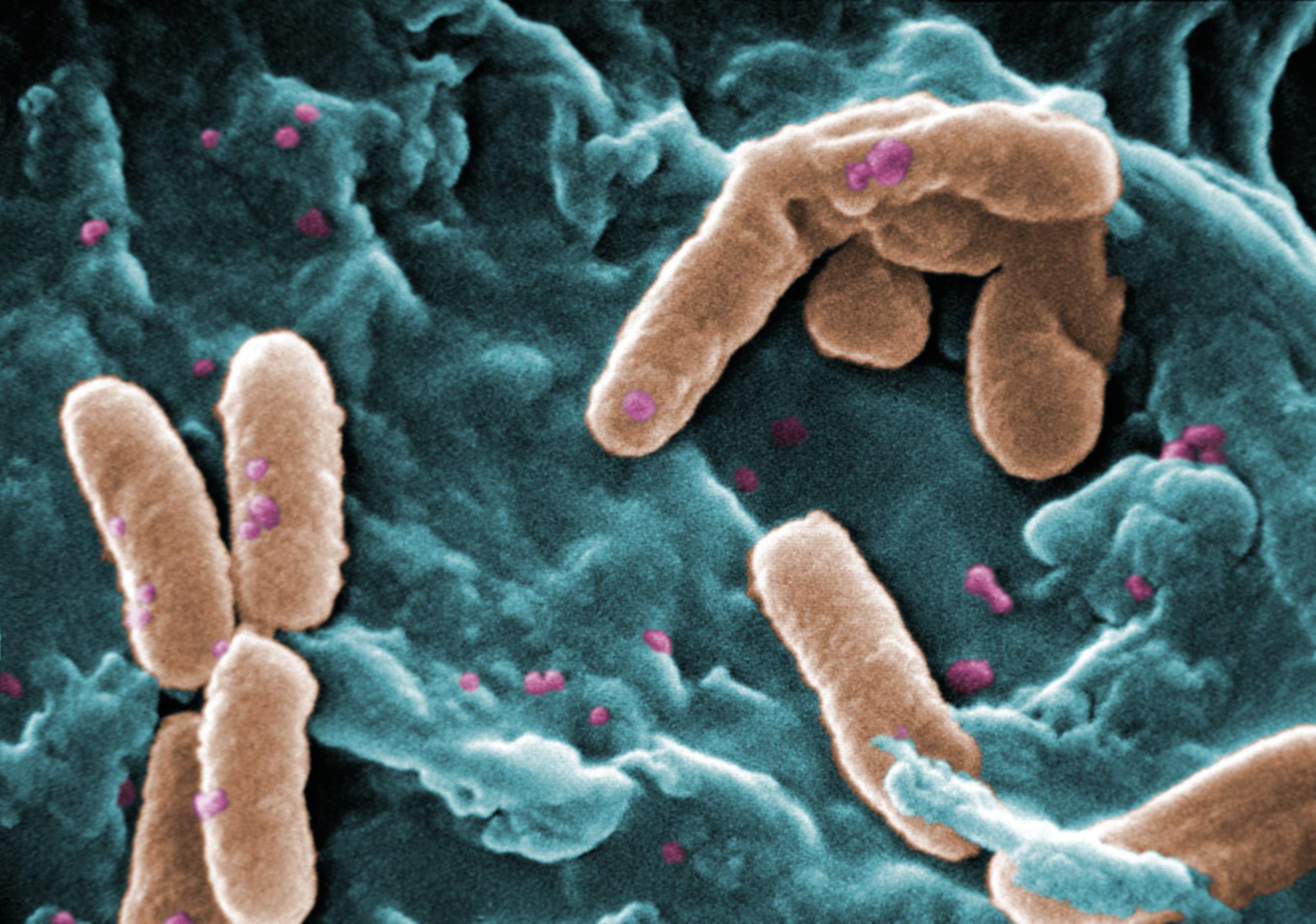
Image source: Wikipedia/Wikimedia
| Ecology, Host, and Life Cycle | |
|---|---|
| Oxygen requirements | Not Available |
| Optimal temperature | Not Available |
| Temperature range | Not Available |
| Habitat | Not Available |
| Biotic relationship | Not Available |
| Host(s) | Not Available |
| Cell arrangement | Not Available |
| Sporulation | Not Available |
| Energy source | Not Available |
| Pathogenicity | Not Available |
Gene Summary
Adenine Count
901793 bp
Thymine Count
903586 bp
Guanine Count
1454410 bp
Cytosine Count
1456873 bp
Genome Length
4717612 bp
Protein-coding Genes
4234 genes
Non-Coding Genes
155 genes
# of Chromosomes/Plasmids
1
Genes
| Name | Locus Tag | UniProt ID | Strand Orientation | Gene Start/End | Protein Molecular Weight |
|---|---|---|---|---|---|
| spfh domain-containing protein | F478_01534 | Not Available | Positive | 1625783 - 1626637 | 31039.7 |
| hypothetical protein | F478_01535 | Not Available | Positive | 1626776 - 1627165 | 13431.5 |
| hypothetical protein | F478_01536 | Not Available | Positive | 1627213 - 1627692 | 17165.7 |
| hypothetical protein | F478_01537 | Not Available | Positive | 1627712 - 1628143 | 15630.1 |
| iron complex outermembrane receptor protein | F478_01538 | Not Available | Positive | 1628206 - 1630266 | 73565.3 |
| putative iron-regulated membrane protein | F478_01539 | Not Available | Positive | 1630324 - 1631691 | 50659.8 |
| d-serine/d-alanine/glycine:proton symporter (aat family) | F478_01540 | Not Available | Positive | 1631933 - 1633348 | 51528.0 |
| hypothetical protein | F478_01541 | Not Available | Negative | 1633414 - 1633710 | 10161.1 |
| amino acid/amide abc transporter substrate-binding protein (haat family) | F478_01544 | Not Available | Positive | 1634156 - 1635421 | 46098.0 |
| amino acid/amide abc transporter membrane protein 1 (haat family) | F478_01545 | Not Available | Positive | 1635508 - 1636995 | 52533.4 |
Pathways
0 pathways
No pathways found
No metabolic pathways have been associated with this bacterium yet.
Health Effects
No health effects information available for this bacterium.


