Kingdom
Pseudomonadati
Phylum
Pseudomonadota
Class
Gammaproteobacteria
Order
Pseudomonadales
Family
Pseudomonadaceae
Genus
Pseudomonas
Description
Taxonomy
| Kingdom | Pseudomonadati |
|---|---|
| Phylum | Pseudomonadota |
| Class | Gammaproteobacteria |
| Order | Pseudomonadales |
| Family | Pseudomonadaceae |
| Genus | Pseudomonas |
| Species | Pseudomonas fluorescens |
| Strain | HK44 |
Profile
| Physiology | |
|---|---|
| Gram staining properties | Negative |
| Shape | Rod |
| Mobility | Yes |
| Flagellar presence | Yes |
| Number of membranes | 2 |

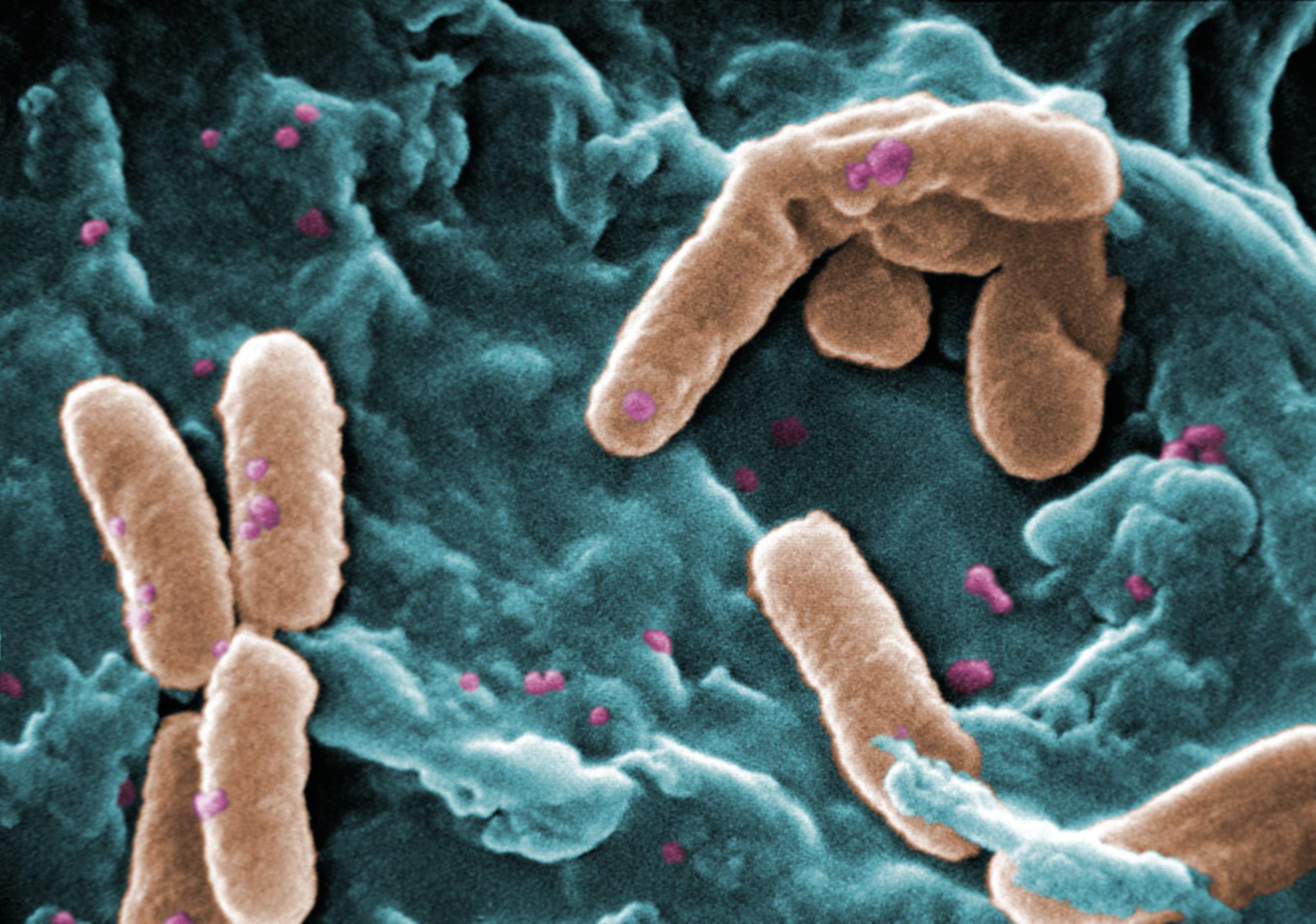
Image source: Wikipedia/Wikimedia
| Ecology, Host, and Life Cycle | |
|---|---|
| Oxygen requirements | Aerobe |
| Optimal temperature | 25 |
| Temperature range | Mesophilic |
| Habitat | Multiple |
| Biotic relationship | Free living |
| Host(s) | Not Available |
| Cell arrangement | Singles |
| Sporulation | Not Available |
| Energy source | Heterotroph |
| Pathogenicity | Not Available |
Gene Summary
Adenine Count
Not Available
Thymine Count
Not Available
Guanine Count
Not Available
Cytosine Count
Not Available
Genome Length
Not Available
Protein-coding Genes
132 genes
Non-Coding Genes
0 genes
# of Chromosomes/Plasmids
2
Genes
| Name | Locus Tag | UniProt ID | Strand Orientation | Gene Start/End | Protein Molecular Weight |
|---|---|---|---|---|---|
| membrane protein | HK44_013210 | Not Available | Negative | 4858132 - 4859004 | 30964.1 |
| transporter | HK44_013215 | Not Available | Negative | 4859183 - 4859623 | 15428.3 |
| dna-dependent helicase | HK44_013220 | Not Available | Negative | 4859797 - 4861980 | 81133.6 |
| diguanylate cyclase | HK44_013225 | Not Available | Positive | 4862242 - 4865112 | 107371.0 |
| rpir family transcriptional regulator | HK44_013230 | Not Available | Positive | 4865251 - 4866117 | 31207.9 |
| hypothetical protein | HK44_013235 | Not Available | Positive | 4866354 - 4866563 | 8342.74 |
| lysr family transcriptional regulator | HK44_013240 | Not Available | Negative | 4866505 - 4867467 | 36140.1 |
| 3-methylcrotonyl-coa carboxylase subunit alpha | HK44_013245 | Not Available | Positive | 4867657 - 4869072 | 51852.2 |
| pyruvate carboxylase | HK44_013250 | Not Available | Positive | 4869084 - 4870892 | 65666.0 |
| gnat family acetyltransferase | HK44_013255 | Not Available | Negative | 4871005 - 4871676 | 24934.5 |
Pathways
0 pathways
No pathways found
No metabolic pathways have been associated with this bacterium yet.
Health Effects
No health effects information available for this bacterium.