Kingdom
Pseudomonadati
Phylum
Pseudomonadota
Class
Gammaproteobacteria
Order
Pseudomonadales
Family
Pseudomonadaceae
Genus
Pseudomonas
Description
Taxonomy
| Kingdom | Pseudomonadati |
|---|---|
| Phylum | Pseudomonadota |
| Class | Gammaproteobacteria |
| Order | Pseudomonadales |
| Family | Pseudomonadaceae |
| Genus | Pseudomonas |
| Species | Pseudomonas fluorescens |
| Strain | HK44 |
Profile
| Physiology | |
|---|---|
| Gram staining properties | Negative |
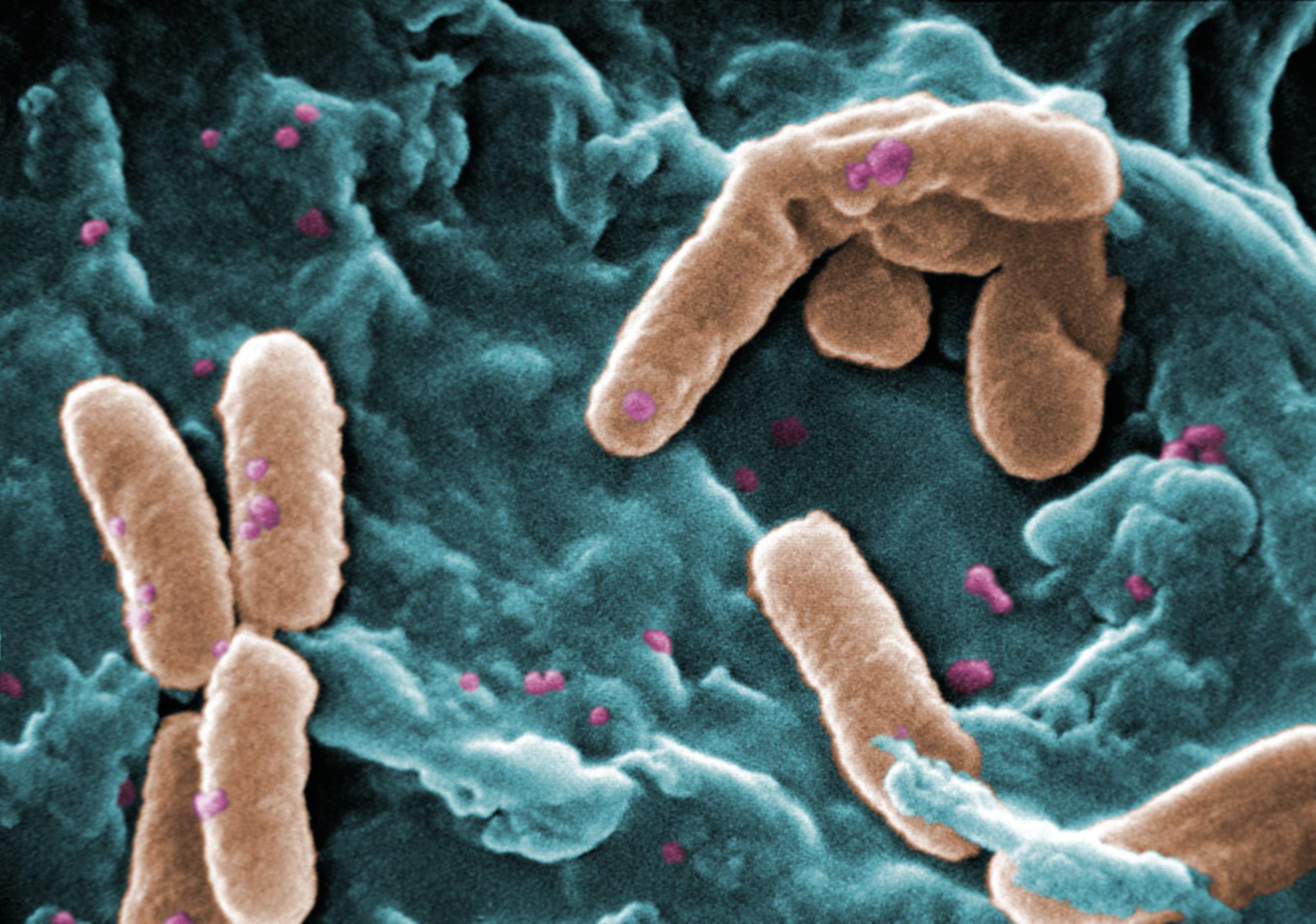
| Shape | Rod |
| Mobility | Yes |
| Flagellar presence | Yes |
| Number of membranes | 2 |

Image source: Wikipedia/Wikimedia
| Ecology, Host, and Life Cycle | |
|---|---|
| Oxygen requirements | Aerobe |
| Optimal temperature | 25 |
| Temperature range | Mesophilic |
| Habitat | Multiple |
| Biotic relationship | Free living |
| Host(s) | Not Available |
| Cell arrangement | Singles |
| Sporulation | Not Available |
| Energy source | Heterotroph |
| Pathogenicity | Not Available |
Gene Summary
Adenine Count
Not Available
Thymine Count
Not Available
Guanine Count
Not Available
Cytosine Count
Not Available
Genome Length
Not Available
Protein-coding Genes
132 genes
Non-Coding Genes
0 genes
# of Chromosomes/Plasmids
2
Genes
| Name | Locus Tag | UniProt ID | Strand Orientation | Gene Start/End | Protein Molecular Weight |
|---|---|---|---|---|---|
| hypothetical protein | HK44_026860 | Not Available | Positive | 1676825 - 1676956 | 4760.55 |
| hypothetical protein | HK44_026865 | Not Available | Positive | 1676980 - 1677171 | 7191.15 |
| dna repair protein rada | HK44_026870 | Not Available | Positive | 1677379 - 1678746 | 48701.2 |
| pilus assembly protein | HK44_026875 | Not Available | Negative | 1678794 - 1679162 | 14244.2 |
| carbon starvation protein a | HK44_026880 | Not Available | Positive | 1679333 - 1681399 | 73866.4 |
| hypothetical protein | HK44_026885 | Not Available | Positive | 1681415 - 1681612 | 7508.05 |
| gtp-binding protein yjia | HK44_026890 | Not Available | Positive | 1681735 - 1682706 | 35840.2 |
| gntr family transcriptional regulator | HK44_026895 | Not Available | Negative | 1682811 - 1683533 | 26736.1 |
| gntr family transcriptional regulator | HK44_026900 | Not Available | Negative | 1683578 - 1684282 | 25615.7 |
| c4-dicarboxylate abc transporter | HK44_026905 | Not Available | Negative | 1684351 - 1685664 | 46512.4 |
Pathways
0 pathways
No pathways found
No metabolic pathways have been associated with this bacterium yet.
Health Effects
No health effects information available for this bacterium.