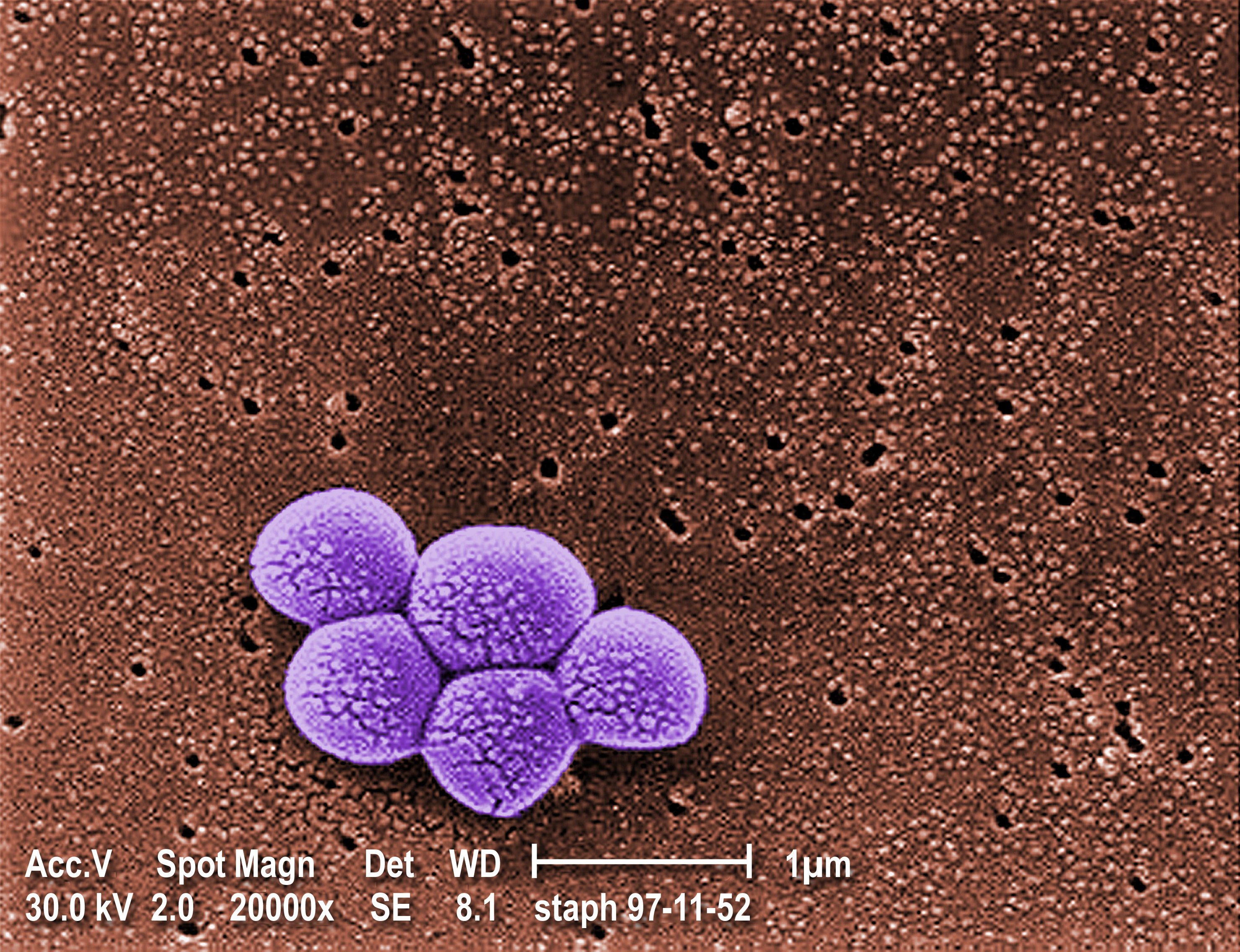
Staphylococcus pettenkoferi VCU012

Gram-positiveCocciNon-motileFacultative anaerobe

Kingdom

Bacillati

Phylum

Bacillota

Class

Bacilli

Order

Caryophanales

Family

Staphylococcaceae

Genus

Staphylococcus

Description

Staphylococcus pettenkoferi VCU012 is a Gram-positive, cocci-shaped bacterium belonging to the genus Staphylococcus. It is classified as a mesophile, thriving optimally at moderate temperatures, specifically between 30°C and 37°C. This microbe is a chemoheterotroph, meaning it derives its energy and carbon from organic compounds, and it exhibits facultative anaerobic respiration, allowing it to grow in both the presence and absence of oxygen. It can be found in various body sites across multiple species, particularly in human skin and mucosal surfaces, as well as in some animal hosts.The Gram-positive nature of *S. pettenkoferi VCU012* indicates a thick peptidoglycan layer in its cell wall, which contributes to its structural integrity and resistance to certain environmental stresses. Its cocci shape enhances its survival in clusters, often found in the characteristic grape-like formations of staphylococci. As a mesophile, it can tolerate and adapt to a wide range of temperatures, making it versatile for colonization in different hosts. Being a chemoheterotroph means that *S. pettenkoferi VCU012* predominantly relies on organic matter for energy and growth, engaging in metabolic processes that can lead to various biochemical interactions with the host. Its facultative anaerobic characteristics allow it to thrive even in low-oxygen environments, which is particularly advantageous for colonization within the host's body where oxygen levels can fluctuate. *Staphylococcus pettenkoferi VCU012* has garnered interest due to its role in both symbiotic relationships and potential pathogenicity. Its presence in the human microbiome suggests it may play a role in maintaining skin health, yet it also has the potential to cause infections, particularly in immunocompromised individuals. The duality of its nature as both a commensal and a potential pathogen highlights the complex relationships microbes can have with their hosts.

Taxonomy

KingdomBacillati
PhylumBacillota
ClassBacilli
OrderCaryophanales
FamilyStaphylococcaceae
GenusStaphylococcus
SpeciesStaphylococcus pettenkoferi
StrainVCU012

Profile

Physiology
Gram staining propertiesPositive
ShapeCocci
MobilityNo
Flagellar presenceYes
Number of membranesNot Available
Image of Staphylococcus pettenkoferi VCU012
Image source: Wikipedia/Wikimedia
Ecology, Host, and Life Cycle
Oxygen requirementsFacultative anaerobe
Optimal temperatureNot Available
Temperature rangeMesophilic
HabitatHost epidermis
Biotic relationshipNot Available
Host(s)Not Available
Cell arrangementNot Available
SporulationNonsporulating
Energy sourceChemoheterotroph
PathogenicityNot Available

Genome Summary

Staphylococcus pettenkoferi VCU012 contig00007, whole genome

Gene Summary

Adenine Count

740032 bp

Thymine Count

764431 bp

Guanine Count

465607 bp

Cytosine Count

484886 bp

Genome Length

2454960 bp

Protein-coding Genes

2345 genes

Non-Coding Genes

65 genes

# of Chromosomes/Plasmids

1

Genes

NameLocus TagUniProt IDStrand OrientationGene Start/EndProtein Molecular Weight
atp synthase f1, epsilon subunitSEVCU012_1227Not AvailableNegative759519 - 75992614798.7
atp synthase f1, beta subunitSEVCU012_1228Not AvailableNegative759944 - 76135651314.1
atp synthase f1, gamma subunitSEVCU012_1229Not AvailableNegative761378 - 76224432149.3
atp synthase f1, alpha subunitSEVCU012_1230Not AvailableNegative762276 - 76378454637.2
atp synthase f1, delta subunitSEVCU012_1231Not AvailableNegative763808 - 76434720854.6
atp synthase f0, b subunitSEVCU012_1232Not AvailableNegative764347 - 76486819626.3
atp synthase f0, c subunitSEVCU012_1233Not AvailableNegative764964 - 7651767133.18
atp synthase f0, a subunitSEVCU012_1234Not AvailableNegative765220 - 76594827342.3
hypothetical proteinSEVCU012_1235Not AvailableNegative765972 - 7660944857.4
udp-n-acetylglucosamine 2-epimeraseSEVCU012_1236Not AvailableNegative766483 - 76761342140.6

Displaying genes 781 – 790 of 2410 in total

Pathways

0 pathways

No pathways found

No metabolic pathways have been associated with this bacterium yet.

Metabolites

395 records
Metabolite IDMetabolite nameStructureCAS number
BASm0000237(R)-4'-phosphopantothenateC9H18NO8PChemical structure of (R)-4'-phosphopantothenateNot available
Average299.2149Da
Monoisotopic299.0770031Da
BASm00002512-dehydropantoateC6H9O4Chemical structure of 2-dehydropantoateNot available
Average145.1333Da
Monoisotopic145.050083776Da
BASm0000377(S)-malateC4H4O5Chemical structure of (S)-malateNot available
Average132.0716Da
Monoisotopic132.005873238Da
BASm0000893crotonobetaineC7H13NO2Chemical structure of crotonobetaine927-89-9
Average143.1836Da
Monoisotopic143.0946287Da
BASm0000989GlycerolC3H8O3Chemical structure of Glycerol56-81-5
Average92.0938Da
Monoisotopic92.04734412Da
BASm0001035indole-3-pyruvateC11H8NO3Chemical structure of indole-3-pyruvate35656-49-6
Average202.1861Da
Monoisotopic202.0504181Da
BASm0001167triphosphateO10P3Chemical structure of triphosphate14127-68-5
Average252.9153Da
Monoisotopic252.8704308Da
BASm0001639CobinamideC48H72CoN11O8Chemical structure of Cobinamide13497-85-3
Average990.0874Da
Monoisotopic989.4897335Da
BASm0001661Cu(2+)CuChemical structure of Cu(2+)7440-50-8
Average63.546Da
Monoisotopic62.929601079Da
BASm0001921(S)-3-methyl-2-oxopentanoateC6H9O3Chemical structure of (S)-3-methyl-2-oxopentanoate1460-34-0
Average129.1339Da
Monoisotopic129.0551692Da

Displaying 1–10 of 395 metabolites

Health Effects

No health effects information available for this bacterium.