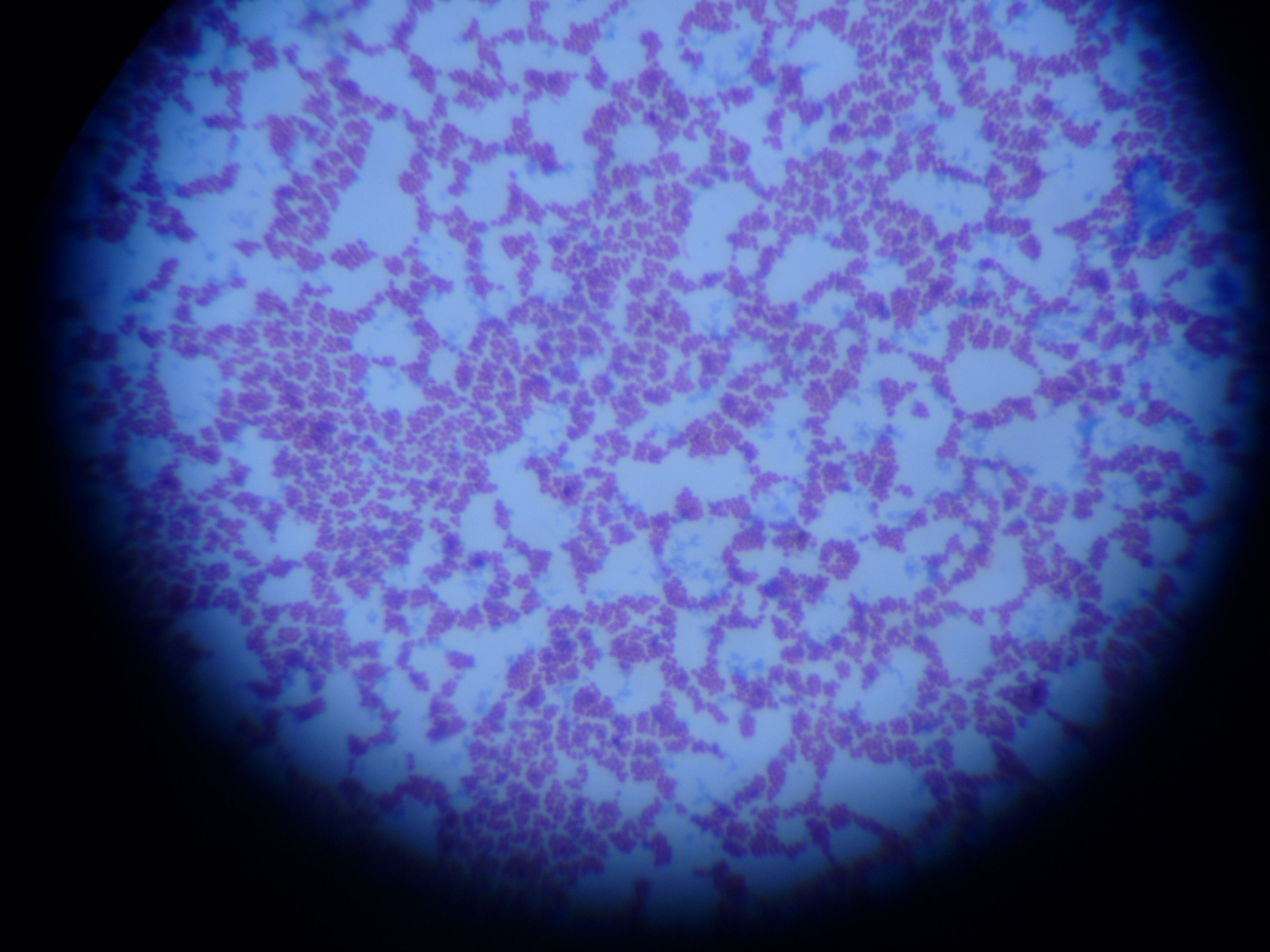
Streptococcus parasanguinis ATCC 903

Gram-positiveCocciNon-motileFacultative anaerobe

Kingdom

Bacillati

Phylum

Bacillota

Class

Bacilli

Order

Lactobacillales

Family

Streptococcaceae

Genus

Streptococcus

Description

Streptococcus parasanguinis ATCC 903 is a Gram-positive, coccoid-shaped bacterium that thrives at mesophilic temperatures, primarily categorized as a heterotroph. This microorganism is widely distributed in human oral and respiratory tracts, where it forms part of the normal microbial flora. Being classified as a facultative anaerobe, S. parasanguinis can adapt to both aerobic and anaerobic environments, allowing it to colonize a variety of niches within the human body, including the mouth, throat, and even the gastrointestinal tract. The Gram-positive nature of S. parasanguinis signifies a thick peptidoglycan layer in its cell wall, which provides structural support and helps the bacteria maintain its shape. Its coccoid form enables S. parasanguinis to form chains or clusters, facilitating its interaction with other microorganisms and host tissues. As a mesophilic organism, it prefers moderate temperature ranges, typically found within the human body, which supports its growth and metabolic activities. Characteristically, S. parasanguinis is a heterotrophic microbe, obtaining energy from organic compounds. This ability is crucial for its survival in nutrient-rich environments such as the oral cavity, where it metabolizes carbohydrates and other organic matter. Its facultative anaerobic metabolism allows S. parasanguinis to thrive in various oxygen conditions, making it resilient in fluctuating environments. Beyond its ecological role, S. parasanguinis has been studied for its potential involvement in dental plaque formation and its interactions with other oral bacteria. Its ability to produce biofilm can contribute to the development of cariogenic and periodontal diseases, underscoring its significance in oral health research.

Taxonomy

KingdomBacillati
PhylumBacillota
ClassBacilli
OrderLactobacillales
FamilyStreptococcaceae
GenusStreptococcus
SpeciesStreptococcus parasanguinis
StrainATCC 903

Profile

Physiology
Gram staining propertiesPositive
ShapeCocci
MobilityNo
Flagellar presenceYes
Number of membranesNot Available
Image of Streptococcus parasanguinis ATCC 903
Image source: Wikipedia/Wikimedia
Ecology, Host, and Life Cycle
Oxygen requirementsFacultative anaerobe
Optimal temperatureNot Available
Temperature rangeMesophilic
HabitatHostAssociated
Biotic relationshipFree living
Host(s)Not Available
Cell arrangementChains-Pairs
SporulationNonsporulating
Energy sourceNot Available
PathogenicityNot Available

Genome Summary

Streptococcus parasanguinis ATCC 903 contig00084, whole genome

Gene Summary

Adenine Count

615914 bp

Thymine Count

615807 bp

Guanine Count

444000 bp

Cytosine Count

440426 bp

Genome Length

2116147 bp

Protein-coding Genes

2080 genes

Non-Coding Genes

36 genes

# of Chromosomes/Plasmids

1

Genes

NameLocus TagUniProt IDStrand OrientationGene Start/EndProtein Molecular Weight
ribosomal protein s5HMPREF8577_1661A8AZK8Positive1685150 - 168564416988.8
ribosomal protein l30HMPREF8577_1662A8AZK7Positive1685659 - 16858416424.13
ribosomal protein l15HMPREF8577_1663Q04ML7Positive1685987 - 168642715392.6
preprotein translocase, secy subunitHMPREF8577_1664A3CK84Positive1686440 - 168775047518.2
adenylate kinaseHMPREF8577_1665B5E6H6Positive1687847 - 168848523759.4
translation initiation factor if-1HMPREF8577_1666Q04ML4Positive1688602 - 16888208203.02
30s ribosomal protein s13HMPREF8577_1667A8AZK1Positive1688978 - 168934313458.5
30s ribosomal protein s11HMPREF8577_1668A8AZK0Positive1689367 - 168975013370.2
dna-directed rna polymerase, alpha subunitHMPREF8577_1669A3CK90Positive1689796 - 169073434196.9
ribosomal protein l17HMPREF8577_1670A8AZJ8Positive1690746 - 169113214473.5

Displaying genes 1681 – 1690 of 2116 in total

Pathways

0 pathways

No pathways found

No metabolic pathways have been associated with this bacterium yet.

Metabolites

377 records
Metabolite IDMetabolite nameStructureCAS number
BASm0000217alpha-ribazoleC14H18N2O4Chemical structure of alpha-ribazoleNot available
Average278.3037Da
Monoisotopic278.126657074Da
BASm0000237(R)-4'-phosphopantothenateC9H18NO8PChemical structure of (R)-4'-phosphopantothenateNot available
Average299.2149Da
Monoisotopic299.0770031Da
BASm00002512-dehydropantoateC6H9O4Chemical structure of 2-dehydropantoateNot available
Average145.1333Da
Monoisotopic145.050083776Da
BASm0000377(S)-malateC4H4O5Chemical structure of (S)-malateNot available
Average132.0716Da
Monoisotopic132.005873238Da
BASm0000387(6R)-5,10-methylene-5,6,7,8-tetrahydrofolateC20H21N7O6Chemical structure of (6R)-5,10-methylene-5,6,7,8-tetrahydrofolateNot available
Average455.432Da
Monoisotopic455.1564286Da
BASm0000403(S)-acetoinC4H8O2Chemical structure of (S)-acetoinNot available
Average88.1051Da
Monoisotopic88.0524295Da
BASm0000542HgHgChemical structure of HgNot available
Average200.59Da
Monoisotopic201.9706256Da
BASm0000989GlycerolC3H8O3Chemical structure of Glycerol56-81-5
Average92.0938Da
Monoisotopic92.04734412Da
BASm0001167triphosphateO10P3Chemical structure of triphosphate14127-68-5
Average252.9153Da
Monoisotopic252.8704308Da
BASm0001279(6S)-5-methyl-5,6,7,8-tetrahydrofolateC20H23N7O6Chemical structure of (6S)-5-methyl-5,6,7,8-tetrahydrofolateNot available
Average457.4399Da
Monoisotopic457.1709815Da

Displaying 1–10 of 377 metabolites

Health Effects

No health effects information available for this bacterium.