Kingdom
Pseudomonadati
Phylum
Pseudomonadota
Class
Gammaproteobacteria
Order
Enterobacterales
Family
Enterobacteriaceae
Genus
Shigella
Description
Taxonomy
| Kingdom | Pseudomonadati |
|---|---|
| Phylum | Pseudomonadota |
| Class | Gammaproteobacteria |
| Order | Enterobacterales |
| Family | Enterobacteriaceae |
| Genus | Shigella |
| Species | Shigella dysenteriae |
| Strain | 1617 |
Profile
| Physiology | |
|---|---|
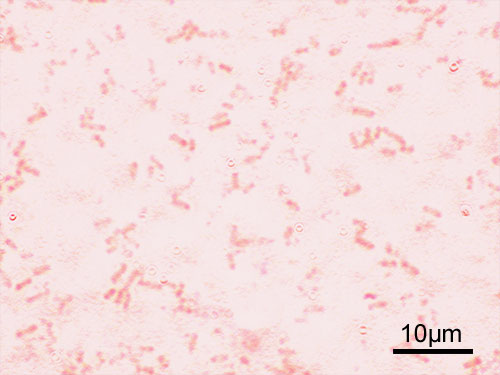
| Gram staining properties | Negative |
| Shape | Rod |
| Mobility | No |
| Flagellar presence | Yes |
| Number of membranes | 2 |

Image source: Wikipedia/Wikimedia
| Ecology, Host, and Life Cycle | |
|---|---|
| Oxygen requirements | Facultative anaerobe |
| Optimal temperature | 37 |
| Temperature range | Mesophilic |
| Habitat | HostAssociated |
| Biotic relationship | Free living |
| Host(s) | Not Available |
| Cell arrangement | Pairs - Singles |
| Sporulation | Not Available |
| Energy source | Chemoorganotroph |
| Pathogenicity | Not Available |
Gene Summary
Adenine Count
1128216 bp
Thymine Count
1123711 bp
Guanine Count
1187326 bp
Cytosine Count
1174304 bp
Genome Length
4613557 bp
Protein-coding Genes
5602 genes
Non-Coding Genes
396 genes
# of Chromosomes/Plasmids
2
Genes
| Name | Locus Tag | UniProt ID | Strand Orientation | Gene Start/End | Protein Molecular Weight |
|---|---|---|---|---|---|
| nickel abc transporter substrate-binding protein | ASD1617_RS21195 | Not Available | Positive | 3315459 - 3317033 | 58804.4 |
| nickel abc transporter permease subunit nikb | ASD1617_RS21200 | Not Available | Positive | 3317033 - 3317977 | 35292.4 |
| nickel abc transporter permease subunit nikc | ASD1617_RS21205 | Not Available | Positive | 3317974 - 3318807 | 30362.9 |
| nickel import atp-binding protein nikd | ASD1617_RS21210 | Not Available | Positive | 3318807 - 3319571 | 26763.0 |
| nickel import atp-binding protein nike | ASD1617_RS21215 | Not Available | Positive | 3319568 - 3320374 | 29714.4 |
| nickel-responsive transcriptional regulator nikr | ASD1617_RS21220 | Not Available | Positive | 3320380 - 3320781 | 15094.7 |
| is1 family transposase | ASD1617_RS21230 | Not Available | Positive | 3320882 - 3321543 | 25198.4 |
| winged helix-turn-helix domain-containing protein | ASD1617_RS21235 | Not Available | Negative | 3321627 - 3322328 | 26401.2 |
| pts sugar transporter subunit iia | ASD1617_RS21245 | Not Available | Positive | 3322513 - 3322986 | 17500.4 |
| pts sugar transporter subunit iib | ASD1617_RS21250 | Not Available | Positive | 3322983 - 3323252 | 9397.31 |
Pathways
0 pathways
No pathways found
No metabolic pathways have been associated with this bacterium yet.
Health Effects
No health effects information available for this bacterium.