Kingdom
Pseudomonadati
Phylum
Pseudomonadota
Class
Gammaproteobacteria
Order
Enterobacterales
Family
Enterobacteriaceae
Genus
Shigella
Description
Taxonomy
| Kingdom | Pseudomonadati |
|---|---|
| Phylum | Pseudomonadota |
| Class | Gammaproteobacteria |
| Order | Enterobacterales |
| Family | Enterobacteriaceae |
| Genus | Shigella |
| Species | Shigella dysenteriae |
| Strain | 1617 |
Profile
| Physiology | |
|---|---|
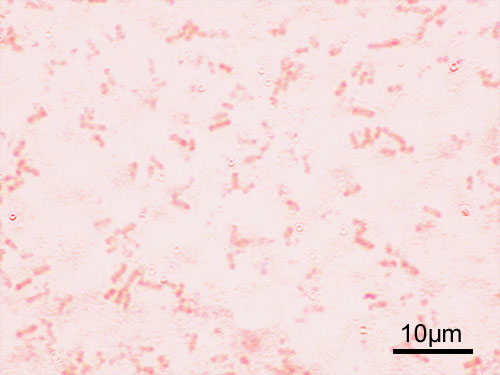
| Gram staining properties | Negative |
| Shape | Rod |
| Mobility | No |
| Flagellar presence | Yes |
| Number of membranes | 2 |

Image source: Wikipedia/Wikimedia
| Ecology, Host, and Life Cycle | |
|---|---|
| Oxygen requirements | Facultative anaerobe |
| Optimal temperature | 37 |
| Temperature range | Mesophilic |
| Habitat | HostAssociated |
| Biotic relationship | Free living |
| Host(s) | Not Available |
| Cell arrangement | Pairs - Singles |
| Sporulation | Not Available |
| Energy source | Chemoorganotroph |
| Pathogenicity | Not Available |
Gene Summary
Adenine Count
1128216 bp
Thymine Count
1123711 bp
Guanine Count
1187326 bp
Cytosine Count
1174304 bp
Genome Length
4613557 bp
Protein-coding Genes
5602 genes
Non-Coding Genes
396 genes
# of Chromosomes/Plasmids
2
Genes
| Name | Locus Tag | UniProt ID | Strand Orientation | Gene Start/End | Protein Molecular Weight |
|---|---|---|---|---|---|
| purine nucleoside transporter punc | ASD1617_RS11020 | Not Available | Positive | 1681933 - 1683144 | 43427.0 |
| cyclopropane fatty acyl phospholipid synthase | ASD1617_RS11025 | Not Available | Positive | 1683435 - 1684583 | 43902.3 |
| riboflavin synthase | ASD1617_RS11030 | Not Available | Negative | 1684623 - 1685264 | 23446.3 |
| winged helix-turn-helix domain-containing protein | ASD1617_RS11040 | Not Available | Positive | 1685410 - 1685900 | 17838.7 |
| winged helix-turn-helix domain-containing protein | ASD1617_RS11050 | Not Available | Positive | 1685962 - 1686344 | 13426.2 |
| multidrug efflux mate transporter mdtk | ASD1617_RS11055 | Not Available | Positive | 1686488 - 1687861 | 49452.2 |
| aida repeat-containing protein | ASD1617_RS11060 | Not Available | Negative | 1687902 - 1689158 | 42809.5 |
| Trna-val | Not Available | Not Available | Positive | 1689469 - 1689545 | Not Available |
| hypothetical protein | ASD1617_RS28800 | Not Available | Negative | 1689488 - 1689673 | 6486.91 |
| winged helix-turn-helix domain-containing protein | ASD1617_RS11075 | Not Available | Negative | 1689898 - 1690571 | 25533.4 |
Pathways
0 pathways
No pathways found
No metabolic pathways have been associated with this bacterium yet.
Health Effects
No health effects information available for this bacterium.